 KarpiGames Editorial
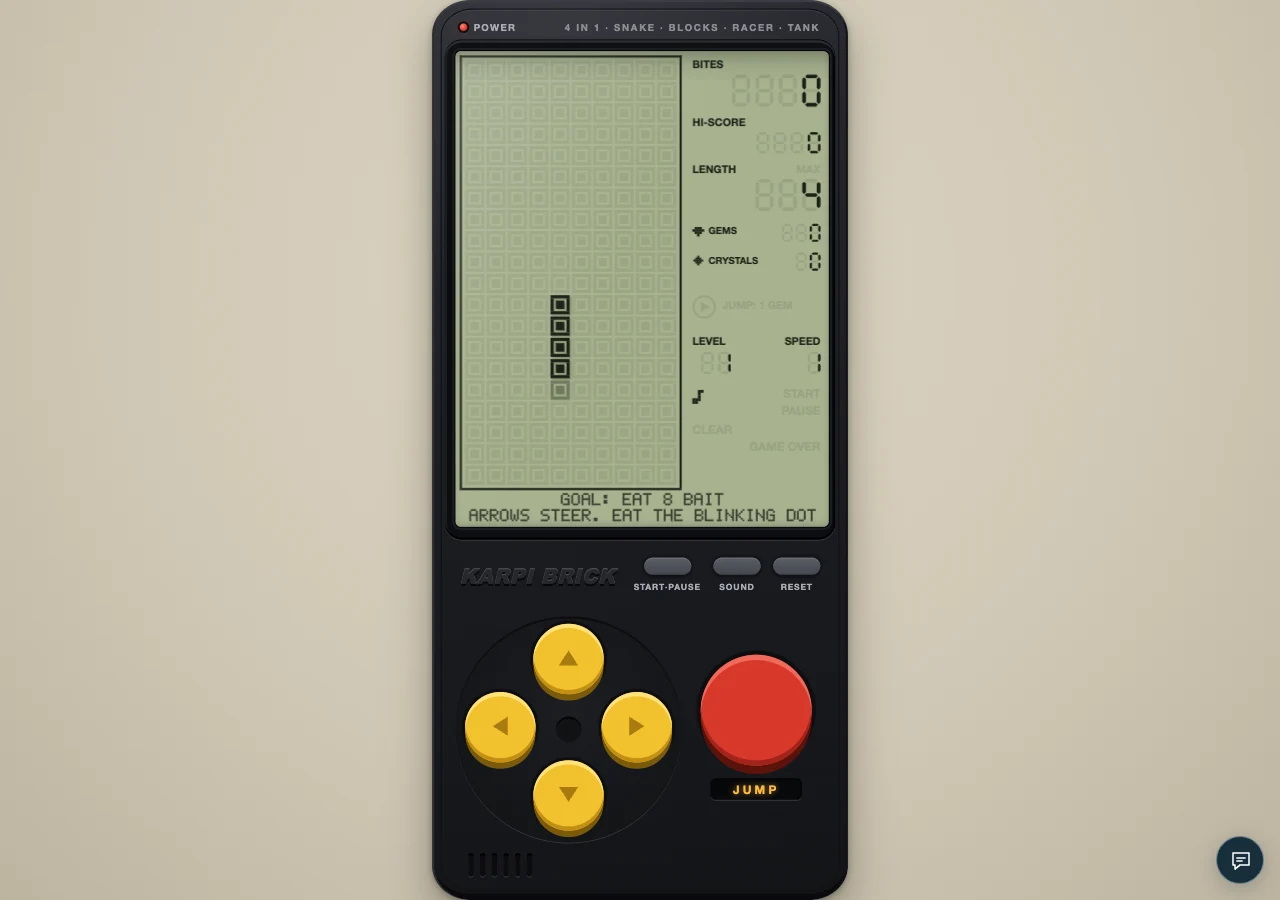
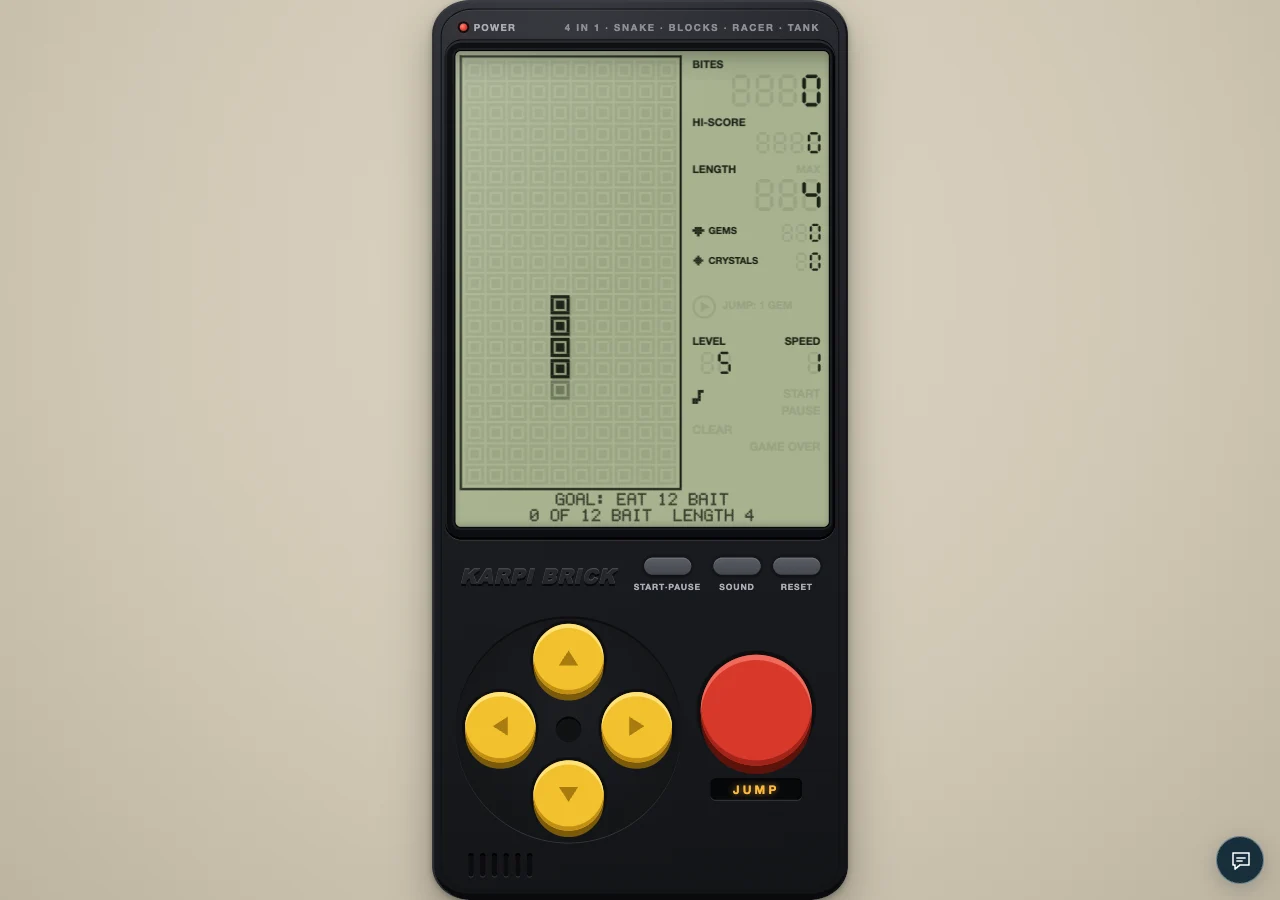
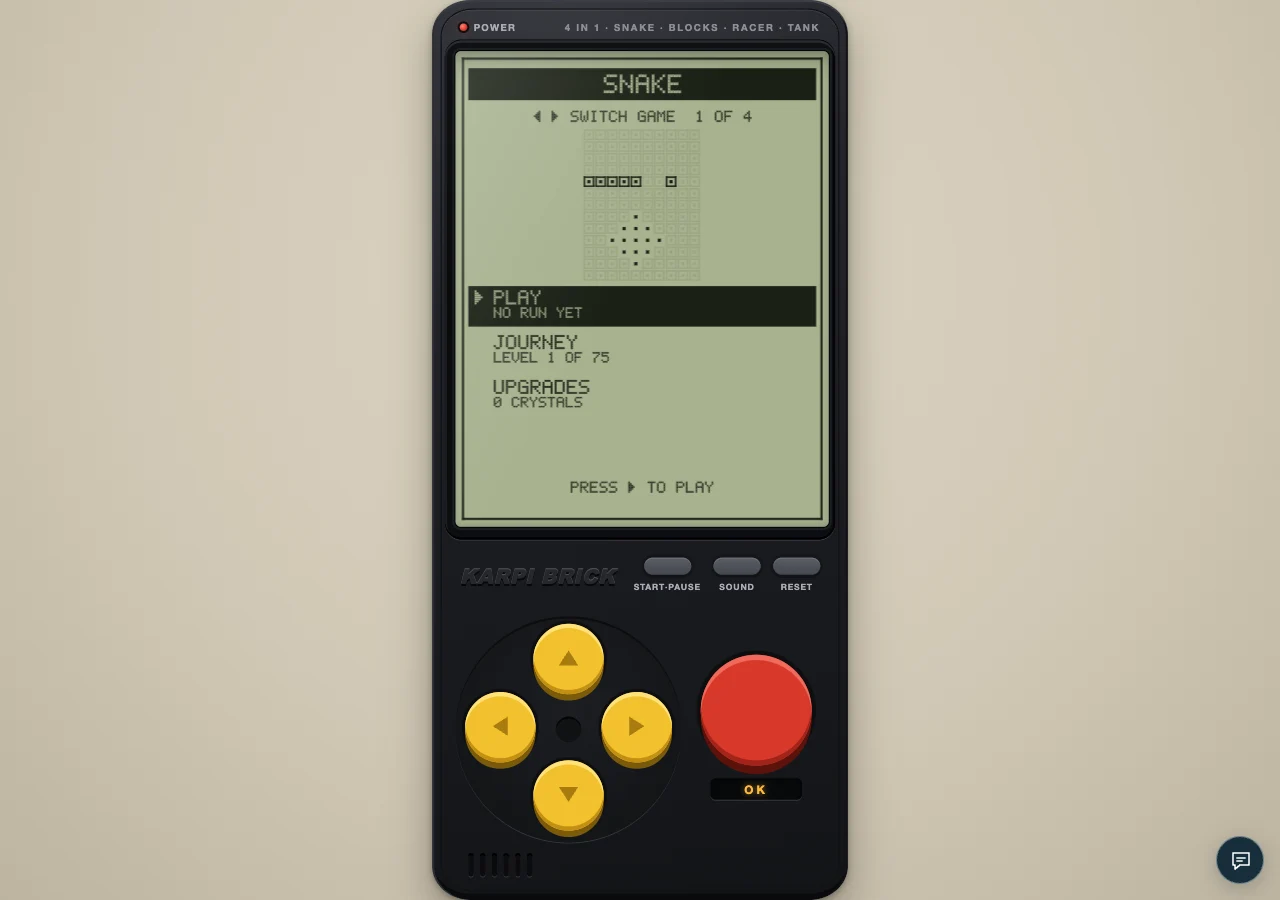
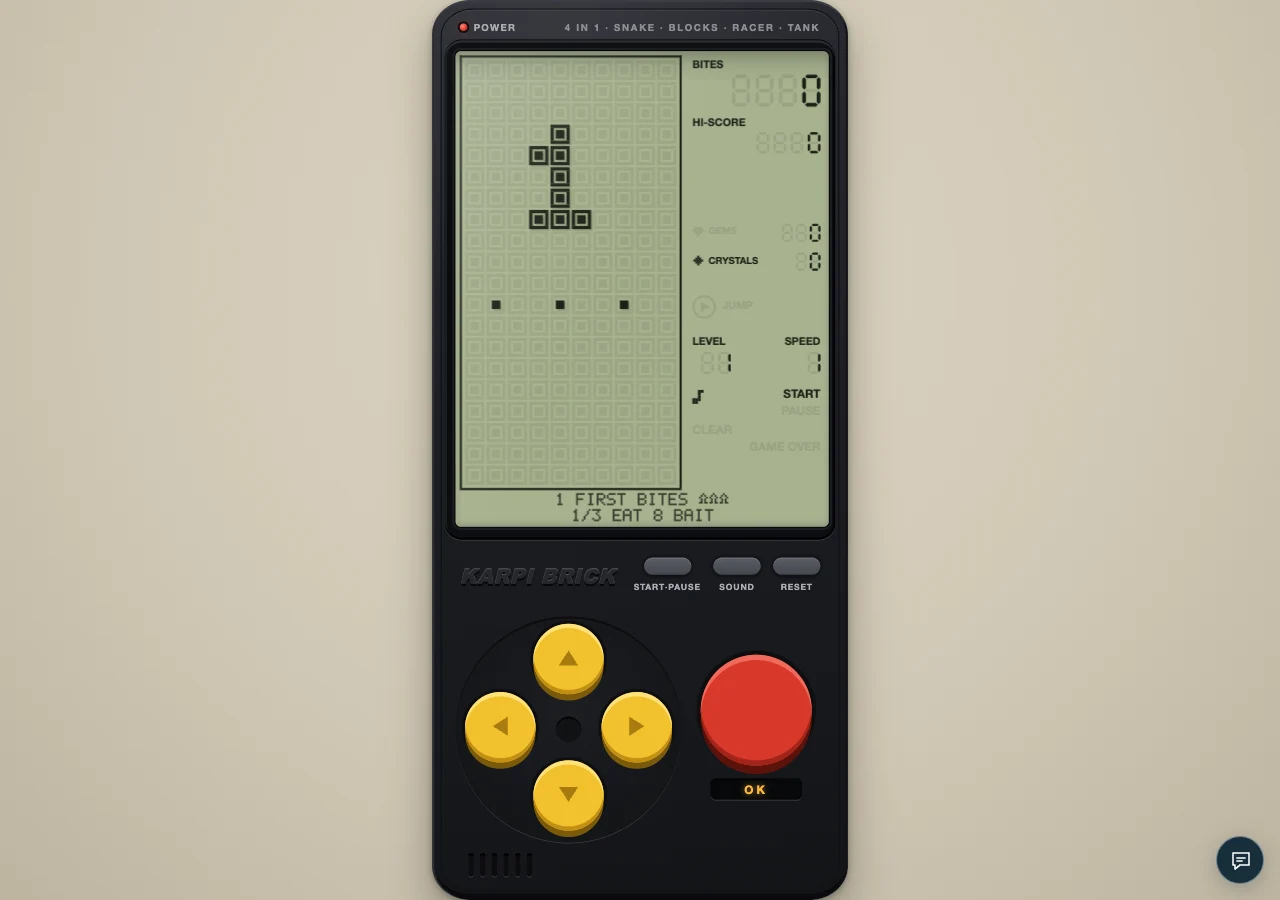
An authentic local capture of the cartridge. The visual guides below explain the decisions to look for.
Karpi Brick Snake connects opposite edges of its 10-by-20 board. The nearest food on screen is not always nearest by the route you can actually travel. A short wrap can save a fading tail, but only if the landing cell is clear.
Count across the seam
Imagine the head near the left edge and food near the right. Crossing the entire visible board may be much longer than leaving on the left. The same comparison applies vertically. Before steering, count the route through the edge as well as the ordinary route. This habit is especially valuable when the tail is close to expiry and a handful of moves changes whether you reach a bite.
The destination is part of the move
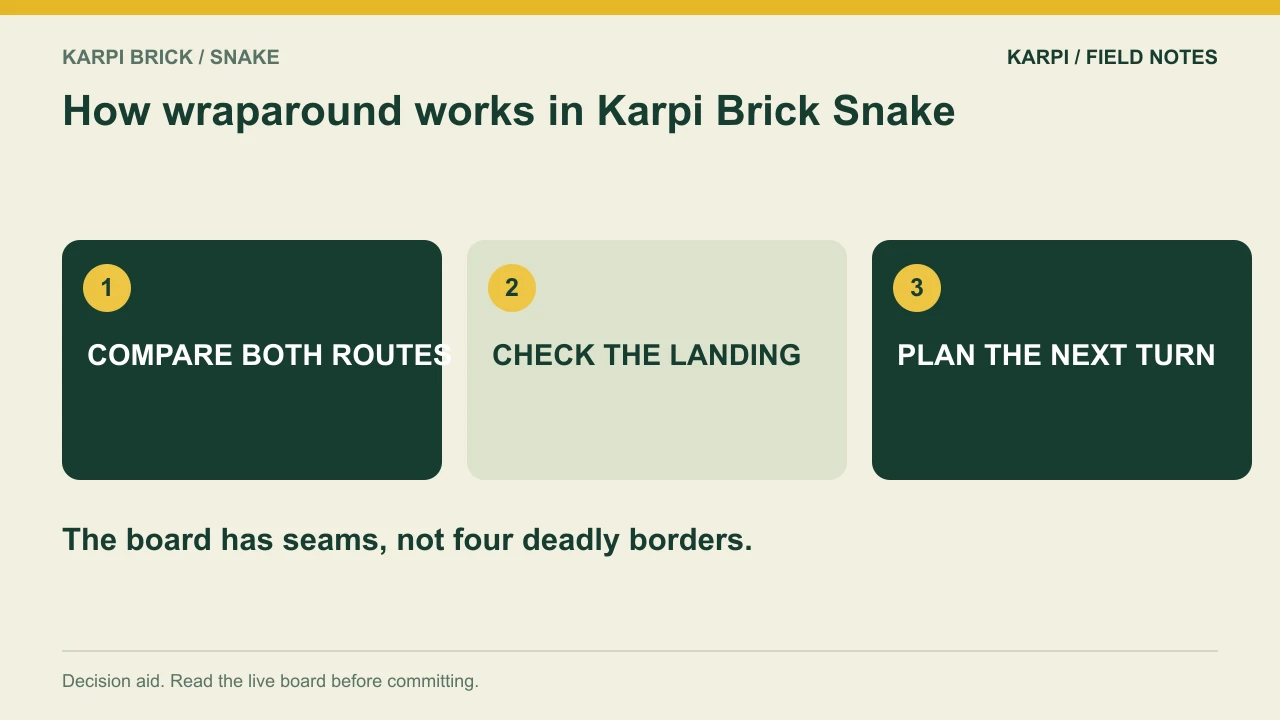
Wrapping is movement, not protection. Look at the cell on the opposite edge and the next turn beyond it. Your own body can occupy the landing area, and journey boards can put obstacles near a tempting exit. A safe edge crossing on an empty board says nothing about the same crossing later. Recheck it when the snake has grown or the board introduces a new hazard.
Shorter is not always safer
The shortest path can deliver you facing the wrong way inside a narrow space. A slightly longer path may leave the head pointed along an open corridor. Think in three parts: approach, wrap and departure. If you cannot describe the departure, the route is unfinished. This matters more than shaving a single cell off the approach when several healthy segments remain.
Turn a loop into a route network
A single repeated circuit feels dependable until food appears away from it. Use the board edges to connect several smaller routes instead. Keep a way to change between the left and right halves, and avoid treating the bottom as a permanent resting area. Since the head does not speed up, learning these connections gives you a repeatable planning rhythm rather than requiring ever faster button presses.
Count a horizontal shortcut on an empty board
Label the ten columns zero through nine for a planning exercise. If the head is at column one and food is at column eight on the same row, travelling directly right covers seven cells. Travelling left through zero and then nine reaches eight in three. The arithmetic explains why the edge is useful. It does not approve the route automatically: facing, the body, obstacles and the next turn still matter. On a populated board, check each cell of the shorter path rather than counting only its length. If column nine is occupied, the attractive three-move route is unavailable at that moment. Practise this comparison in open space until both routes are visible to you quickly. Then apply it to journey boards, where the geometric shortcut may need a detour to remain safe.
A focused practice attempt
On an open-board run, deliberately use one horizontal wrap and one vertical wrap while approaching food. Before each crossing, check the landing cell and decide the following turn. If either is uncertain, abandon that crossing. The exercise is about seeing both sides of the screen together, not collecting wraps for their own sake.
At the console | What to use |
|---|---|
Open this cartridge | |
Main controls | Arrows or WASD steer; Space uses JUMP. The four edges wrap. |
Pause | START/PAUSE on the console; Enter or P on a keyboard |
Journey | 75 levels across eight chapters; read the goal and two extras |
Take it to the board: Play Snake and test one decision from this guide. The advice describes the current cartridge rules; a practice exercise is not a guaranteed score or clear.
 Take it to the gameBrick GameSnake, Blocks, Racer and Tank on a 90s handheldPlay free
Read next
Snake Time Jump: Line Up the Food Before You Press For the series starting point, read Karpi Brick Snake: The Tail Is a Clock.