 KarpiGames Editorial
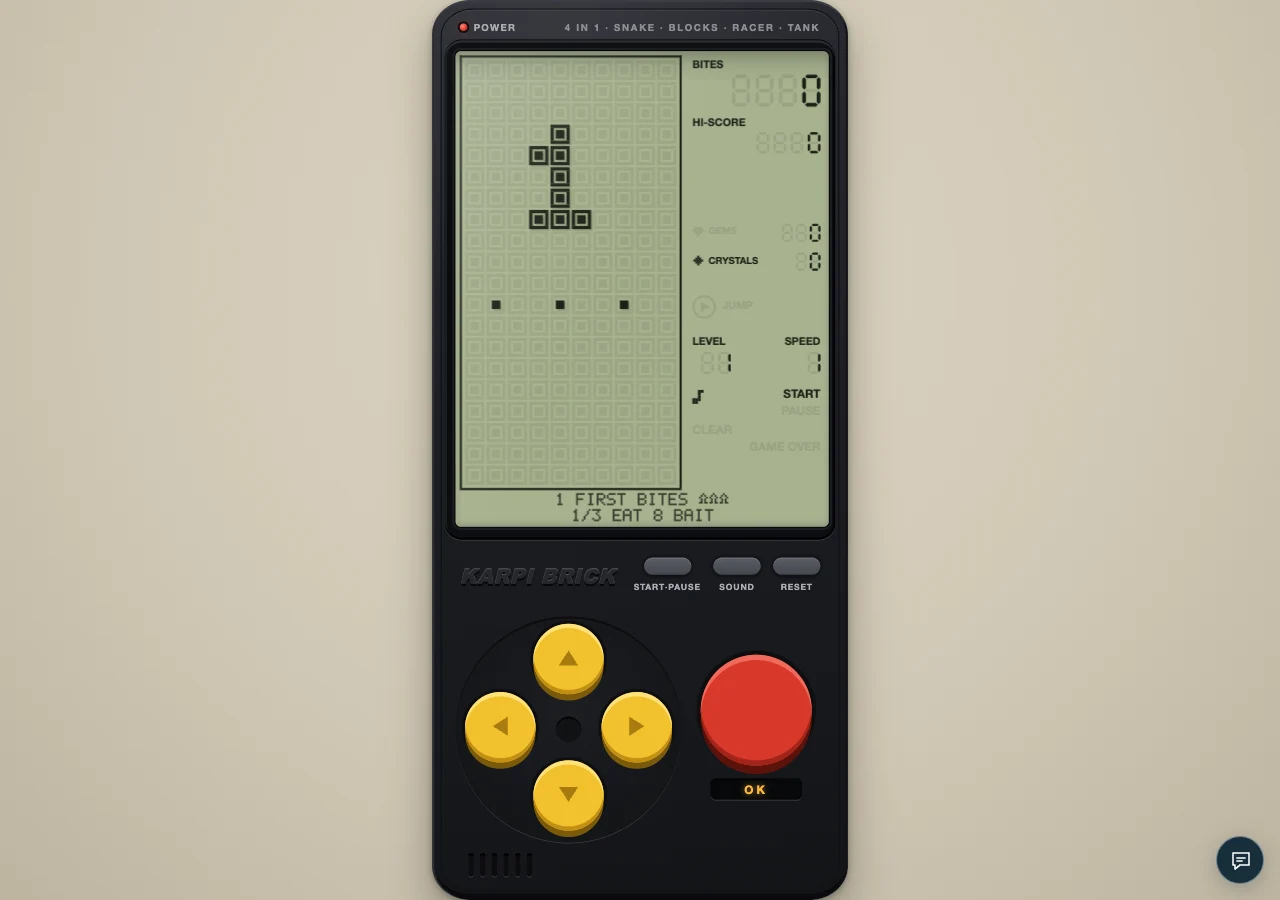
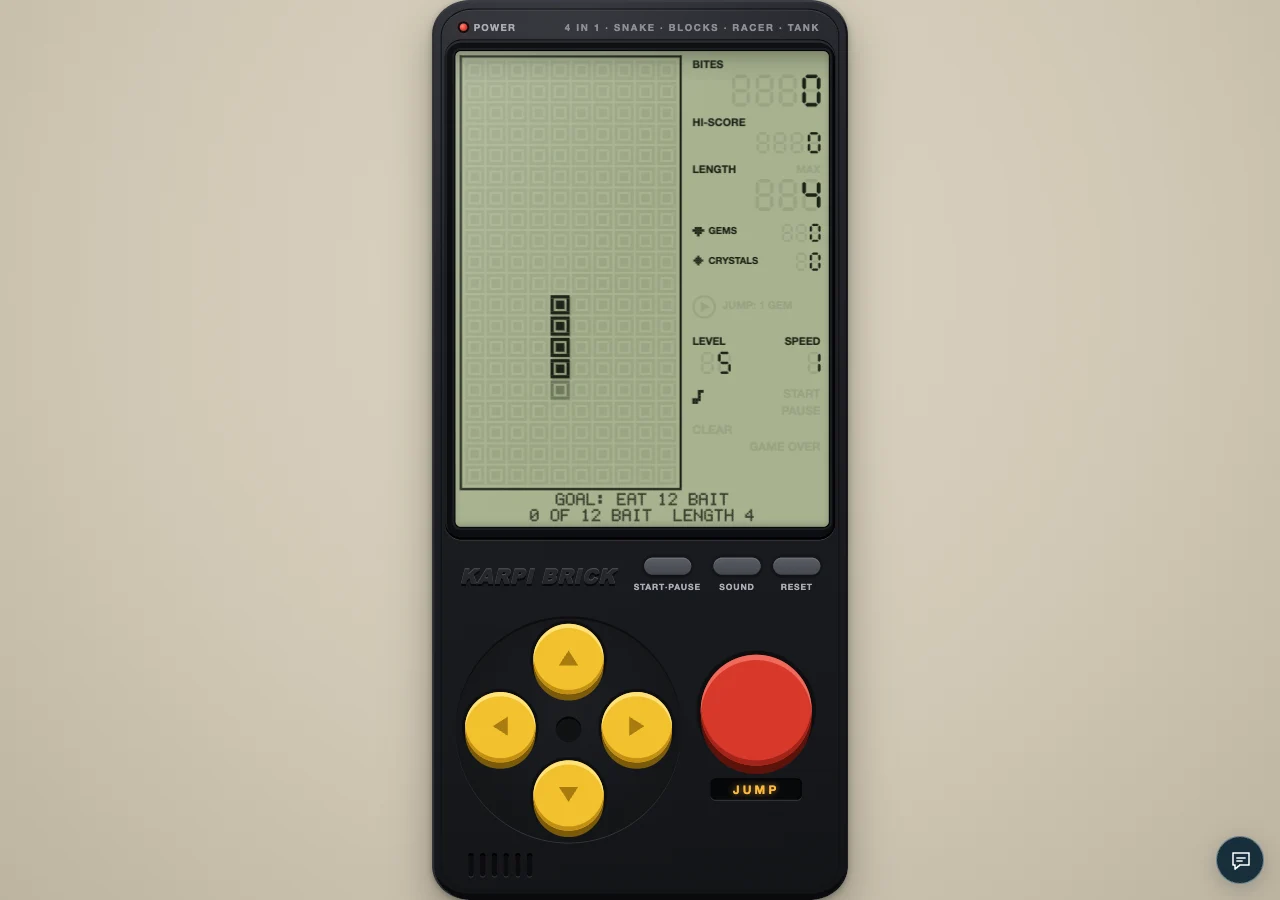
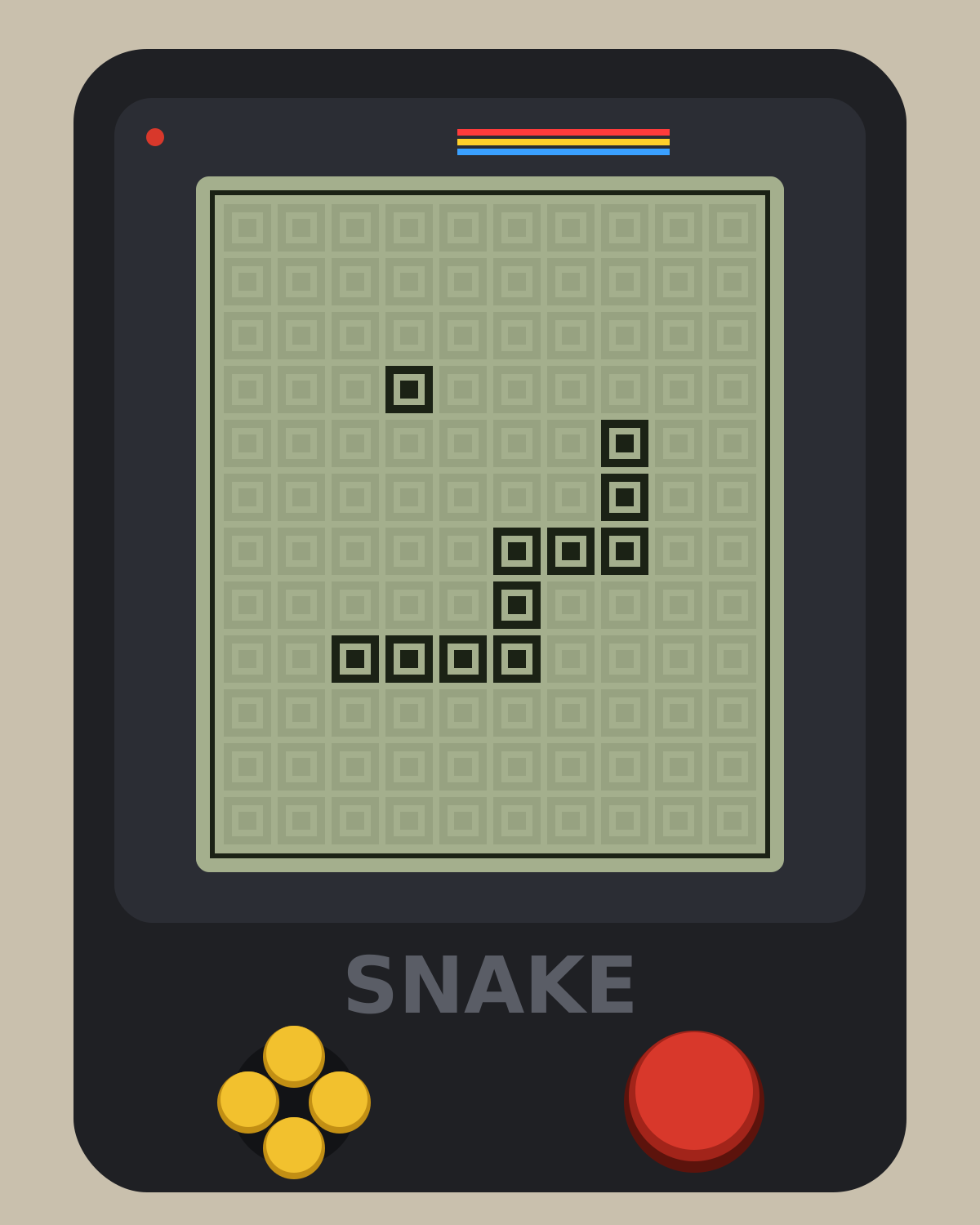
An authentic local capture of the cartridge. The visual guides below explain the decisions to look for.
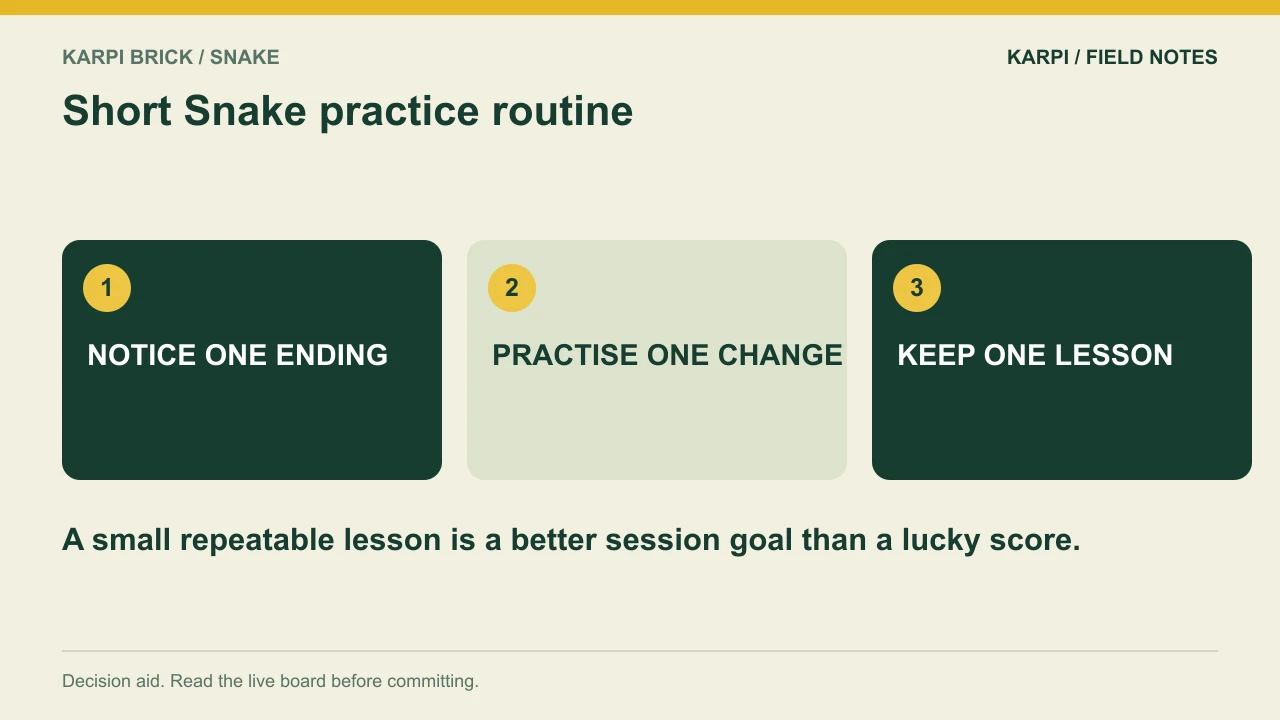
A short Snake session works best when it has a small purpose. Use a few minutes to diagnose one ending, practise one route and replay one level. Chasing a personal best on every attempt makes it harder to see what actually improved.
Start with a run you can explain
Open PLAY and watch the tail, food and space after each bite. When the run ends, identify the cause. Hunger suggests a route or food-timing problem. A collision suggests a cell you misread or an exit you failed to leave. The score matters less for this first attempt than having a clear account of the final decision.
Practise the smallest useful correction
If hunger ended the attempt, compare a normal food route with a wrap. If the body blocked you, approach a similar bite from another side. If an obstacle caused the crash, identify its position before entering that area. Change one habit at a time. A complete overhaul of your playing style makes the next result harder to interpret.
Use Journey for a repeatable question
Choose an available level with an objective you understand. Play it, read the result, and repeat it with your correction in mind. You do not need three stars to make the exercise worthwhile. A cleaner approach or a recognised hazard is a useful result, even if another mistake still ends the run. Keep the lesson smaller than the whole game.
Finish with a sentence, not a verdict
Write a simple observation such as: I saw the wrap earlier, or I ate before checking the exit. Avoid reducing the session to good player or bad player. The console gives concrete problems you can practise. A specific observation makes the next short session easier to start and keeps an ordinary loss from feeling like wasted time.
Keep a tiny practice log
A useful log can be three short entries: what ended the first run, what you changed and what happened on the replay. For example, hunger ended the run; I used a horizontal wrap; I reached the next bait but turned into the body afterward. That is a productive result because the time problem improved and the next problem became specific. It is more informative than writing only the score. On another day, the replay may be worse because a new route creates an unfamiliar corner. Record that honestly and keep the experiment small. The routine is for learning the game, not a claim about improving intelligence, treating stress or delivering a measurable cognitive benefit. Its value is practical: the next time you open the console, you know which decision you wanted to practise.
A focused practice attempt
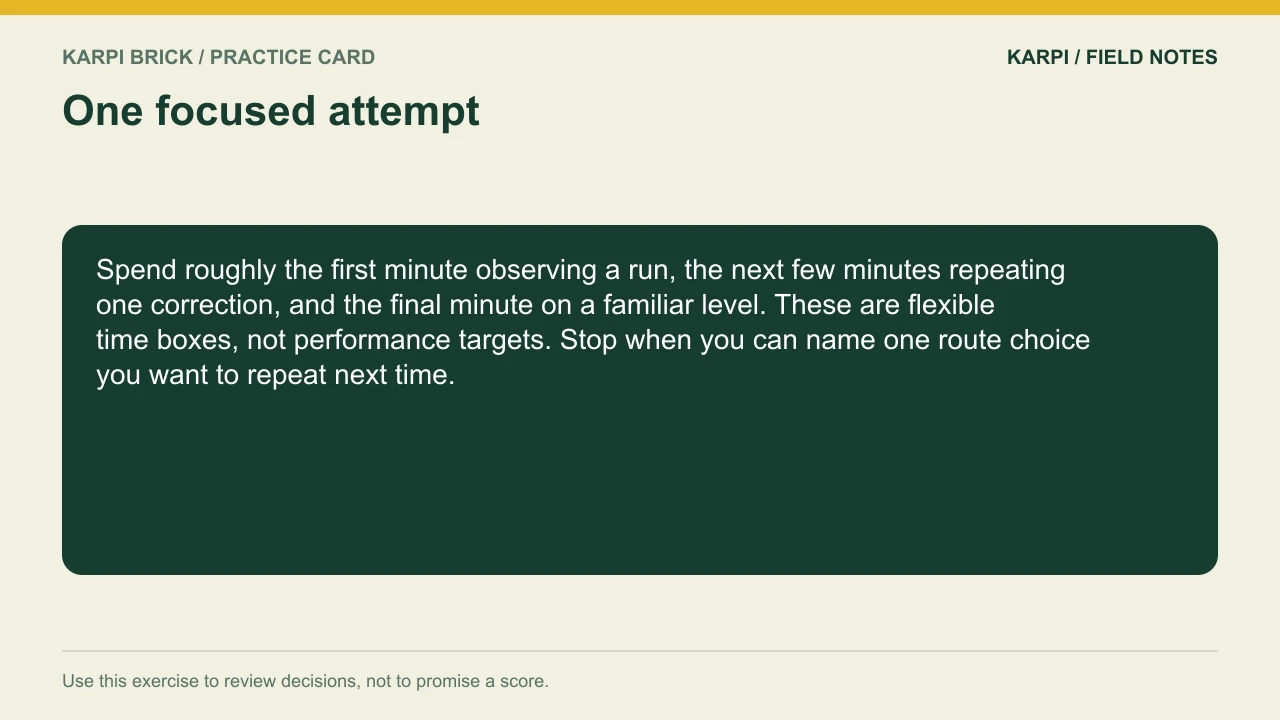
Spend roughly the first minute observing a run, the next few minutes repeating one correction, and the final minute on a familiar level. These are flexible time boxes, not performance targets. Stop when you can name one route choice you want to repeat next time.
At the console | What to use |
|---|---|
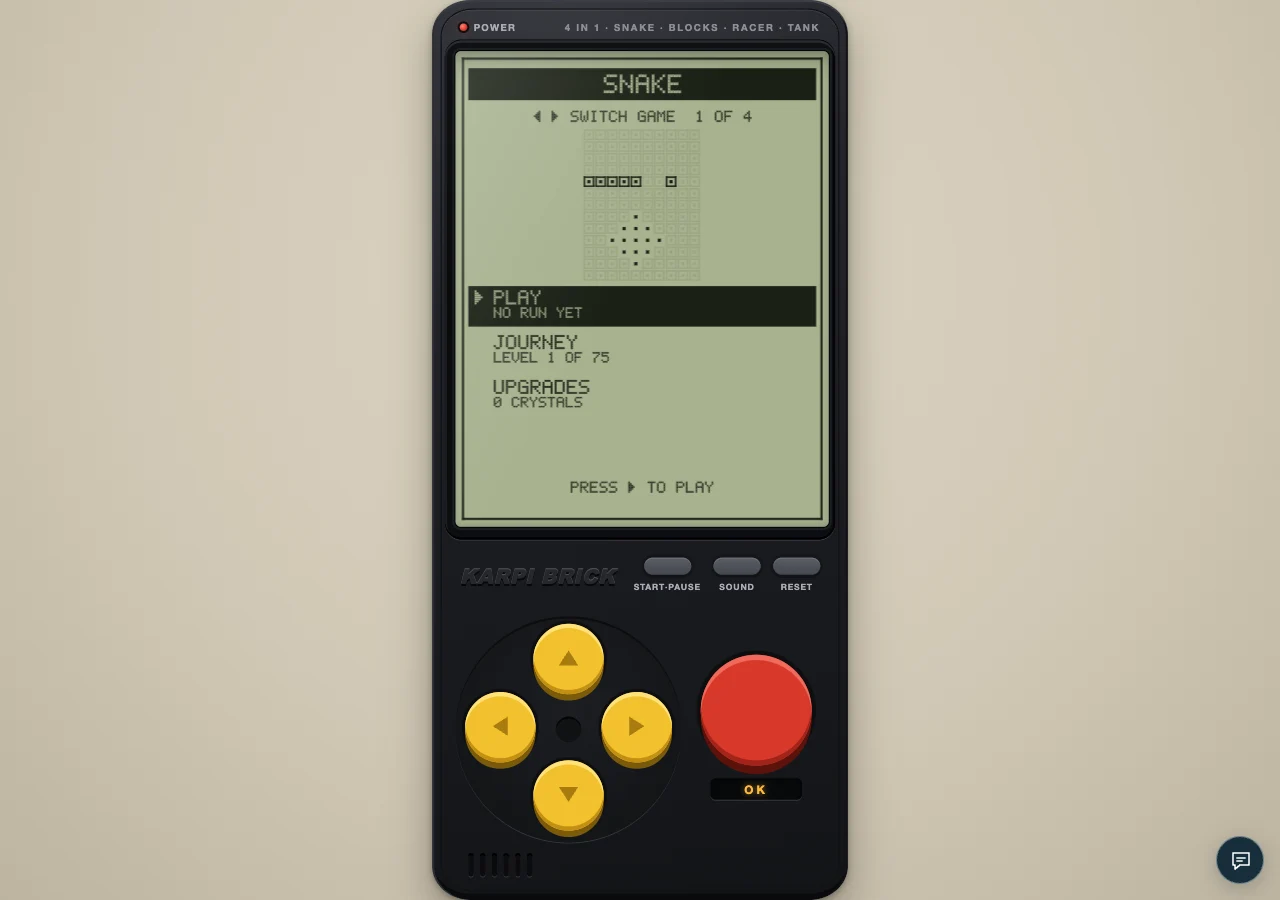
Open this cartridge | |
Main controls | Arrows or WASD steer; Space uses JUMP. The four edges wrap. |
Pause | START/PAUSE on the console; Enter or P on a keyboard |
Journey | 75 levels across eight chapters; read the goal and two extras |
Take it to the board: Play Snake and test one decision from this guide. The advice describes the current cartridge rules; a practice exercise is not a guaranteed score or clear.
 Take it to the gameBrick GameSnake, Blocks, Racer and Tank on a 90s handheldPlay free
Read next
Karpi Brick Snake: The Tail Is a Clock For the series starting point, read Karpi Brick Snake: The Tail Is a Clock.