 KarpiGames Editorial
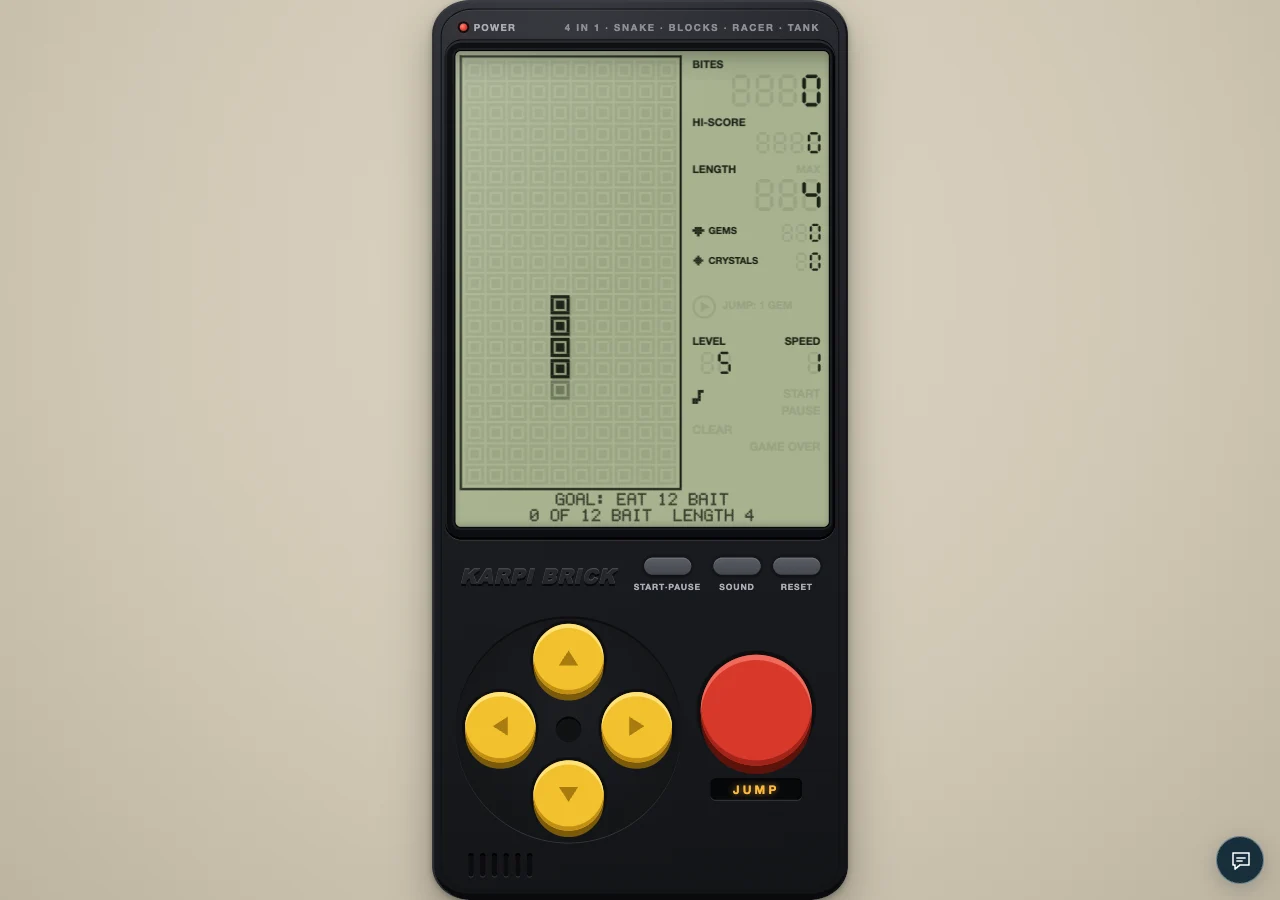
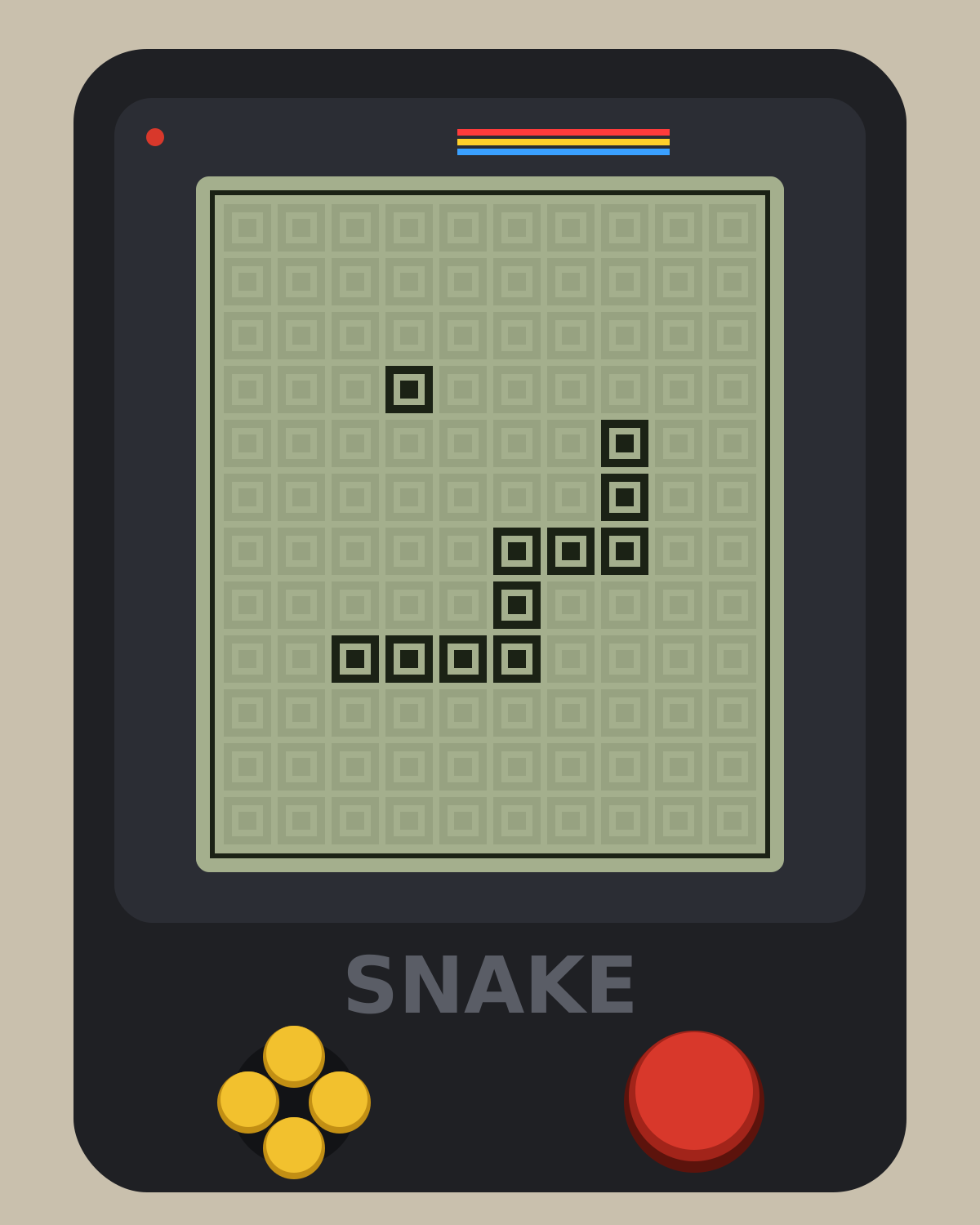
An authentic local capture of the cartridge. The visual guides below explain the decisions to look for.
Snake's time jump moves the head straight toward bait ahead, stopping before the nearest bait on that line. It is a situational route tool. Line up a useful target first, check the lane, and then decide whether spending gems helps more than ordinary steering.
A direction comes before an action
The red key does not choose a destination for you. The head's current direction matters. If food sits off to one side, pressing JUMP is not a substitute for lining it up. Make the turn that creates the lane, check the cells ahead, and only then use the action. Learning that order removes much of the apparent unpredictability from the power.
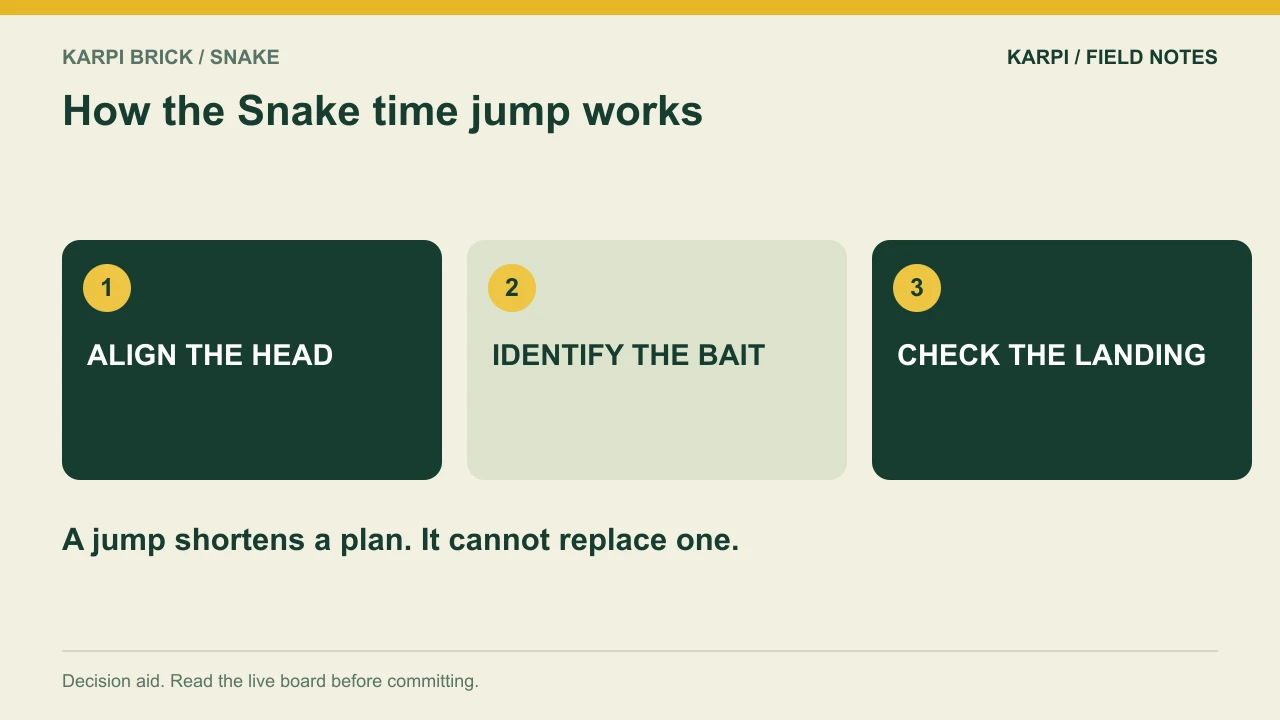
The landing is before the bite
A jump is not the same as eating. It brings the head close to the nearest bait ahead, and the next normal movement still matters. Look at the cell beyond the food before using it. If the jump leaves you about to grow into a cramped corner, you have traded a time problem for a space problem. A good use shortens a route and preserves a clean departure.
Gems and crystals have different jobs
The run's gems come from bites and fund time jumps. Crystals belong to progression between runs. Do not judge a jump by the crystal number on the console: that is a different resource. The base jump cost is a share of held gems, rounded up, with a minimum cost. That means repeated action presses deserve a purpose; the button is not an unlimited movement shortcut.
Use the power to solve a named problem
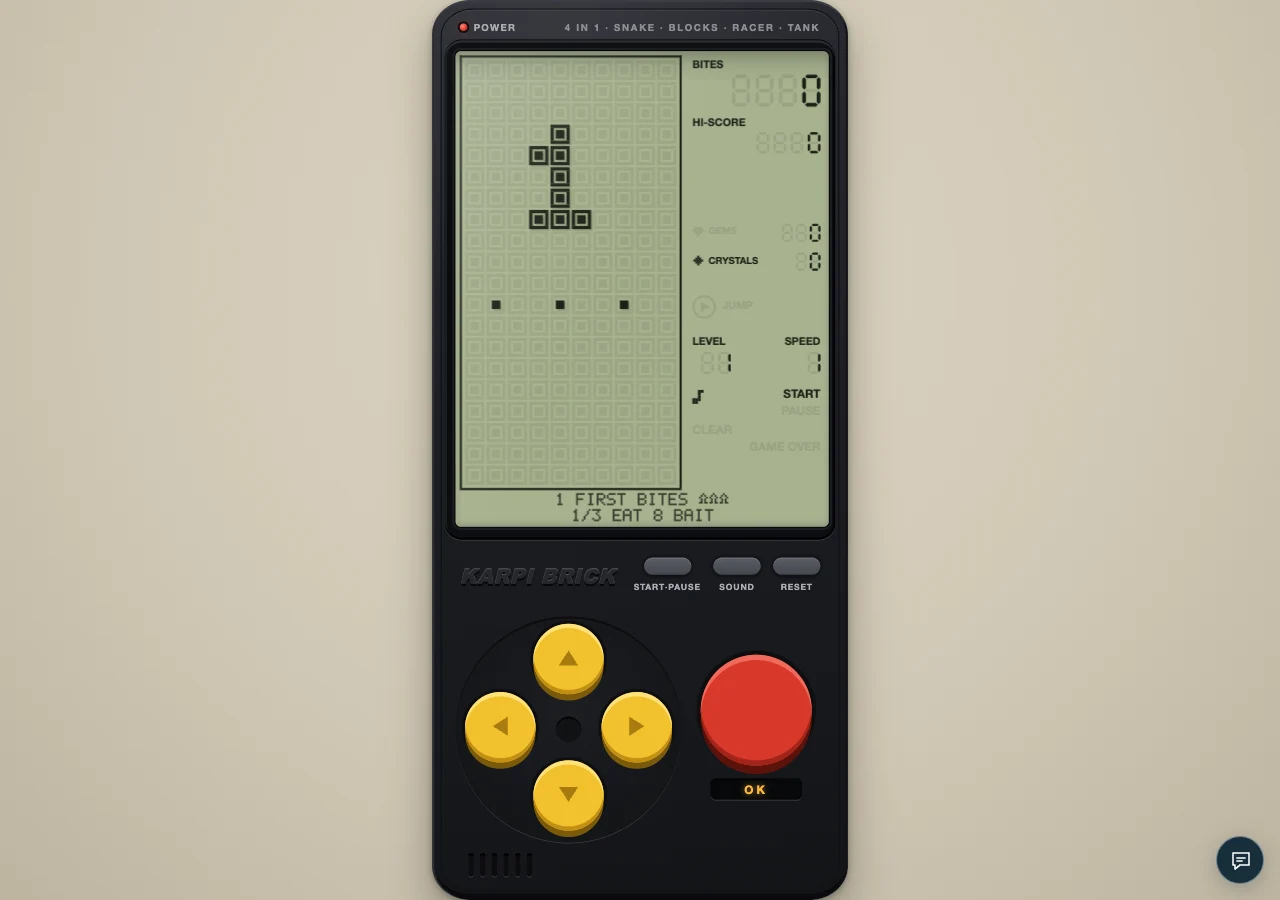
Useful reasons include reaching a distant meal before a tail deadline or shortening an otherwise awkward straight approach. A vague feeling that the run needs rescuing is a weaker reason. If you cannot name the target and the route after landing, steer first. The normal movement pace remains fixed, so a controlled turn is often available before the situation becomes urgent.
A useful jump and an unhelpful jump
Imagine the head aligned with bait several cells ahead and open space beyond it. A jump can shorten the approach, leaving a straightforward next movement into the food and an obvious turn afterward. Now imagine the same bait beside an obstacle, with the head arriving pointed toward a blocked cell. The saved distance has not solved the departure. You may need to approach from another direction instead. This comparison is more useful than a universal instruction to jump when the tail blinks. A deadline tells you that time matters; it does not identify the safe landing. If an activation is refused, check the basic conditions before repeatedly pressing: a suitable bait ahead, a legal route, enough usable resources and a meaningful distance to move. The action is governed by the board, not by how urgent the situation feels.
A focused practice attempt
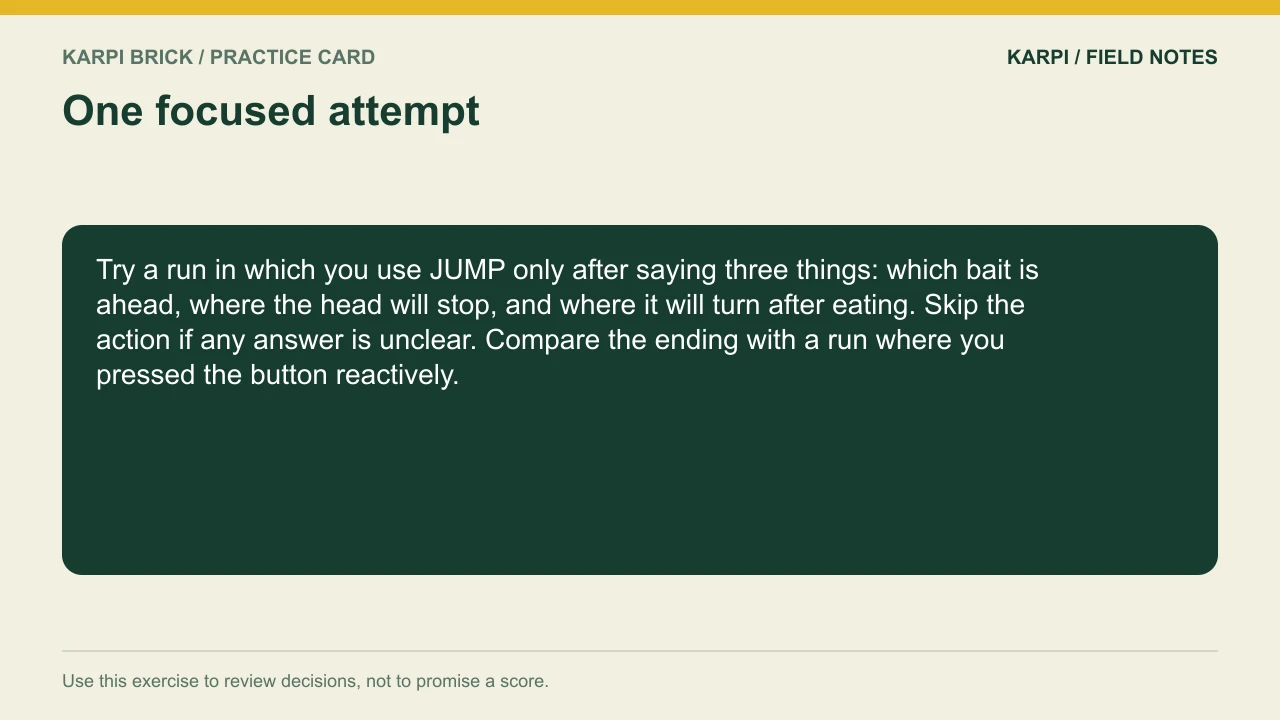
Try a run in which you use JUMP only after saying three things: which bait is ahead, where the head will stop, and where it will turn after eating. Skip the action if any answer is unclear. Compare the ending with a run where you pressed the button reactively.
At the console | What to use |
|---|---|
Open this cartridge | |
Main controls | Arrows or WASD steer; Space uses JUMP. The four edges wrap. |
Pause | START/PAUSE on the console; Enter or P on a keyboard |
Journey | 75 levels across eight chapters; read the goal and two extras |
Take it to the board: Play Snake and test one decision from this guide. The advice describes the current cartridge rules; a practice exercise is not a guaranteed score or clear.
 Take it to the gameBrick GameSnake, Blocks, Racer and Tank on a 90s handheldPlay free
Read next
Snake Journey: Read the Goal Before Chasing Three Stars For the series starting point, read Karpi Brick Snake: The Tail Is a Clock.