 KarpiGames Editorial
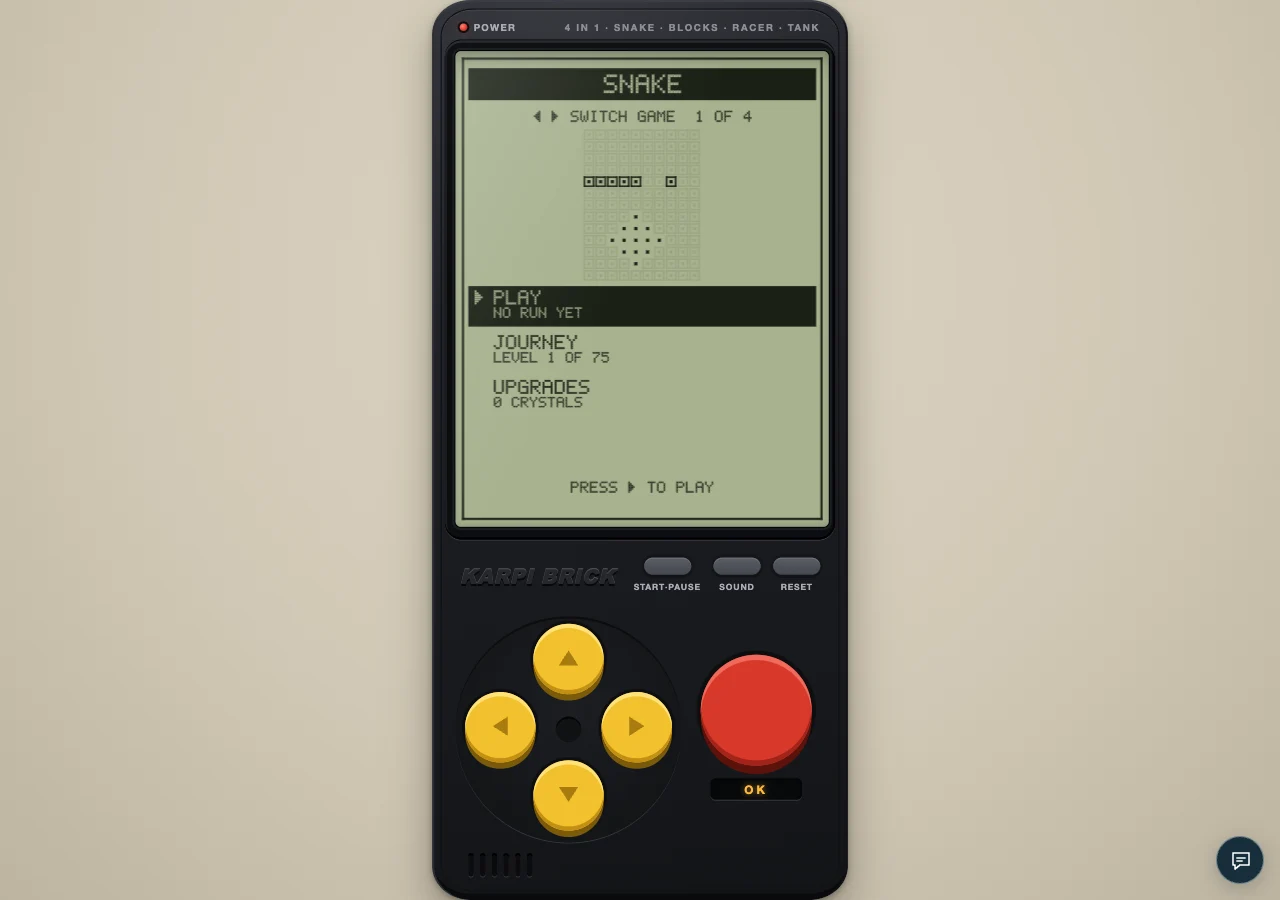
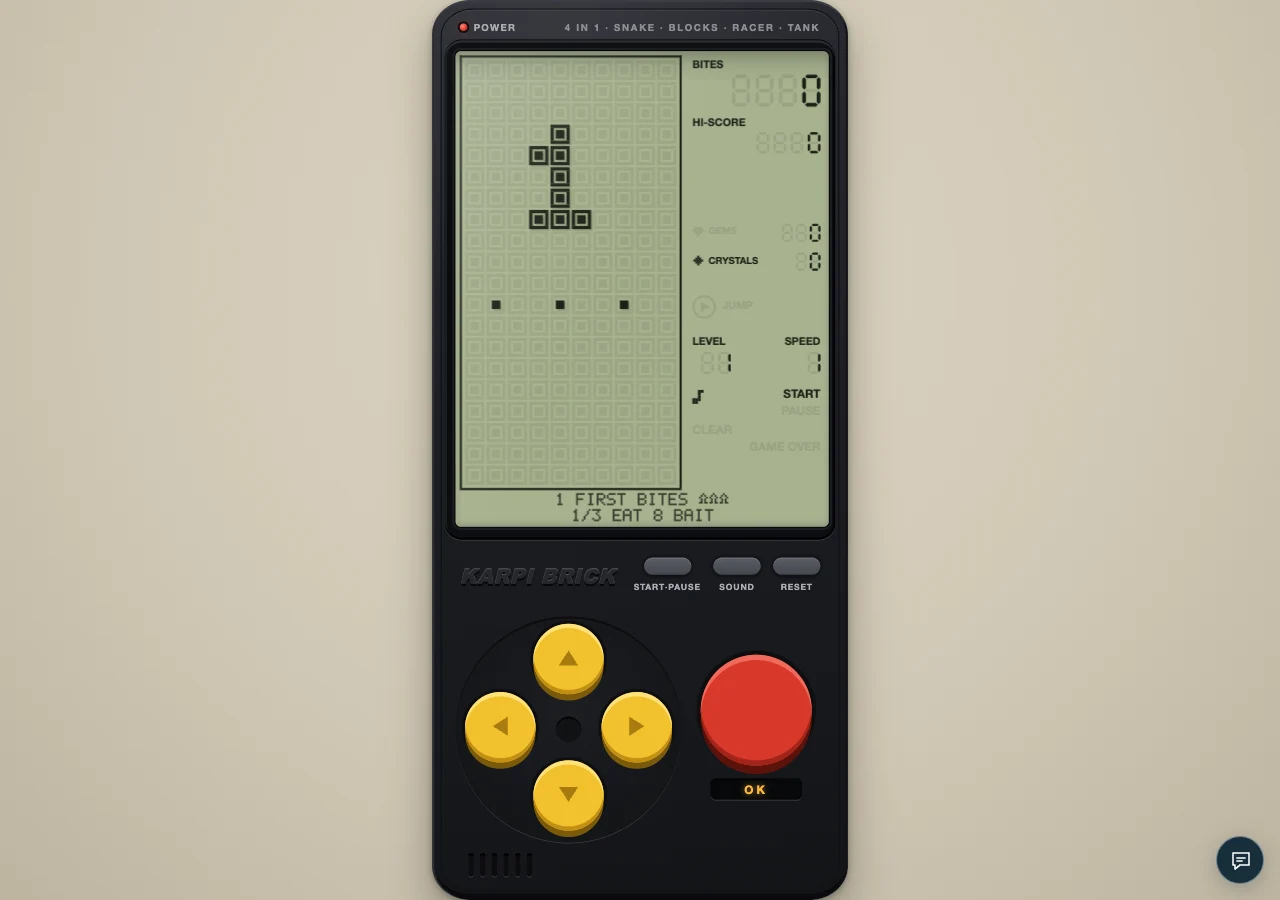
An authentic local capture of the cartridge. The visual guides below explain the decisions to look for.
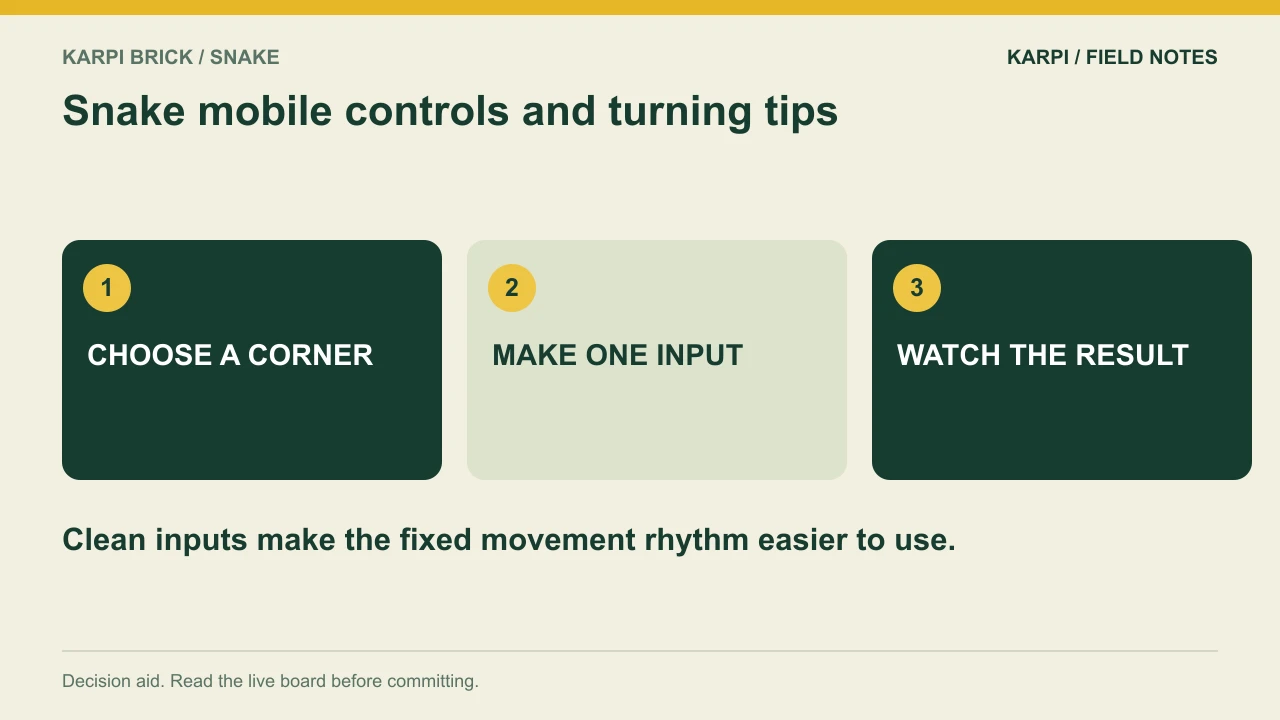
On a phone, Karpi Brick Snake supports the directional pad and swipes. The most useful control habit is deliberate timing: choose a corner, make the turn, and avoid adding extra inputs simply because the next obstacle looks close.
Use one control style while learning
Switching between swipes and pad taps in the same tight sequence can make it hard to tell why a turn happened. Start with whichever feels clearer and stay with it for an attempt. You are learning the movement rhythm as well as the control surface. Once a simple route feels consistent, compare the other input style on the same board.
Separate the next turn from the one after it
The game remembers a small turn queue. That helps with planned corners, but it also means an extra tap can be an instruction rather than harmless nervous movement. Think about the next two cells before entering a cramped section. Make the intended turn once, then observe the result. If the route requires repeated last-second corrections, look for a wider approach.
The red key has a different job
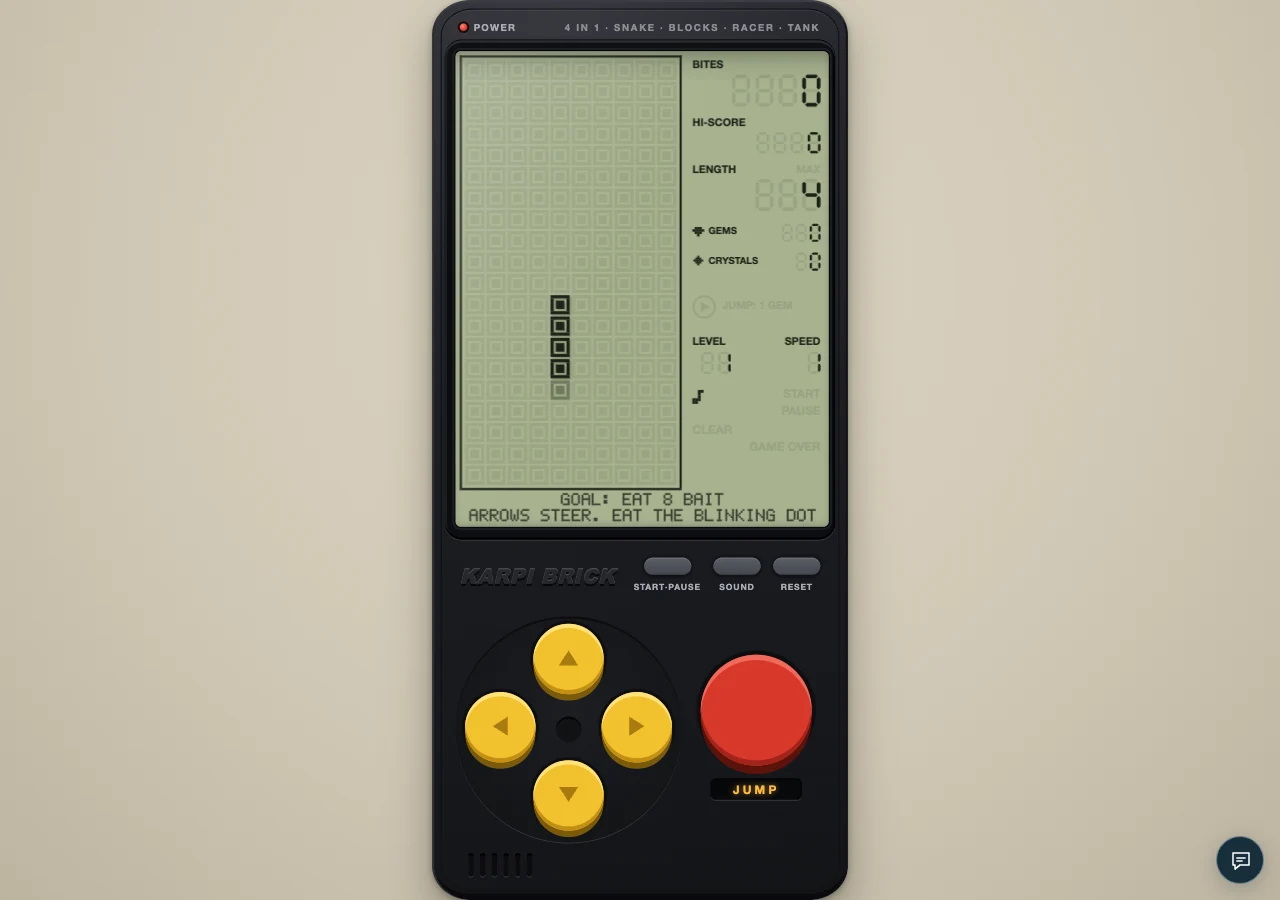
During play, the red key is JUMP. It is not a second directional input and does not choose the best exit. Before touching it, align the head with bait and check the landing. The smaller START/PAUSE control is for stopping and resuming. Learning the physical layout prevents a moment of uncertainty from turning into the wrong action.
Practise away from the score chase
A familiar journey board is useful because the task stays recognisable. Try clean cornering there before judging yourself on a long endless attempt. Repeatedly changing boards can hide whether your improvement came from better control or an easier layout. Watch for the moment where input stops matching intention; that is the corner worth practising.
A two-corner exercise for deliberate input
Find a route with room to turn right and then downward a few cells later. Watch the head approach the first corner, make the right input once and confirm the change. Only then prepare the downward turn at the second corner. Once this is comfortable, make the planning earlier while keeping the movements distinct. The purpose is to connect each input with an intended cell, not to prove that a phone can accept the fastest possible taps. If you accidentally queue a turn too soon, widen the exercise and repeat. If a swipe is harder to judge than a pad tap, use the pad for that session. There is no need to switch control styles for prestige. The better style is the one that lets your next intended direction match the movement you actually see.
A focused practice attempt
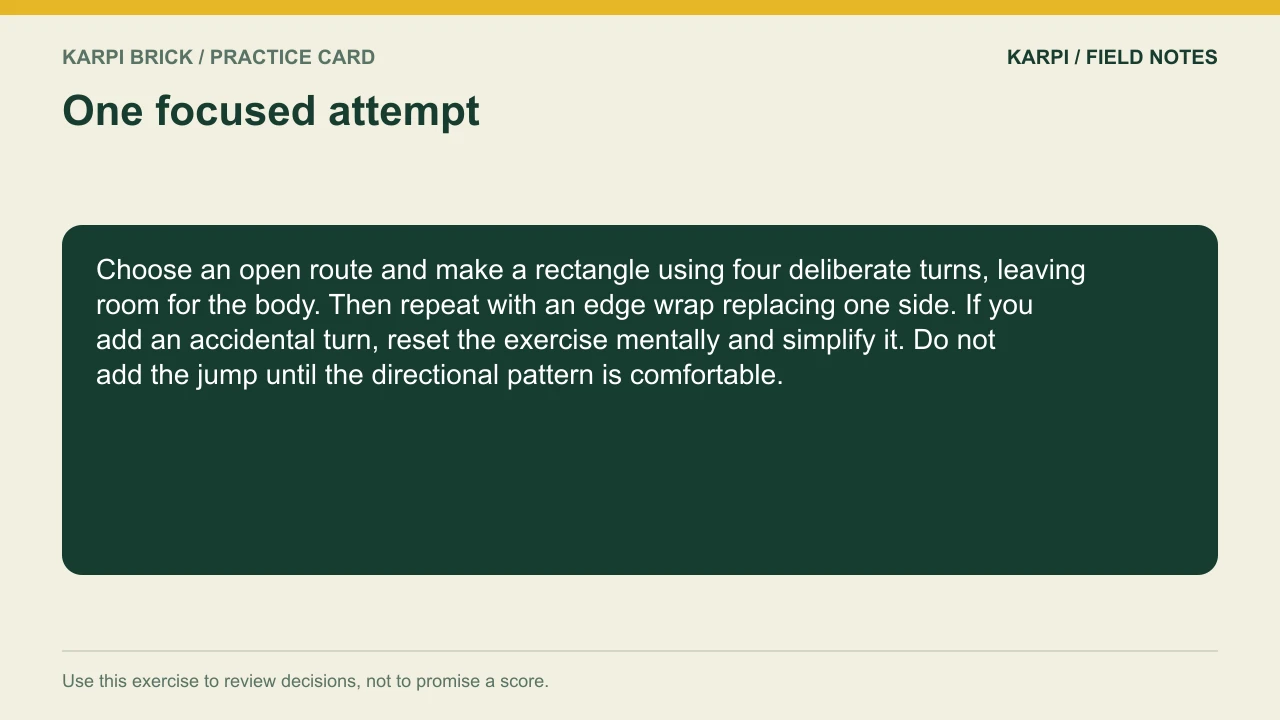
Choose an open route and make a rectangle using four deliberate turns, leaving room for the body. Then repeat with an edge wrap replacing one side. If you add an accidental turn, reset the exercise mentally and simplify it. Do not add the jump until the directional pattern is comfortable.
At the console | What to use |
|---|---|
Open this cartridge | |
Main controls | Arrows or WASD steer; Space uses JUMP. The four edges wrap. |
Pause | START/PAUSE on the console; Enter or P on a keyboard |
Journey | 75 levels across eight chapters; read the goal and two extras |
Take it to the board: Play Snake and test one decision from this guide. The advice describes the current cartridge rules; a practice exercise is not a guaranteed score or clear.
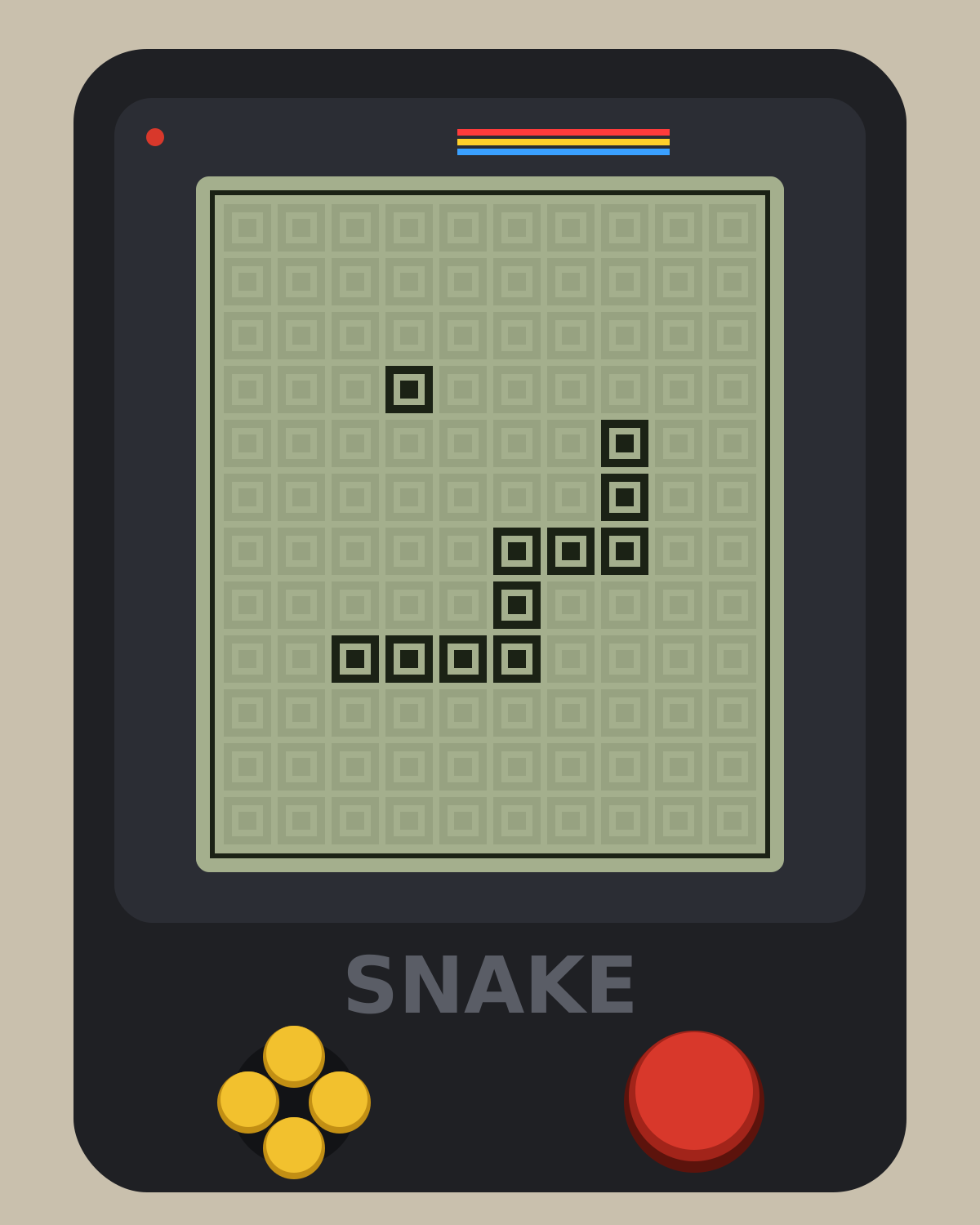 Take it to the gameBrick GameSnake, Blocks, Racer and Tank on a 90s handheldPlay free
Read next
A Five-Minute Snake Routine With One Useful Lesson For the series starting point, read Karpi Brick Snake: The Tail Is a Clock.