 KarpiGames Editorial
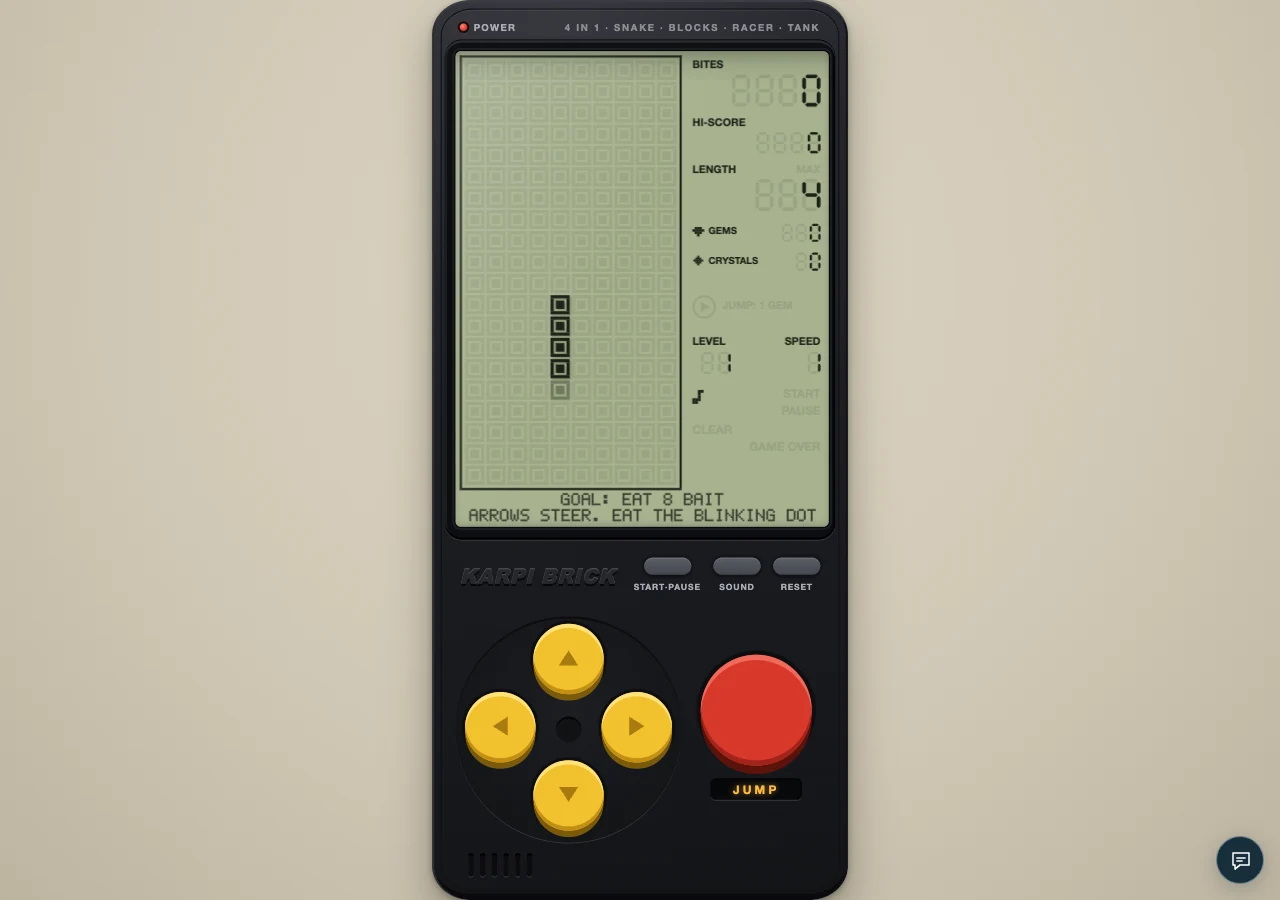
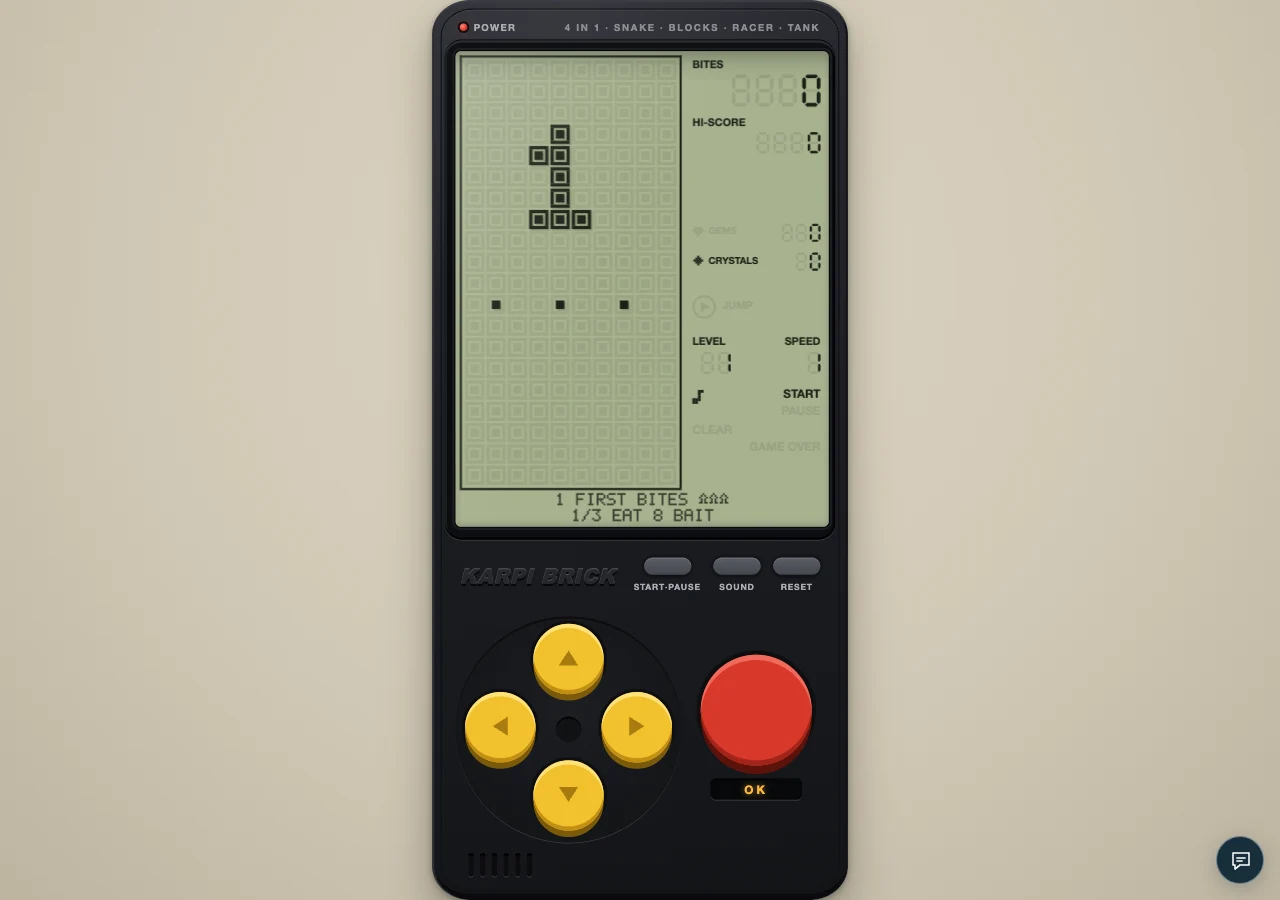
An authentic local capture of the cartridge. The visual guides below explain the decisions to look for.
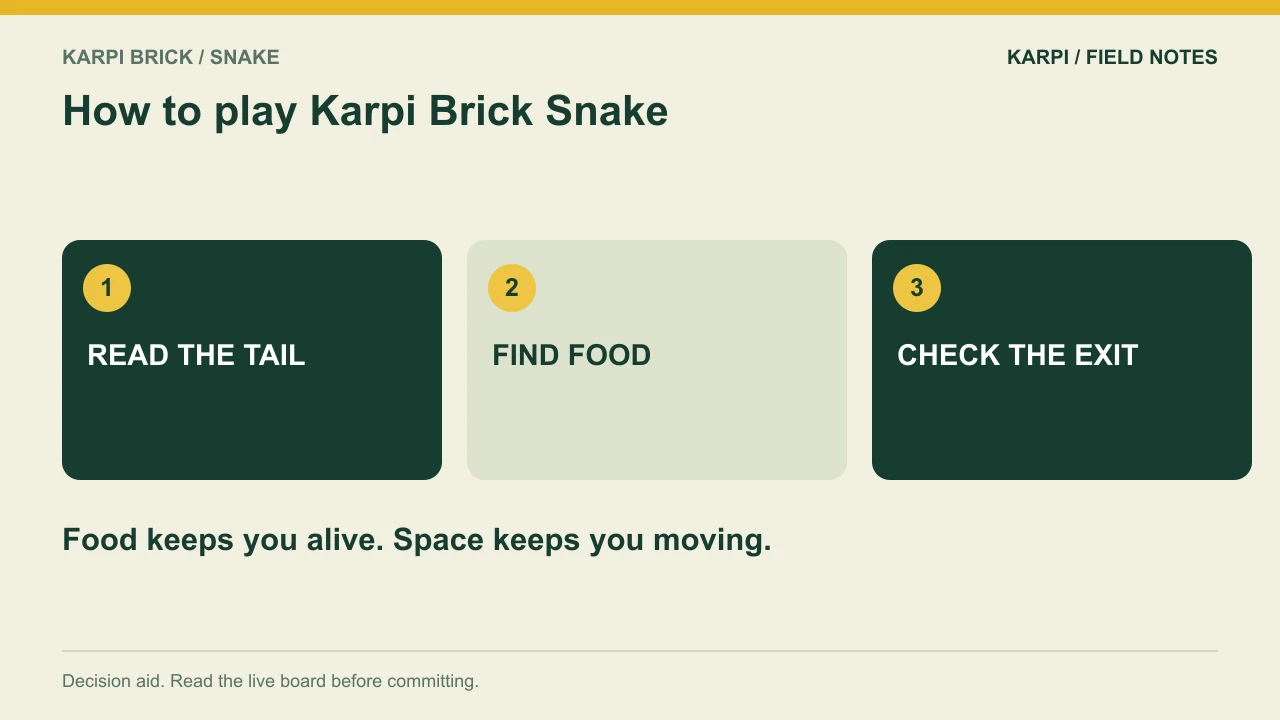
The surprise in Karpi Brick Snake is not how fast the head moves. It is what happens behind it: body segments expire. Eat to stay alive, leave room to turn, and watch the fading tail before deciding whether another bite is worth the detour.
The first bite is already urgent
The run begins with a short body and unequal time left on its segments. You cannot park in a comfortable loop forever. Food adds a segment, but avoiding food lets the body wear away until only the head remains and the run ends. That makes this a route-planning game with two pressures: find the next meal, and avoid building a body that blocks the trip after it.
The screen tells you what is running out
A fading tail changes through a ring, corner dots and a blinking centre before disappearing. Treat those marks as information, not decoration. A long, healthy body can afford a wider turn; a nearly exhausted one needs a shorter route to food. The head keeps the same pace throughout. When a later level feels frantic, the problem is the board or the food rhythm, not a secret speed increase.
The edge can be a shortcut
The four edges wrap. Leaving the left side brings the head back on the right, and the top connects to the bottom. Before taking the long route to food, compare it with a wrap. Check the destination first: a shortcut that puts the head into its own body or a level obstacle is still a losing move. The outer border itself is not the wall you fear in many older Snake games.
Make the second turn before you need it
Use the arrows or the on-screen directional pad to steer. Plan one turn to approach food and another to leave it. If you only plan the bite, the growing body can close the route behind the head. Begin with PLAY to learn the rhythm; choose JOURNEY when you want an explicit goal and a repeatable level. The red action key is JUMP during a run, not a general escape button.
A first-run example to recognise
Suppose food is visible to the right while the head is travelling upward. Turning right immediately might reach it, but check where the body lies behind the target. If the right-hand approach leaves the head facing a crowded edge, staying upward for another cell and approaching from above may create a cleaner exit. The point is not that a longer route is always better. You are comparing the food deadline with the space the route will leave. When the tail is nearly gone, a short direct route may be the only practical choice; when several fresh segments remain, you can spend a little distance on a safer departure. That tradeoff is the game. After a failed attempt, ask which side you misread: the time needed to reach food, or the space needed to leave it. Each answer suggests a different correction.
A focused practice attempt
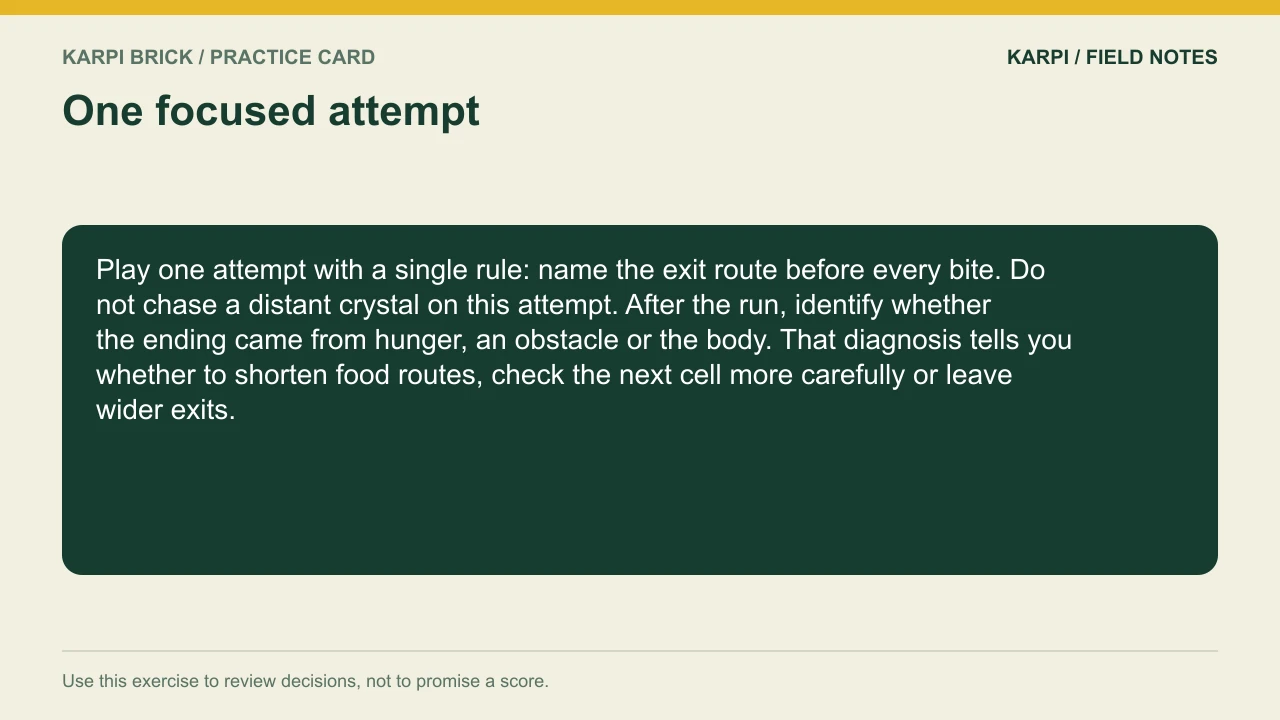
Play one attempt with a single rule: name the exit route before every bite. Do not chase a distant crystal on this attempt. After the run, identify whether the ending came from hunger, an obstacle or the body. That diagnosis tells you whether to shorten food routes, check the next cell more carefully or leave wider exits.
At the console | What to use |
|---|---|
Open this cartridge | |
Main controls | Arrows or WASD steer; Space uses JUMP. The four edges wrap. |
Pause | START/PAUSE on the console; Enter or P on a keyboard |
Journey | 75 levels across eight chapters; read the goal and two extras |
Take it to the board: Play Snake and test one decision from this guide. The advice describes the current cartridge rules; a practice exercise is not a guaranteed score or clear.
 Take it to the gameBrick GameSnake, Blocks, Racer and Tank on a 90s handheldPlay free
Read next
Why Your Snake Keeps Shrinking—and How to Survive Explore the full Karpi Brick Snake collection.