 KarpiGames Editorial
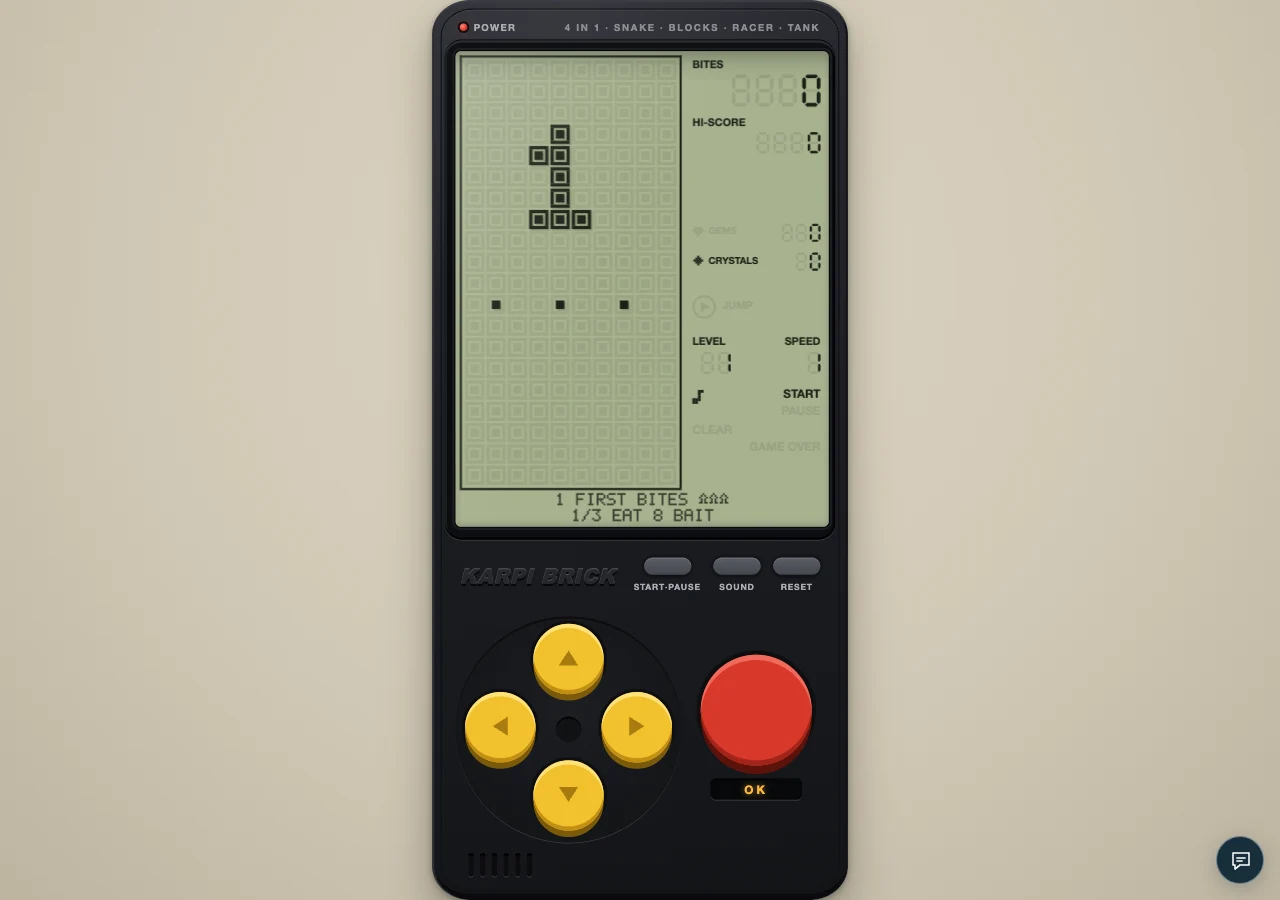
An authentic local capture of the cartridge. The visual guides below explain the decisions to look for.
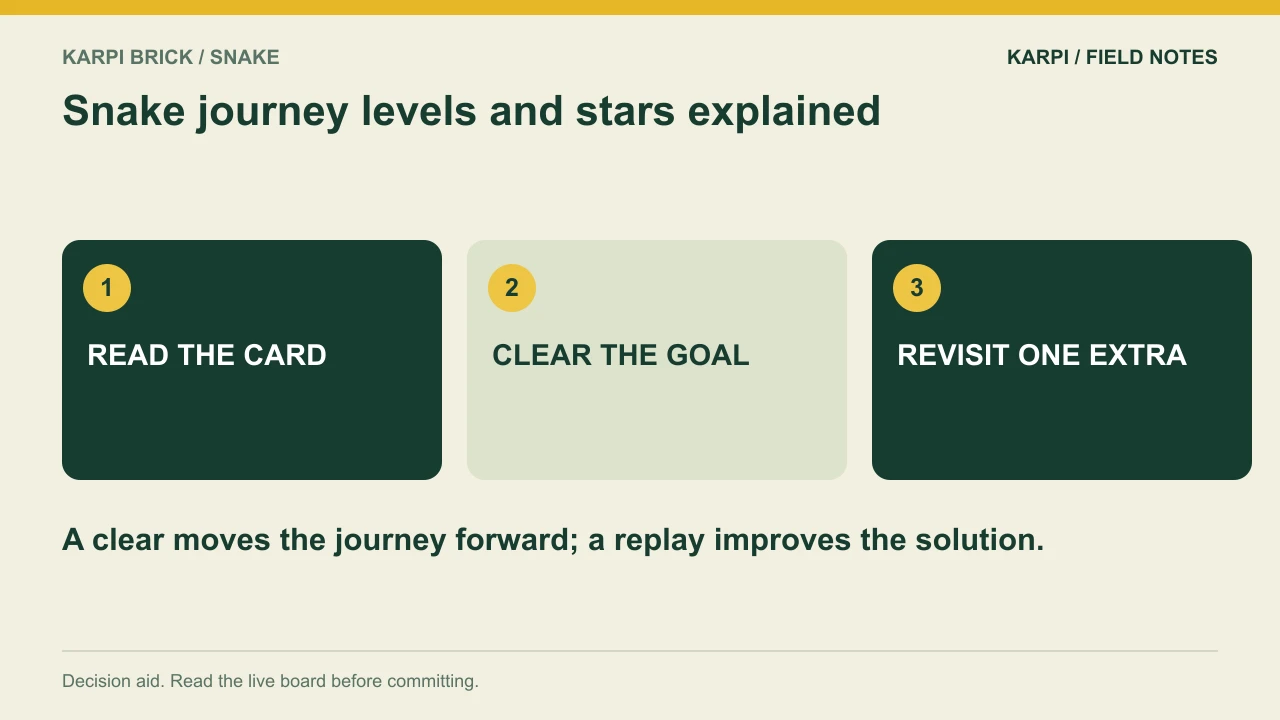
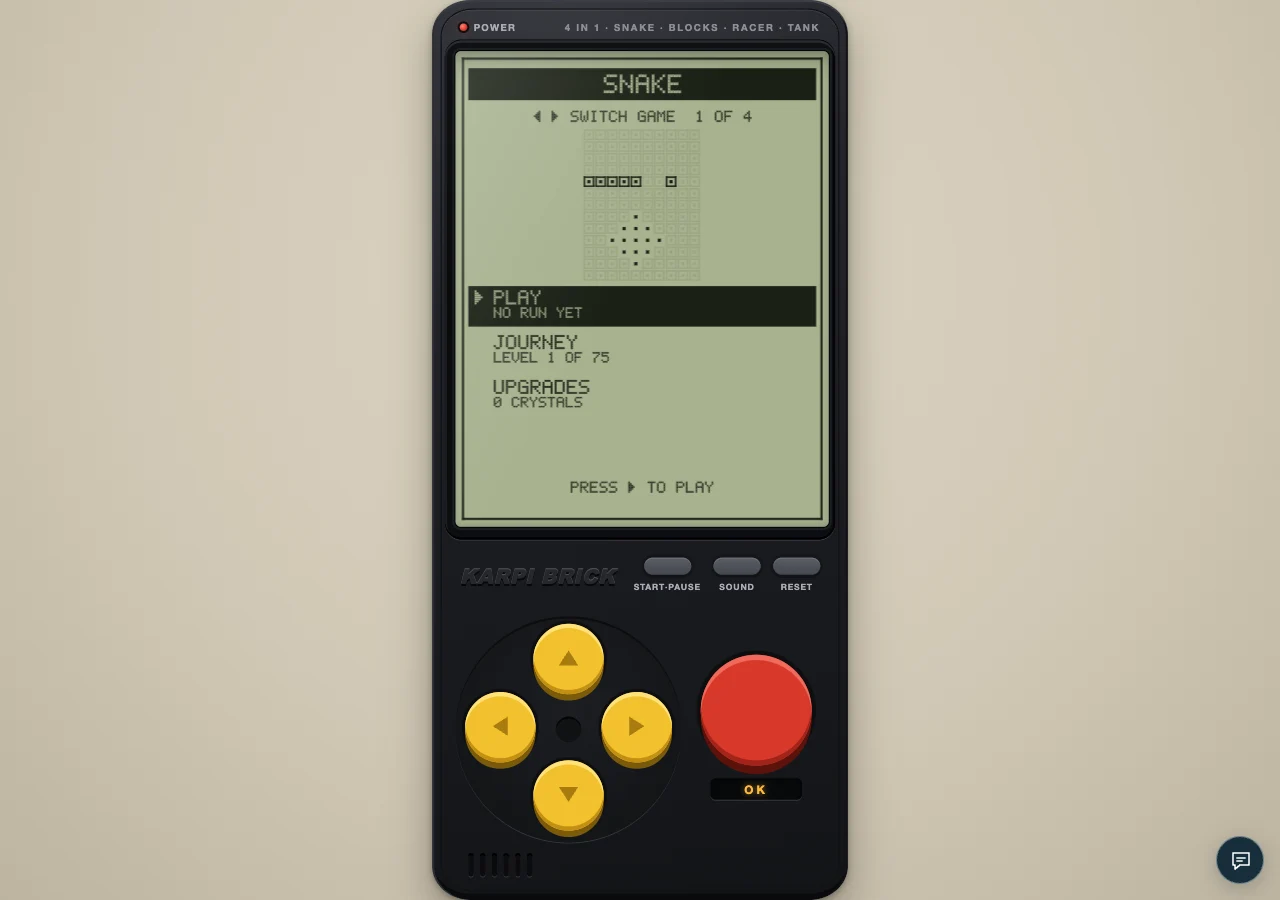
Snake's Journey has 75 levels across eight chapters. Clearing the main objective opens the next level; the extra objectives give you a reason to revisit it. Read the level card before playing so a good survival run does not distract you from the actual task.
A level is a particular problem
The journey moves through fields, pillars, portals, hunger, moving hazards, mazes, patterns and a finale. These are not just different pictures behind endless mode. Obstacles and objectives change the route you need. Begin by asking what ends this level successfully. A score habit that works in PLAY can be irrelevant when the card is asking for another measurable result.
Clear first, refine the route second
Trying to solve the main goal and every extra on the first attempt can make a new board harder to understand. Get a clean clear, then use what you learned to improve the route. The next level opens from the clear, so a missed extra is a reason to return rather than proof that you failed to progress. Repetition is especially helpful when the board has a predictable hazard pattern.
Stars need the right evidence
The level card states the objectives, and the result page tells you which ones you achieved. Read both. If you missed a time condition, look for detours; if you missed a food or length condition, examine the eating route. Do not change everything after one imperfect result. Pick the missed condition and make a specific adjustment on the next attempt.
A crystal should not hijack the attempt
Journey levels include a one-time crystal opportunity, but the visible reward is not always on the safest route to the objective. Decide whether the current attempt is for a clear, a star condition or collecting that crystal. You can make a more sensible route when the priority is explicit. Progression is easier to understand when you are not chasing every visible benefit at once.
Separate a navigation error from an objective error
A run can feel controlled and still miss the condition you meant to complete. That is an objective-reading problem. A run can also pursue exactly the right goal and fail because you entered a blocked lane. That is a navigation problem. Read the result with those possibilities apart. For an objective error, revisit the card and choose the counter to watch. For a navigation error, identify the specific approach that needs changing. Do not automatically buy an upgrade or switch to a different board when the missing information is already on the level card. A useful replay begins with a sentence such as: this time I am reducing the detour through the left side, or this time I am tracking the extra condition before taking the final bite. That makes the attempt a test of one decision.
A focused practice attempt
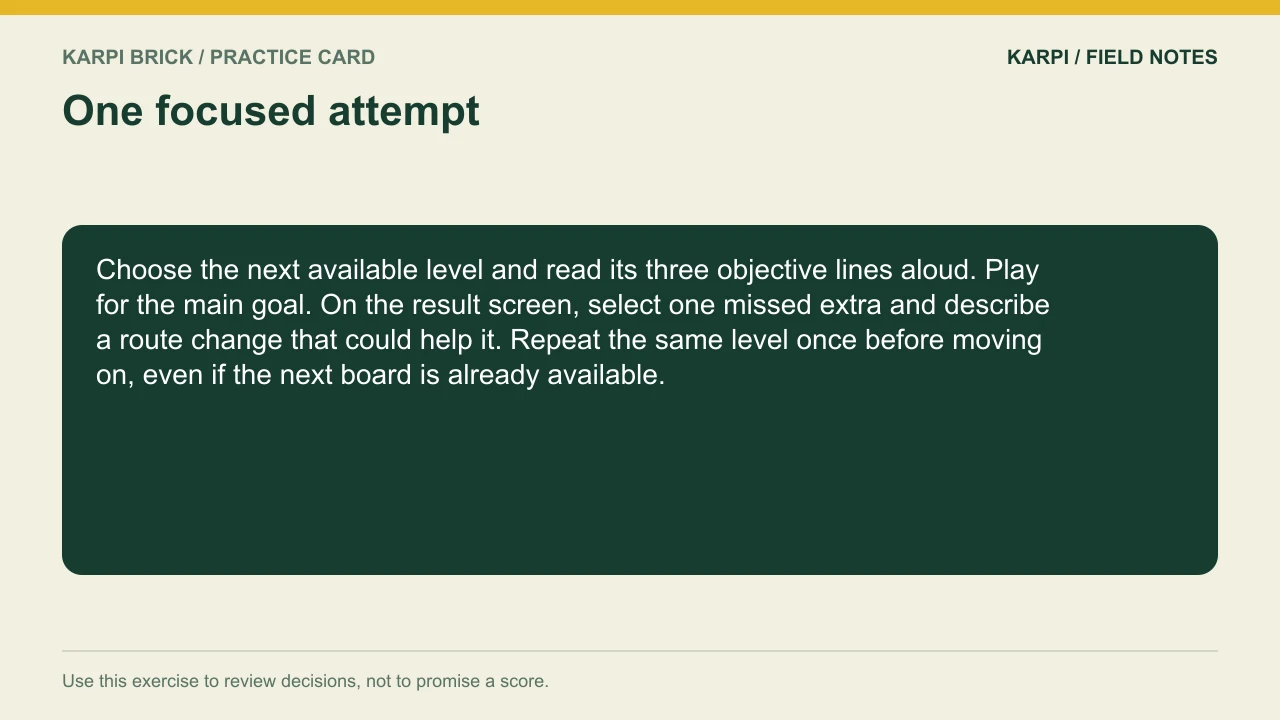
Choose the next available level and read its three objective lines aloud. Play for the main goal. On the result screen, select one missed extra and describe a route change that could help it. Repeat the same level once before moving on, even if the next board is already available.
At the console | What to use |
|---|---|
Open this cartridge | |
Main controls | Arrows or WASD steer; Space uses JUMP. The four edges wrap. |
Pause | START/PAUSE on the console; Enter or P on a keyboard |
Journey | 75 levels across eight chapters; read the goal and two extras |
Take it to the board: Play Snake and test one decision from this guide. The advice describes the current cartridge rules; a practice exercise is not a guaranteed score or clear.
 Take it to the gameBrick GameSnake, Blocks, Racer and Tank on a 90s handheldPlay free
Read next
Snake Feels Faster? Watch the Board, Not the Clock For the series starting point, read Karpi Brick Snake: The Tail Is a Clock.