 KarpiGames Editorial
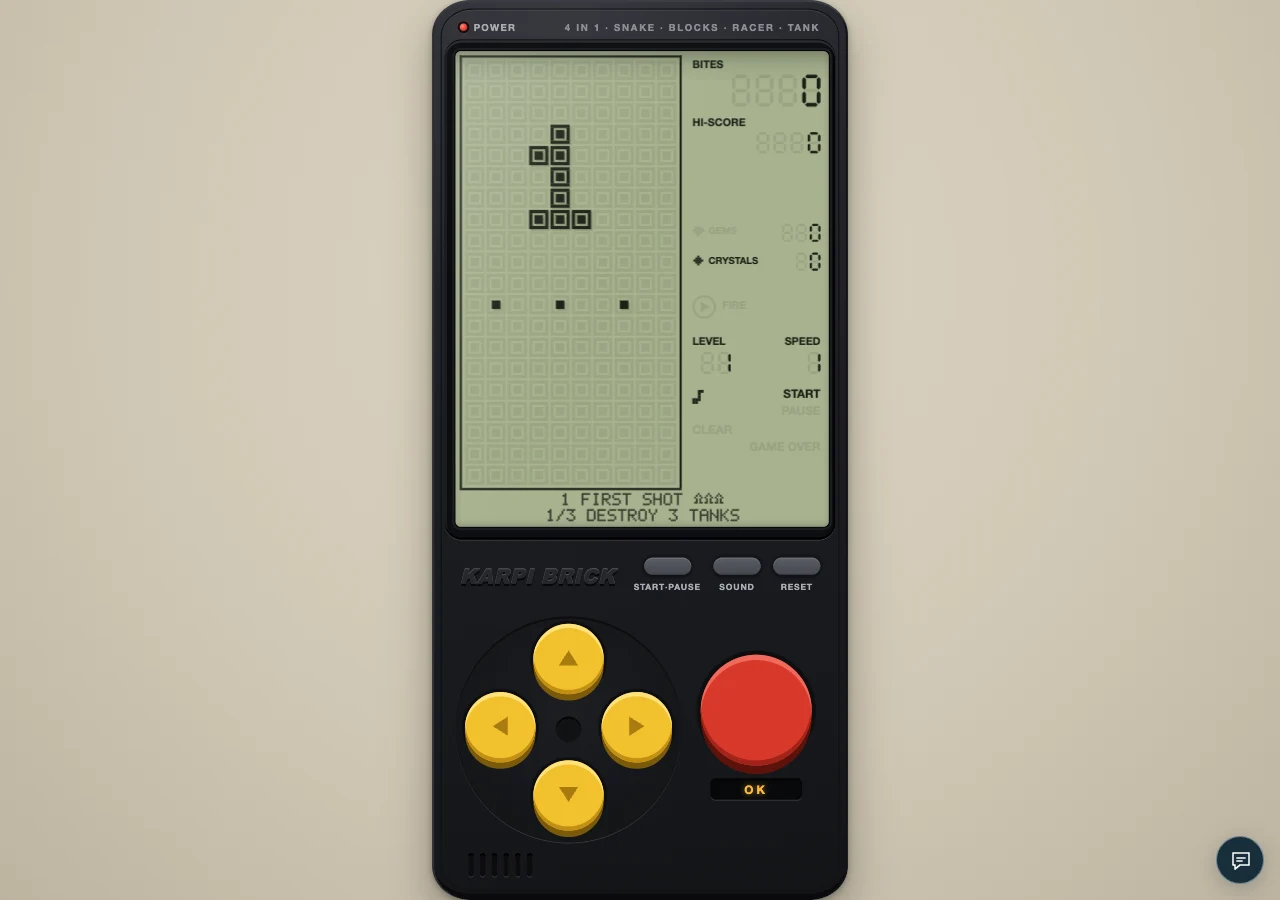
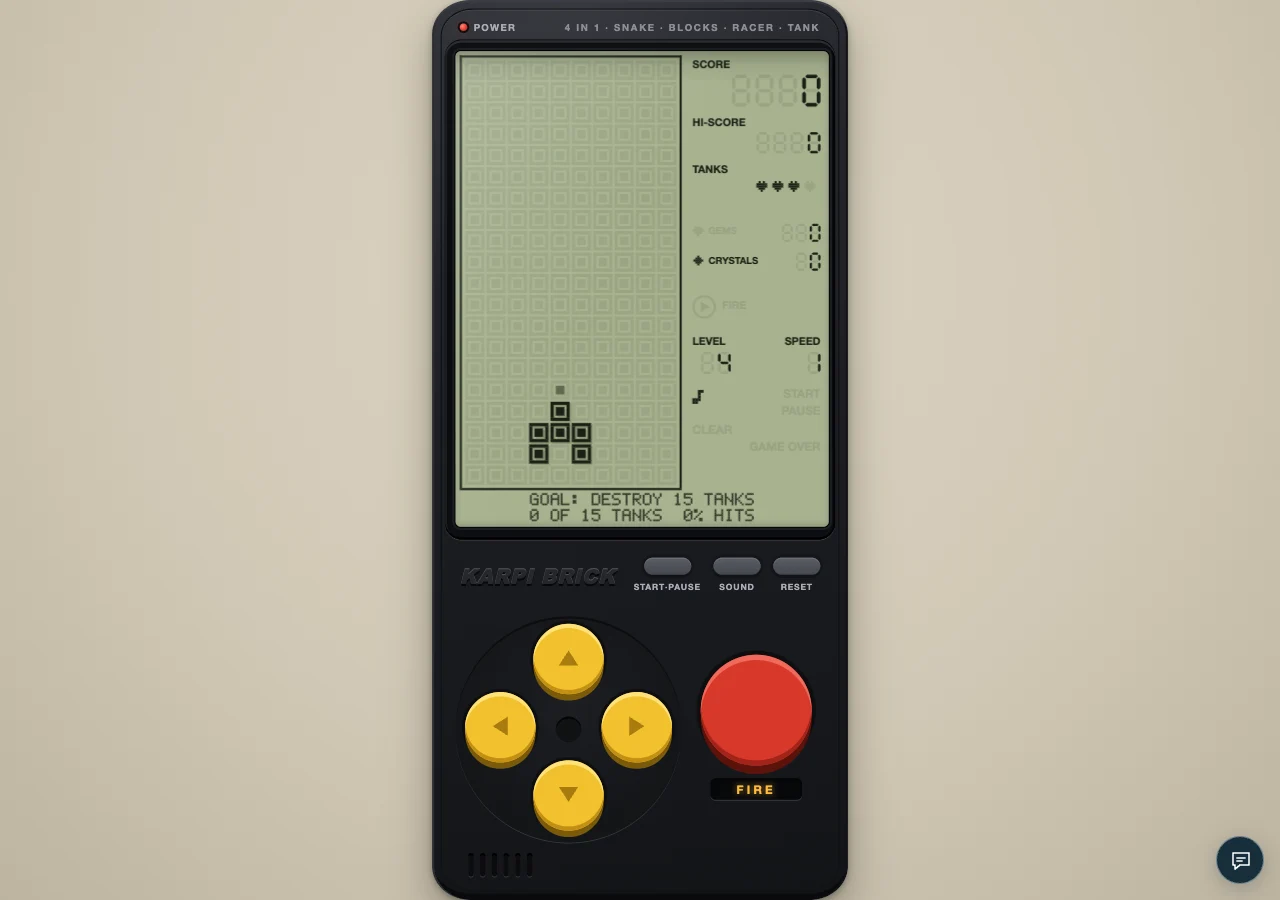
An authentic local capture of the cartridge. The visual guides below explain the decisions to look for.
Tank Journey contains twelve levels in three chapters: PATROL, SKIRMISH and ASSAULT. The cards alternate destruction and survival tasks, with extras for accuracy, speed and conserving lives. Read the goal before choosing how aggressively to play.
PATROL teaches the basic exchange
FIRST SHOT begins with a small destroy-count goal. The opening chapter then introduces accuracy and survival conditions. Use these levels to learn turning, movement and the one-shell firing limit. If a shot goes the wrong direction or a dodge only rotates the tank, the lesson belongs here before enemy pressure rises.
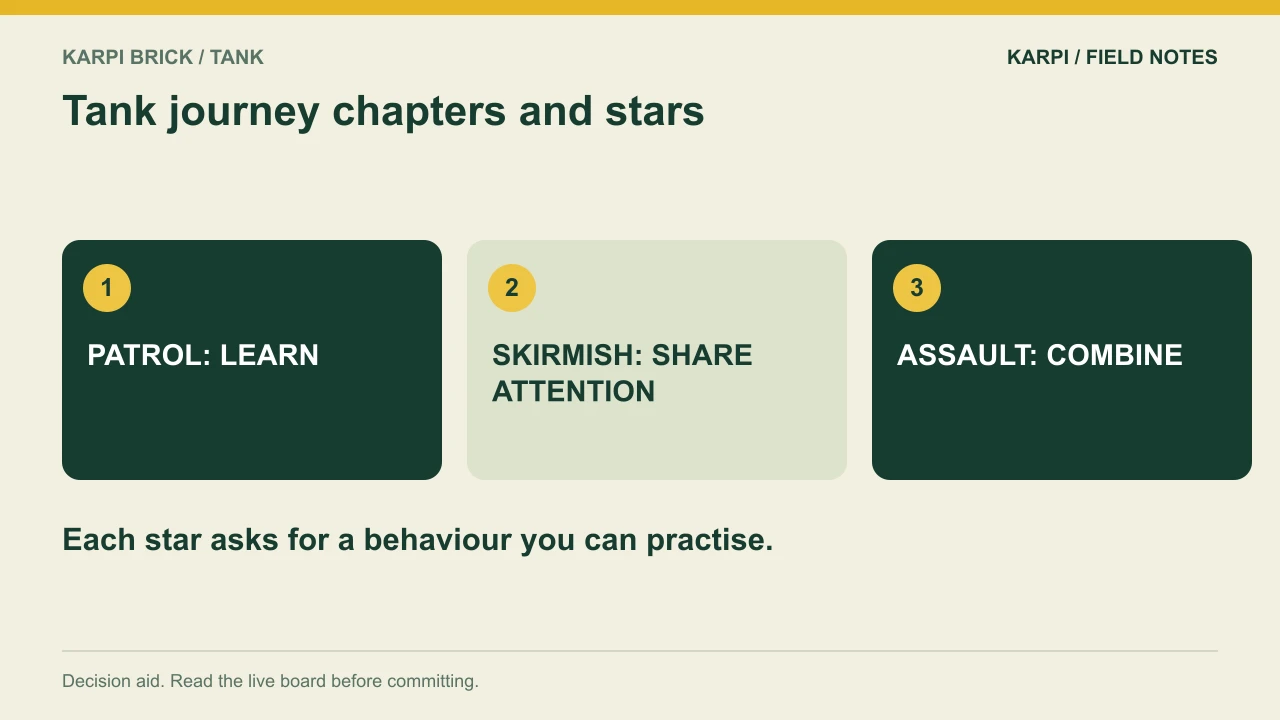
SKIRMISH asks you to share attention
The middle chapter starts at higher difficulty and mixes longer survival with larger destroy counts. CROSSFIRE asks for a minute alive; THREE FRONTS adds no-loss and accuracy extras. You need to observe several lanes while deciding whether to attack. Watching only your own shell becomes increasingly expensive.
ASSAULT combines the habits
The final chapter introduces tougher starts, demanding accuracy and longer survival. MARKSMAN makes shot selection explicit. SIEGE asks for 90 seconds. TANK COMMANDER starts with two lives and a twenty-tank goal. The challenge is not a new button; it is using the known controls while more information competes for attention.
Treat stars as specific follow-up tasks
After clearing, read which extras remain. A speed extra suggests more efficient attacks; an accuracy extra suggests fewer speculative shots; a no-loss extra suggests better exits. These can pull the run in different directions. Practise them separately before expecting one attempt to satisfy every condition.
Compare SHARP EYE with HOLD THE LINE
Both levels sit in the opening chapter, but they reward different finishing decisions. SHARP EYE asks for eight destructions, with extras for 60% accuracy and a finish within 90 seconds. Once the eighth kill is recorded, the main task is complete; there is no reason to wait for a long survival clock. HOLD THE LINE instead asks for 45 seconds alive, with extras for five kills and no life lost. Destroying five enemies early does not end that stage.
Use that comparison when choosing a replay. If you need to practise selecting a shot without taking forever, SHARP EYE gives a useful accuracy-and-time combination. If you keep getting hit after a successful attack, HOLD THE LINE asks you to maintain defence after enough kills are already on the board. Later chapters amplify these same distinctions with tougher starting conditions. The progression is easier to understand when you sort levels by their main verb rather than treating every higher number as the same fight with more targets.
A level number is not the current difficulty
Journey stage ten is MARKSMAN, but it starts at Tank difficulty four, not ten. The stage number identifies its card and place in the journey; the difficulty setting controls enemy pressure within the run. Further kills can increase that setting during the attempt. Similarly, LAST STAND and TANK COMMANDER begin with two lives while most stages begin with three. If two nearby cards feel surprisingly different, compare starting difficulty, lives and the goal before assuming your skill suddenly improved or declined.
A focused practice attempt
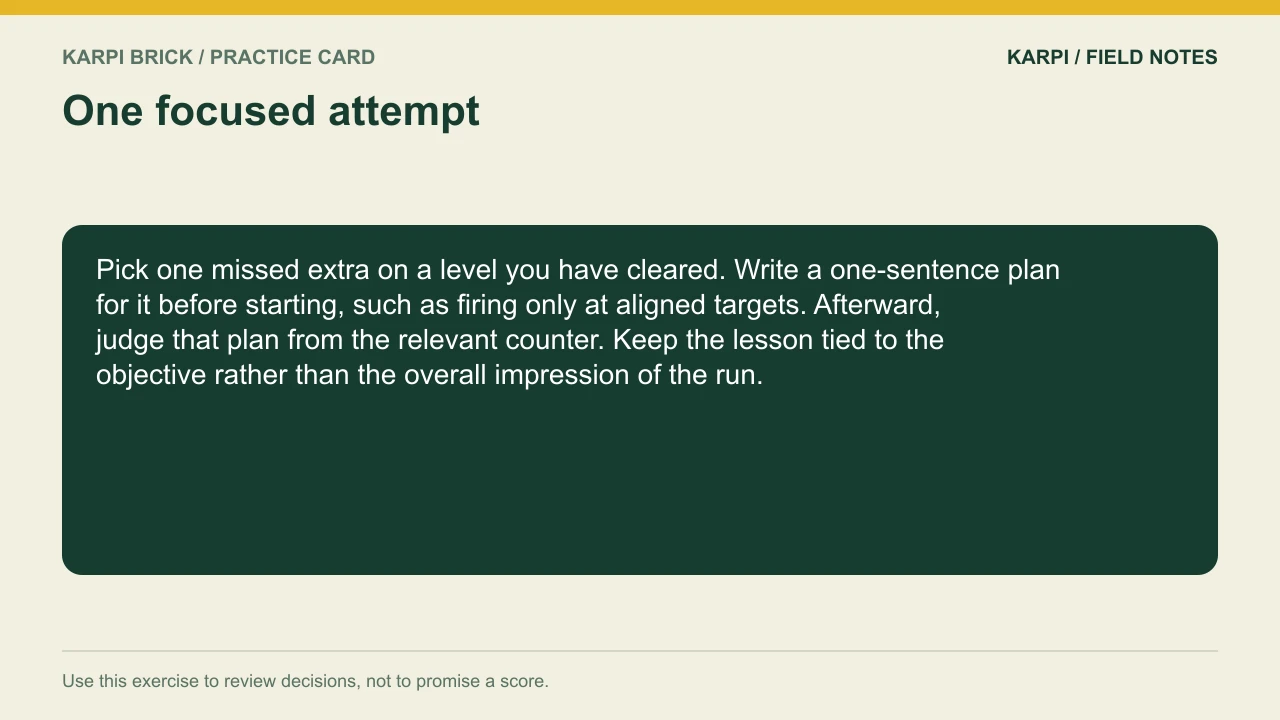
Pick one missed extra on a level you have cleared. Write a one-sentence plan for it before starting, such as firing only at aligned targets. Afterward, judge that plan from the relevant counter. Keep the lesson tied to the objective rather than the overall impression of the run.
At the console | What to use |
|---|---|
Open this cartridge | |
Main controls | A new direction turns the tank first; another input in that direction moves it. Space or the red key fires. |
Pause | START/PAUSE on the console; Enter or P on a keyboard |
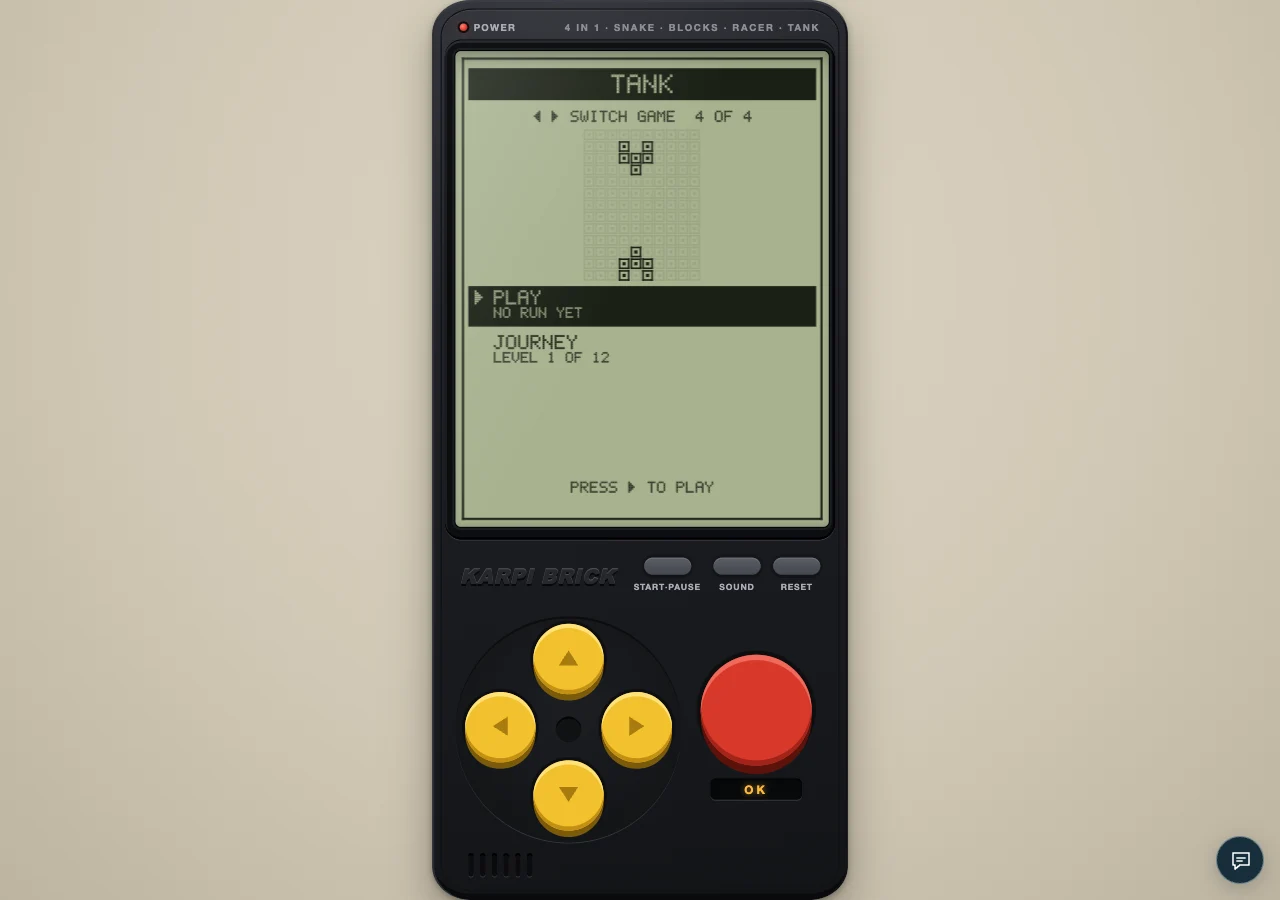
Journey | 12 levels across three chapters; read the goal and two extras |
Take it to the board: Play Tank and test one decision from this guide. The advice describes the current cartridge rules; a practice exercise is not a guaranteed score or clear.
 Take it to the gameBrick GameSnake, Blocks, Racer and Tank on a 90s handheldPlay free
Read next
Tank on a Phone: Give Each Thumb a Clear Job For the series starting point, read Karpi Brick Tank: Aim First, Then Make Room.