 KarpiGames Editorial
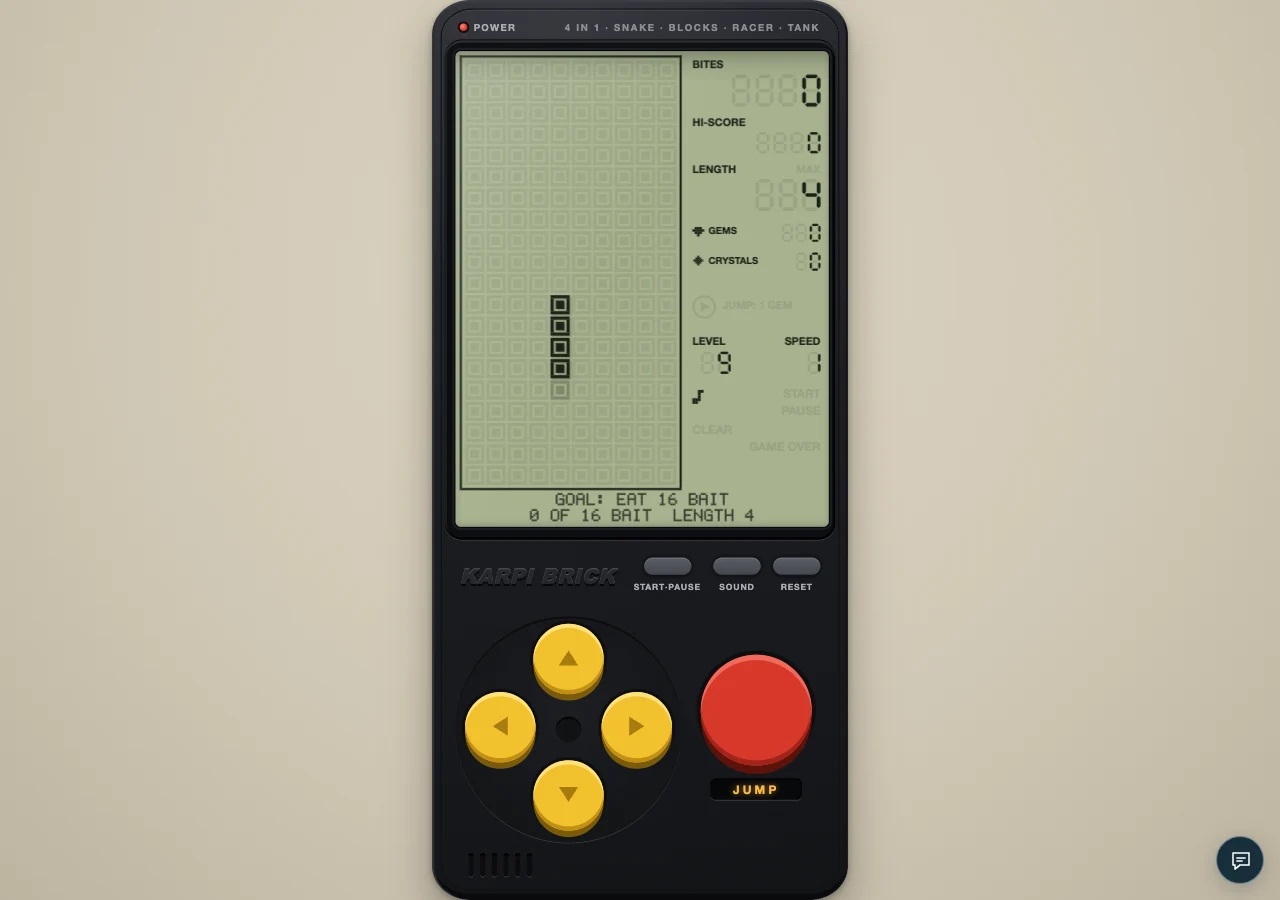
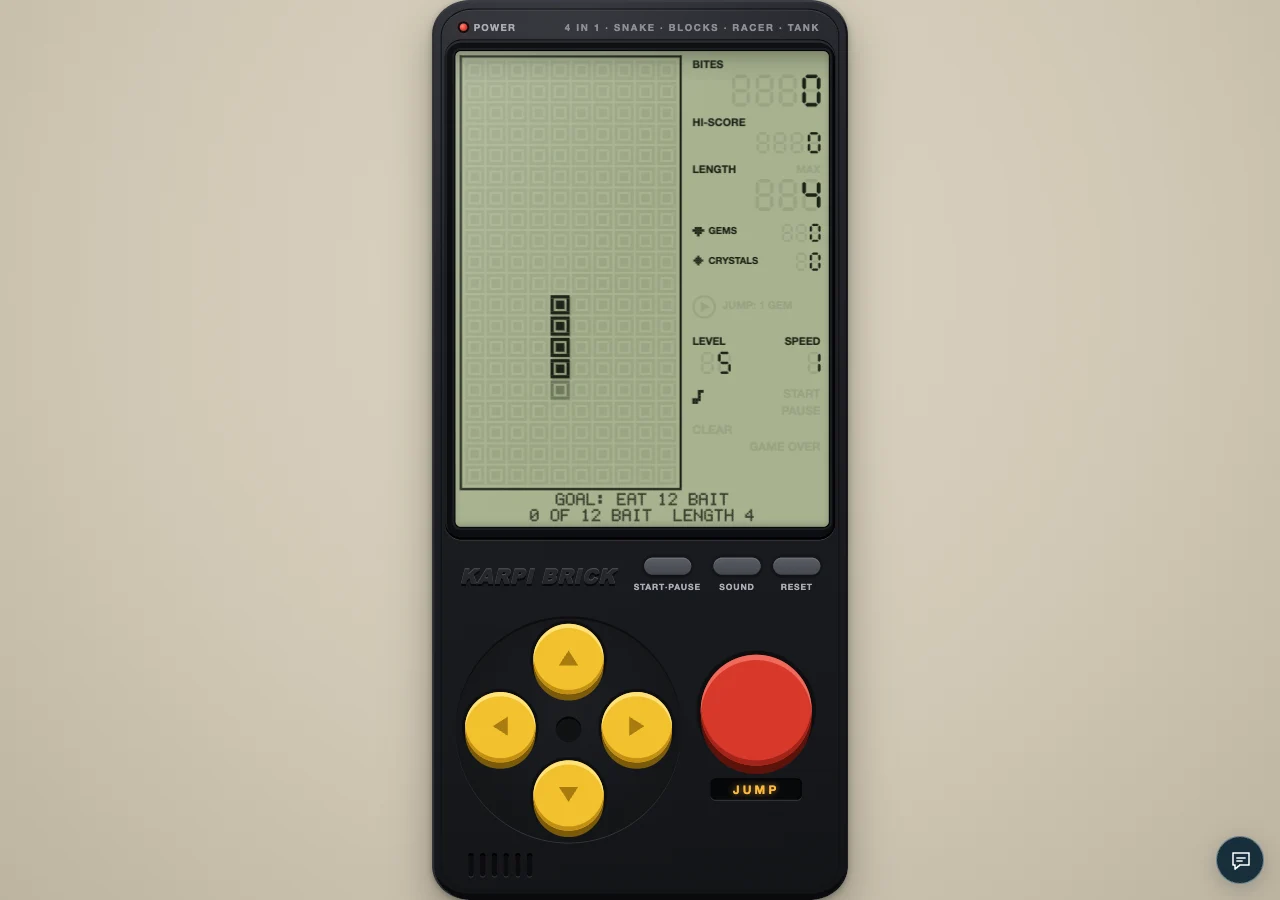
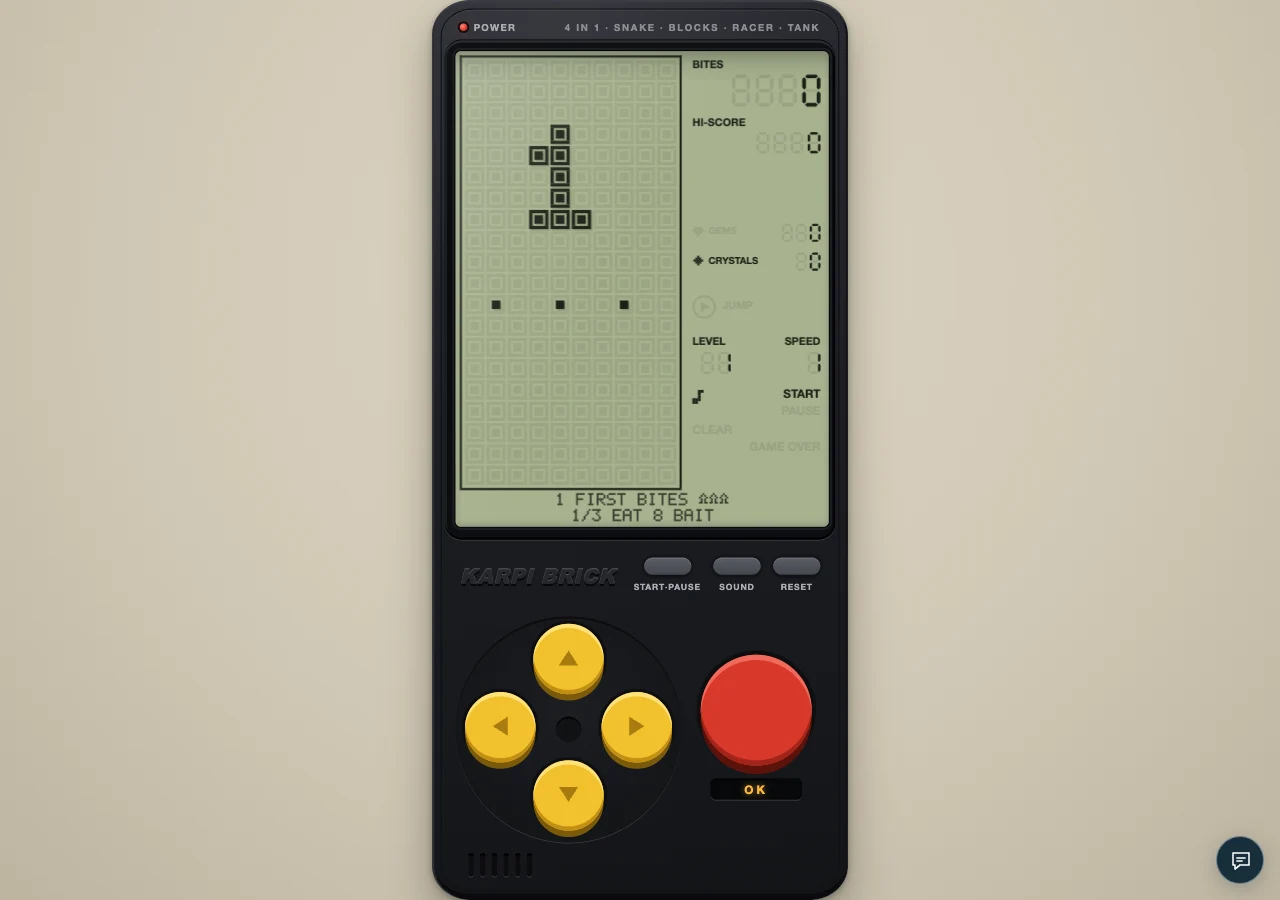
An authentic local capture of the cartridge. The visual guides below explain the decisions to look for.
The snake moves one cell every 210 milliseconds in the current rules. That pace stays fixed across modes and levels. If a run suddenly feels faster, look at food placement, body length and hazards: those change the number of decisions you need to make.
Pressure can rise without acceleration
More things can demand attention during the same number of moves. Food can accumulate, a longer body can occupy familiar routes, and a journey obstacle can remove an easy turn. Your fingers experience the extra decisions as urgency. Separating that feeling from movement speed helps you diagnose the real problem instead of trying to press every key faster.
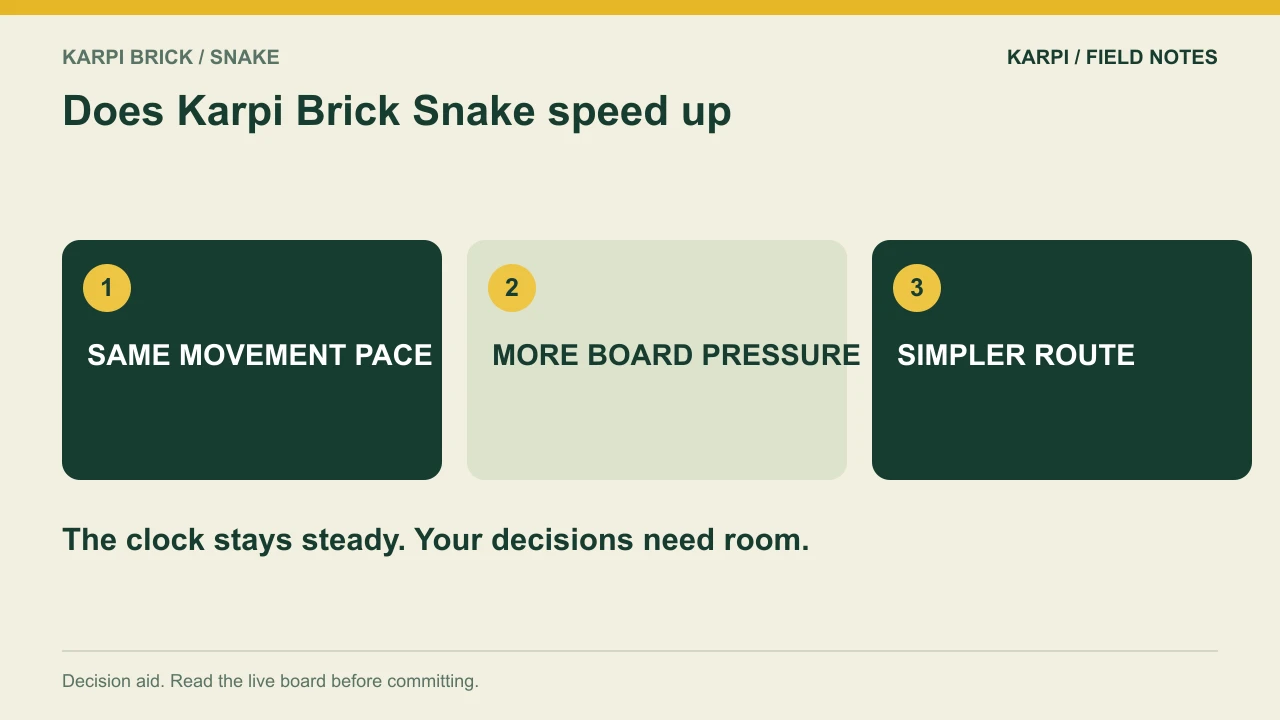
A familiar loop can stop being useful
An early route may comfortably pass near each food. Later, the useful targets and available corridors may be different. Continuing the loop can waste the life remaining in the tail. Reassess when you eat, when a segment expires and when a hazard changes the path. Keep the movement rhythm; change the route rather than assuming the game demands frantic input.
Queued turns reward clear intentions
The console can remember a small queue of turns between movement steps. That makes deliberate cornering possible, but random extra taps can leave you unsure which turn is next. Make each input correspond to a cell or corner you have identified. If you cannot explain the next two moves, simplify the route until you can. More input is not the same as more control.
Reduce the decisions per bite
A direct lane with an obvious exit is easier to execute than a zigzag through several tight corners. When the board feels busy, favour plans that require fewer decisions during the approach. Wrapping may provide such a lane, but check its destination. The goal is to make the fixed rhythm work for you, not to prove you can survive the most complicated route.
Test the feeling with the same corner
Choose a familiar corner that you can reach safely on an early journey board. Notice the steady interval between cells as the head approaches and turns. Then watch the same basic movement in a busier attempt. The physical rhythm remains steady, while the number of things competing for attention increases. If you begin pressing several directions at once, the problem may be that your plan is arriving too late. Move the decision earlier: identify the exit before entering the corner, then let the known rhythm carry the head through. This is not a promise that every board becomes easy. It is a way to spend effort on the variable that actually changed. Better anticipation can help; training for a nonexistent speed ramp cannot explain the obstacle you overlooked.
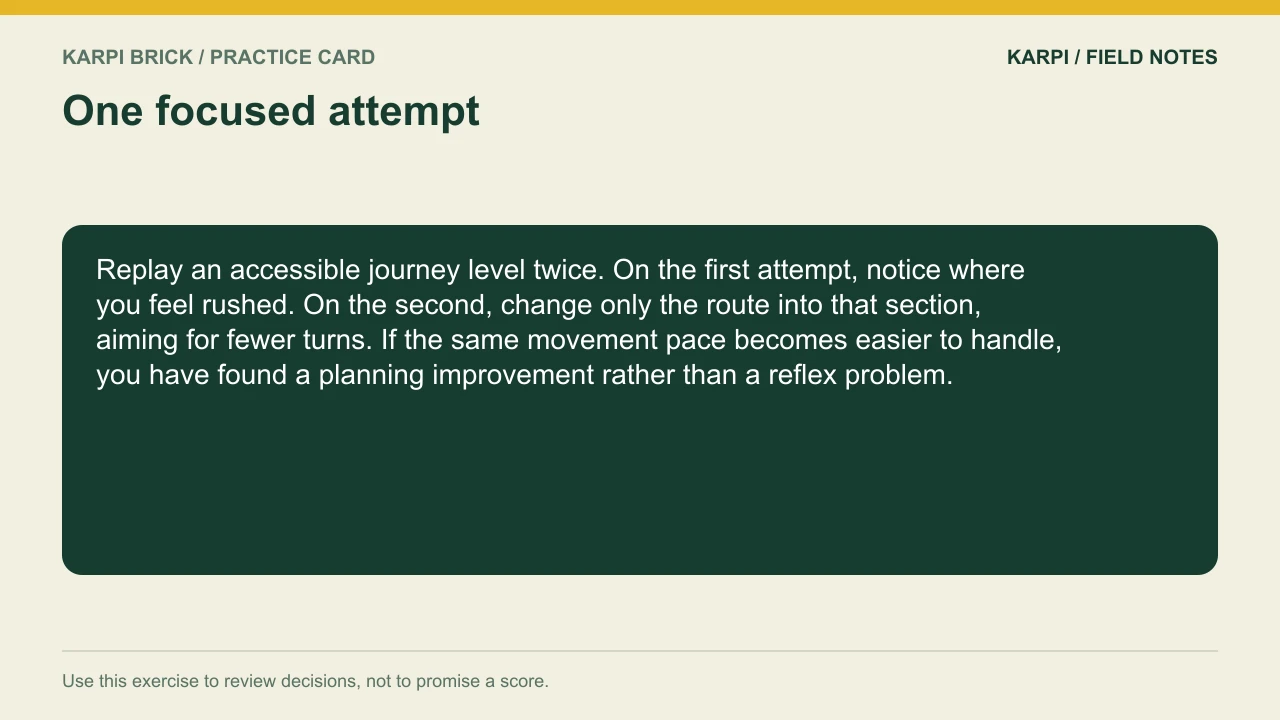
A focused practice attempt
Replay an accessible journey level twice. On the first attempt, notice where you feel rushed. On the second, change only the route into that section, aiming for fewer turns. If the same movement pace becomes easier to handle, you have found a planning improvement rather than a reflex problem.
At the console | What to use |
|---|---|
Open this cartridge | |
Main controls | Arrows or WASD steer; Space uses JUMP. The four edges wrap. |
Pause | START/PAUSE on the console; Enter or P on a keyboard |
Journey | 75 levels across eight chapters; read the goal and two extras |
Take it to the board: Play Snake and test one decision from this guide. The advice describes the current cartridge rules; a practice exercise is not a guaranteed score or clear.
 Take it to the gameBrick GameSnake, Blocks, Racer and Tank on a 90s handheldPlay free
Read next
The Bite Was Safe. The Exit Wasn't: Snake Trap Guide For the series starting point, read Karpi Brick Snake: The Tail Is a Clock.