 KarpiGames Editorial
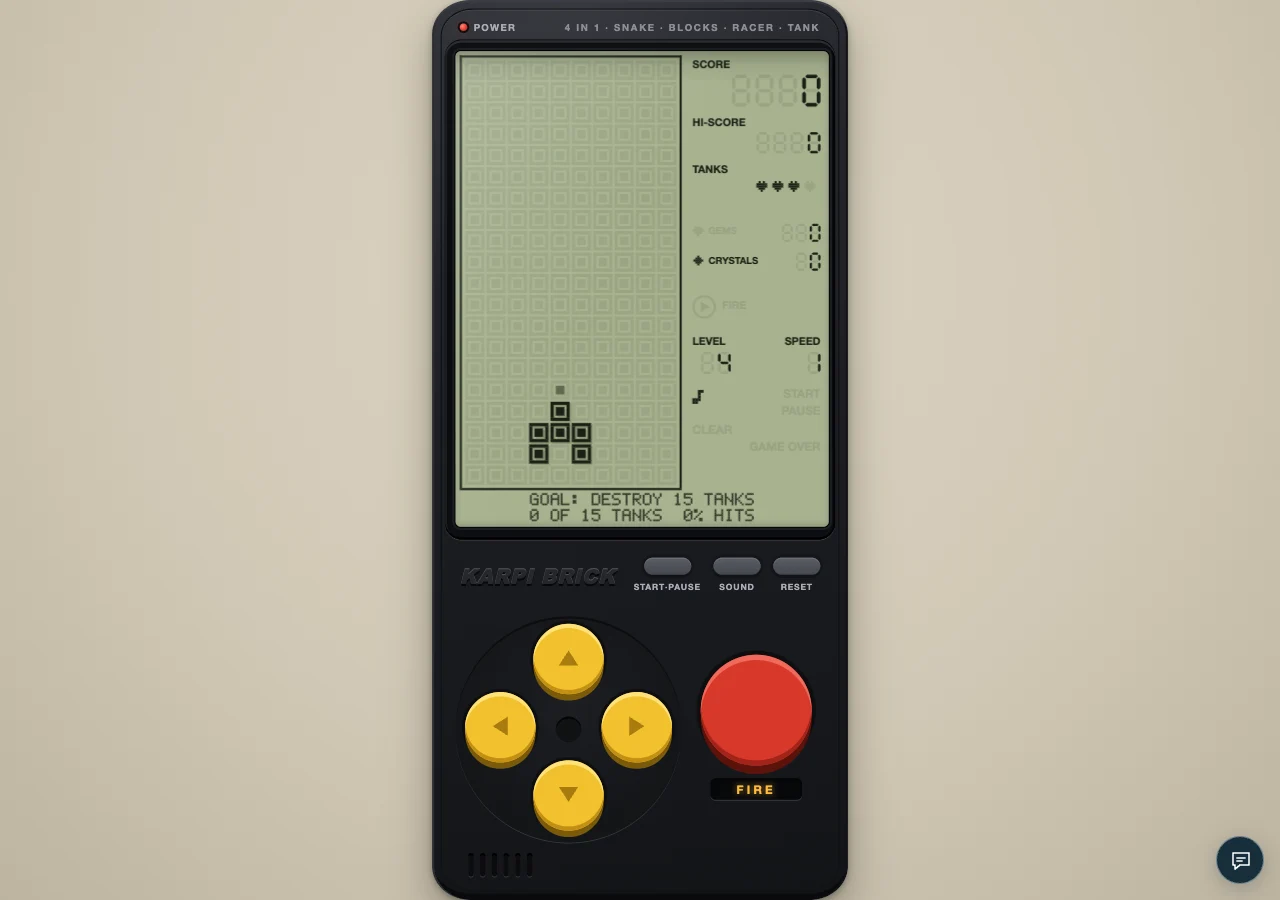
An authentic local capture of the cartridge. The visual guides below explain the decisions to look for.
TANK COMMANDER is the twelfth Tank journey stage. It begins at difficulty level six with two lives and asks you to destroy twenty enemies. The extras require at least 60% accuracy and no life lost, so every rushed shot and cramped escape matters.
The first exchange already matters
The stage starts well above the opening difficulty. Do not use the first enemies as a warm-up you can afford to ignore. Read the entry lanes and establish a position with an escape. With only two starting lives, an early hit removes a large part of the attempt's margin even if the main clear remains possible.
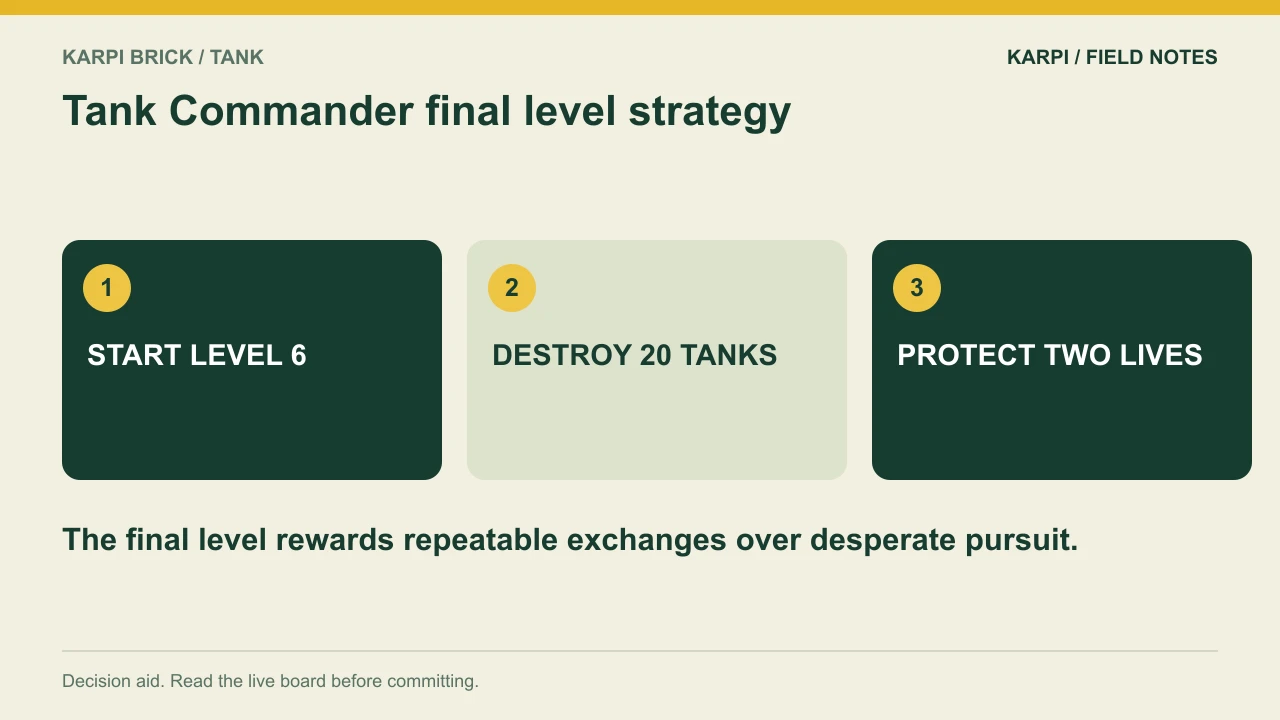
Twenty targets are a sequence of safe exchanges
The total can encourage aggressive chasing. Instead, solve the current shot and the movement after it. Destroying an enemy while exposing the tank to an unavoidable return shell is a poor exchange when life preservation is an extra. Keep a route available while your one shell is travelling.
Accuracy asks you to refuse some shots
A visible enemy is not always a useful target. It may be moving out of alignment or sitting beyond a lane you cannot safely hold. Wait for a clearer shot when the board allows it. The 60% condition rewards consistency across the attempt, so several hopeful misses can make the end more demanding.
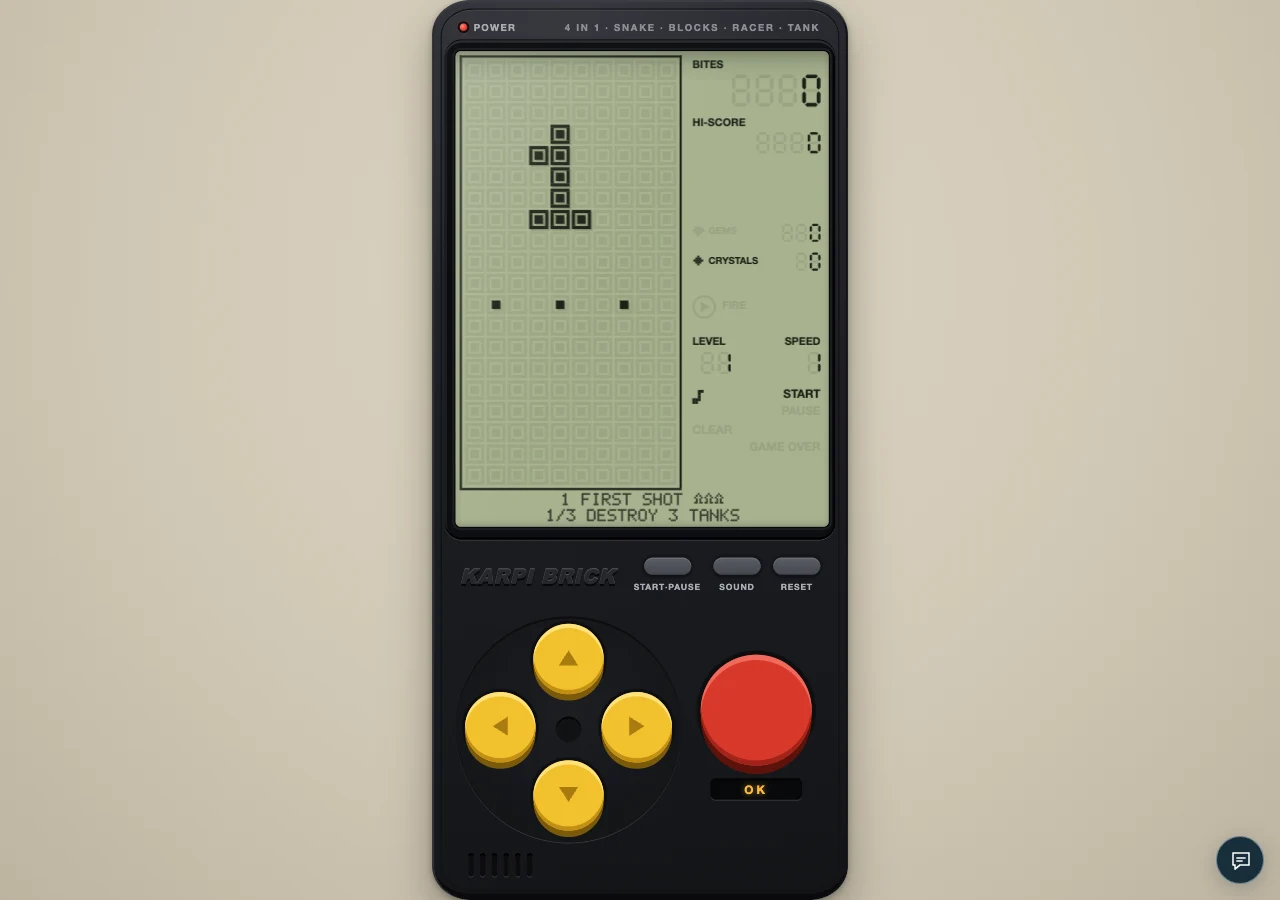
Build toward the full result
First learn to reach twenty destructions. Then work on accuracy and life preservation with the same opening route. A repeatable beginning gives you something to compare. If each attempt starts with unrelated frantic movement, it is hard to identify whether the improvement came from better decisions or a fortunate exchange.
Twenty kills still include difficulty changes
TANK COMMANDER starts at difficulty six. Reaching eight kills takes the run to seven; sixteen takes it to eight. The final four targets therefore arrive in a different setting from the first exchange, even though the enemy cap was already at four at the start. Spawn and firing opportunities become more frequent within their configured limits. Do not assume that learning the opening solves the entire stage; preserve attention for how the pressure changes late in the attempt.
The accuracy extra is 60%. At the twenty-kill finish, twenty hits from thirty-three launched shots rounds to 61%, while twenty from thirty-four rounds to 59%. Thirty-three is therefore a useful upper shot count for that condition on a normal completed run. It leaves room for some misses, but not endless hopeful fire. Keep the budget in mind between exchanges, then return your gaze to the board. The no-life-lost extra is separate and cannot be restored by improving the percentage after taking a hit.
How to review a failed final attempt
Identify where the run changed character: before eight kills, between eight and sixteen, or after sixteen. An early hit suggests the opening position needs work. Later trouble may reflect the increased pressure, a shot budget lost to speculative firing, or movement into a cramped edge. Change one of those causes on the replay. With two starting lives, the first hit leaves a chance to complete the main goal, so continuing can reveal the late pattern even when a no-loss result is no longer possible.
A focused practice attempt
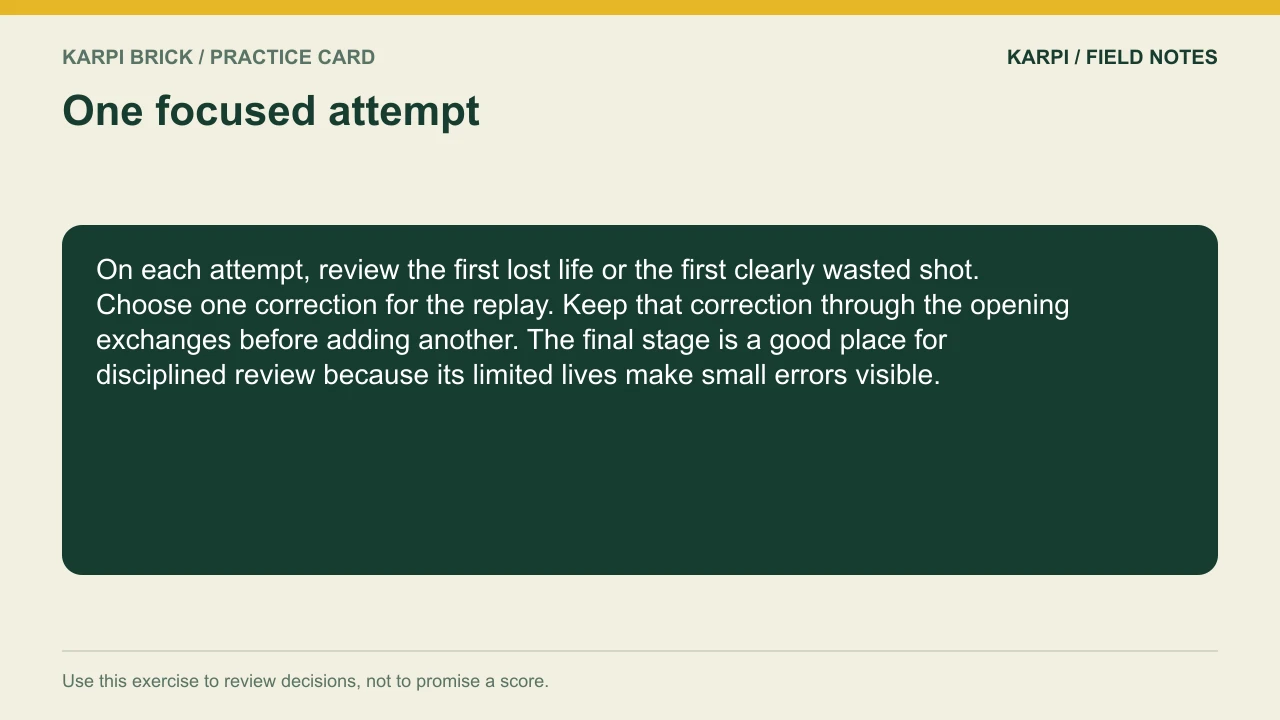
On each attempt, review the first lost life or the first clearly wasted shot. Choose one correction for the replay. Keep that correction through the opening exchanges before adding another. The final stage is a good place for disciplined review because its limited lives make small errors visible.
At the console | What to use |
|---|---|
Open this cartridge | |
Main controls | A new direction turns the tank first; another input in that direction moves it. Space or the red key fires. |
Pause | START/PAUSE on the console; Enter or P on a keyboard |
Journey | 12 levels across three chapters; read the goal and two extras |
Take it to the board: Play Tank and test one decision from this guide. The advice describes the current cartridge rules; a practice exercise is not a guaranteed score or clear.
 Take it to the gameBrick GameSnake, Blocks, Racer and Tank on a 90s handheldPlay free
Read next
Karpi Brick Tank: Aim First, Then Make Room For the series starting point, read Karpi Brick Tank: Aim First, Then Make Room.