 KarpiGames Editorial
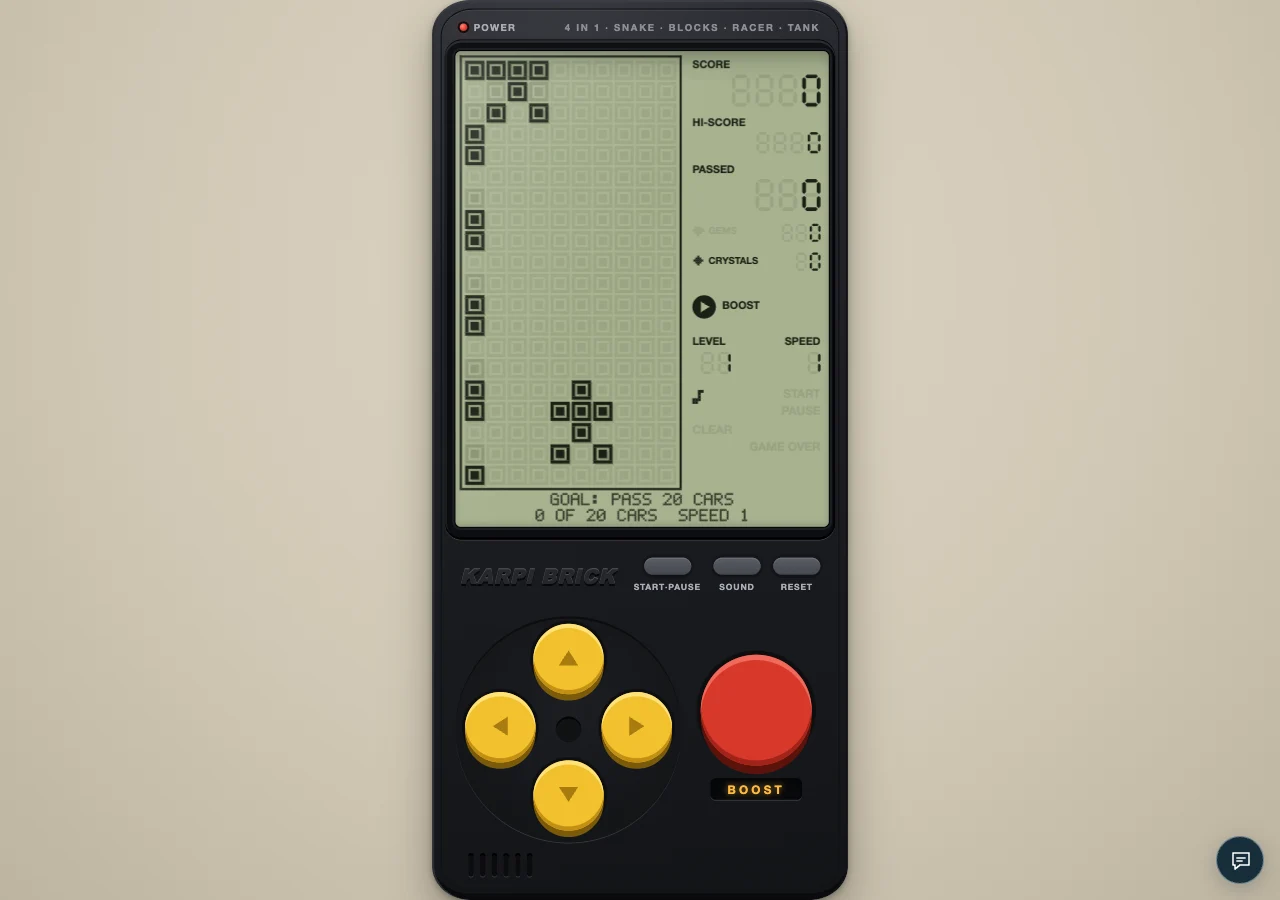
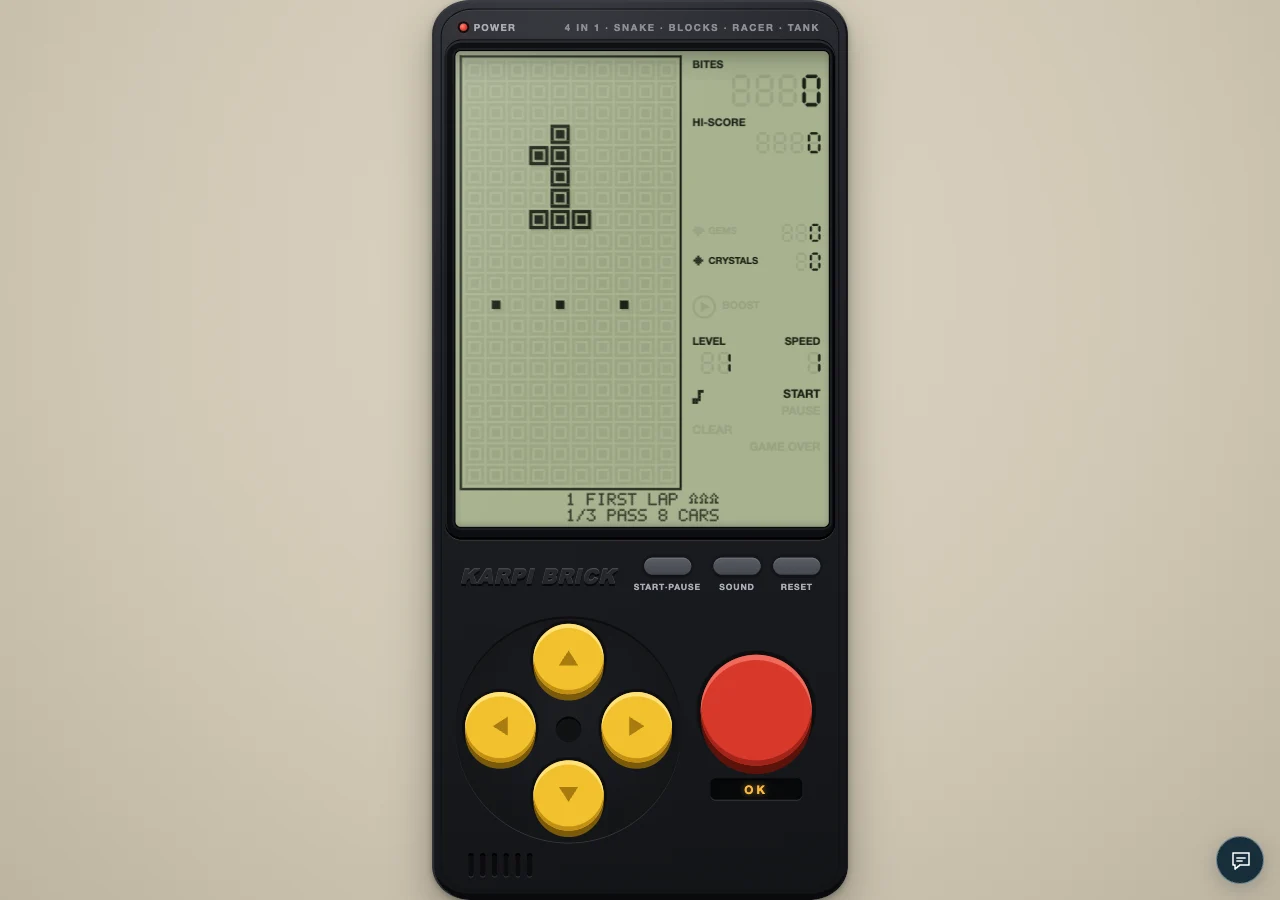
An authentic local capture of the cartridge. The visual guides below explain the decisions to look for.
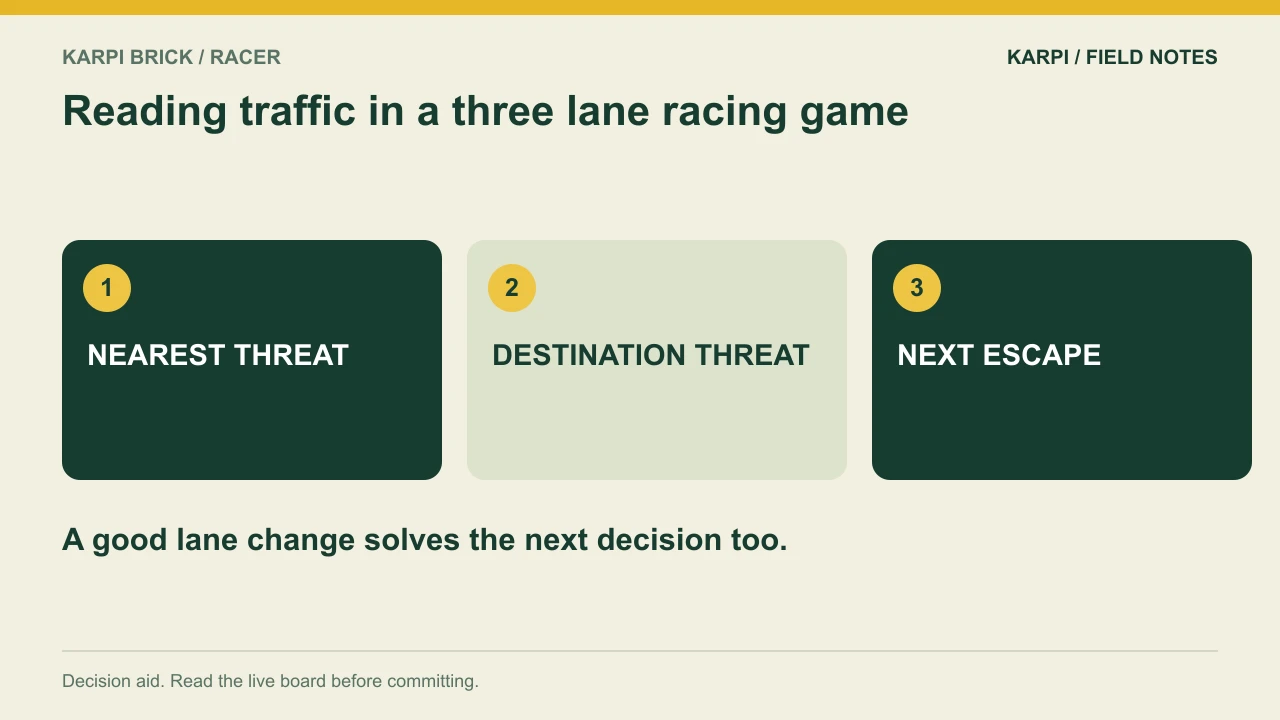
Dodging the nearest car is only half a Racer decision. The destination lane may contain the next threat. Look at the first car you need to avoid and the car that will matter after the move, then choose the route through both.
The obvious gap can be temporary
A space beside the player looks inviting when traffic fills the current lane. Before moving into it, scan upward. If another car is already approaching that lane, you may need a second change soon. That can still work, but it should be part of the plan rather than an unpleasant discovery at the bottom of the screen.
Move for a reason
Repeated left-right steering can create avoidable risk. Each move should answer a visible problem: a blocked lane, a future pair or a better path through the next group. If the current lane remains usable, staying there preserves time to read. Activity is not a measure of skill; keeping a route available is.
Think about the next escape
The middle lane offers access to either side, but it is not automatically the safest place. A side lane can be clear for longer, while the centre can be crowded. Judge the incoming pattern. Prefer positions that leave a plausible next move after the nearest traffic has passed, rather than selecting a lane by habit.
Reassess after each pass
Traffic patterns change as the road advances and speed rises. Once a car goes past, the next car becomes the immediate problem. Use that moment to update your plan. Holding an old decision for too long is a common way to turn a clean pass into the next collision.
A two-car decision from the middle lane
Picture a car approaching your middle lane, a second car farther back in the left lane, and the right lane clear near the player. A left move would solve the first problem but create another soon afterward. A right move may leave a longer usable stretch. That is the value of reading two cars: both moves escape the nearest obstacle, yet they produce different next decisions.
Now change one detail. An older car is still alongside you in the right lane. The right-hand route is attractive in the distance but unavailable immediately. You must account for that older car before moving, rather than treating the empty upper road as permission. If the middle threat is still far enough away, waiting for the older car to clear can open the route. If not, the left gap may be the available choice. This is an illustrative arrangement, not a guaranteed sequence for a particular level; the rule is to compare threats at several heights.
The trap of returning to centre automatically
A successful dodge often triggers an unnecessary second move: you leave the middle, then immediately return because it feels like the default lane. That return can meet the same car's trailing cells or the next arrival. Review the second input, not only the first. Ask what visible threat required the return and whether the destination was already clear. Staying on a side is acceptable when the incoming road supports it. The middle is a useful option, not a compulsory reset position between passes.
A focused practice attempt
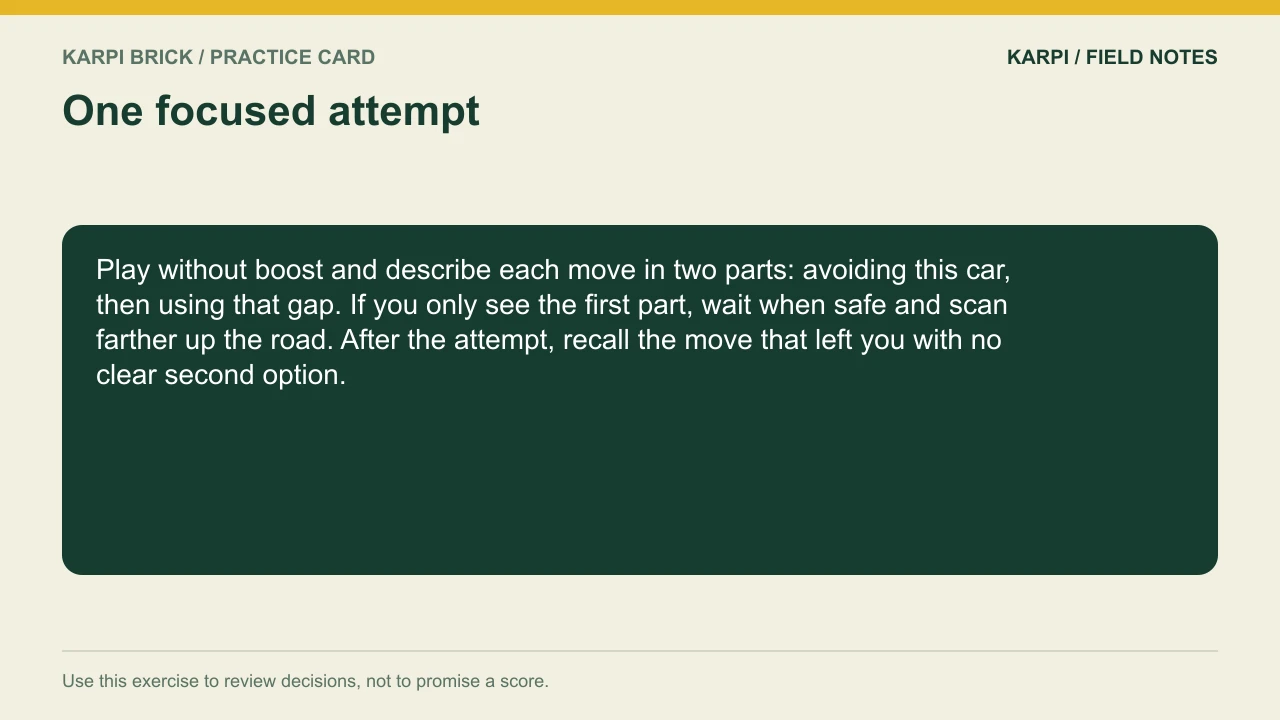
Play without boost and describe each move in two parts: avoiding this car, then using that gap. If you only see the first part, wait when safe and scan farther up the road. After the attempt, recall the move that left you with no clear second option.
At the console | What to use |
|---|---|
Open this cartridge | |
Main controls | Left/right change lanes; Space or the red key boosts. Read the destination lane before moving. |
Pause | START/PAUSE on the console; Enter or P on a keyboard |
Journey | 12 levels across three chapters; read the goal and two extras |
Take it to the board: Play Racer and test one decision from this guide. The advice describes the current cartridge rules; a practice exercise is not a guaranteed score or clear.
 Take it to the gameBrick GameSnake, Blocks, Racer and Tank on a 90s handheldPlay free
Read next
Racer Speed Levels: Why the Road Suddenly Closes In For the series starting point, read Karpi Brick Racer: Three Lanes, One Way Through.