 KarpiGames Editorial
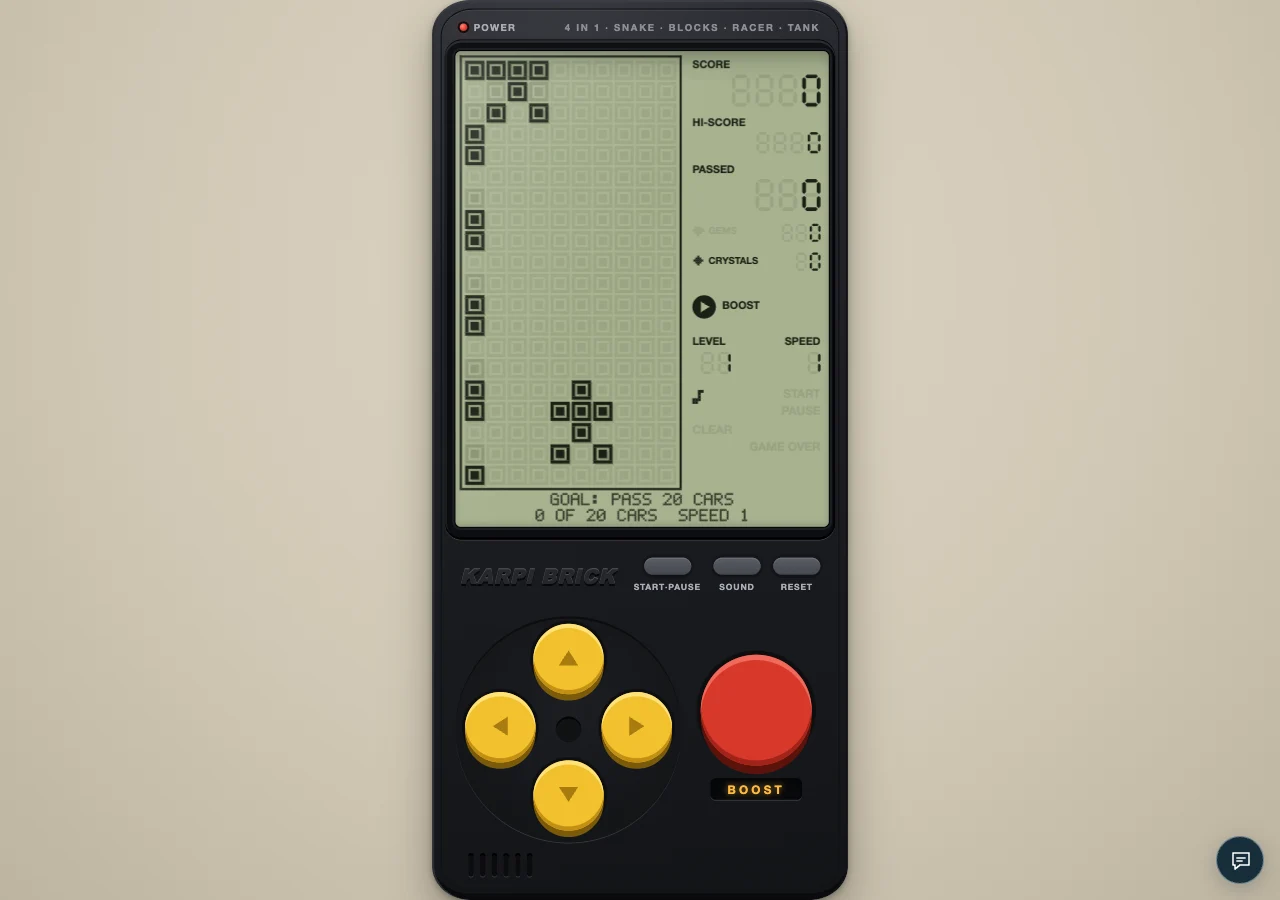
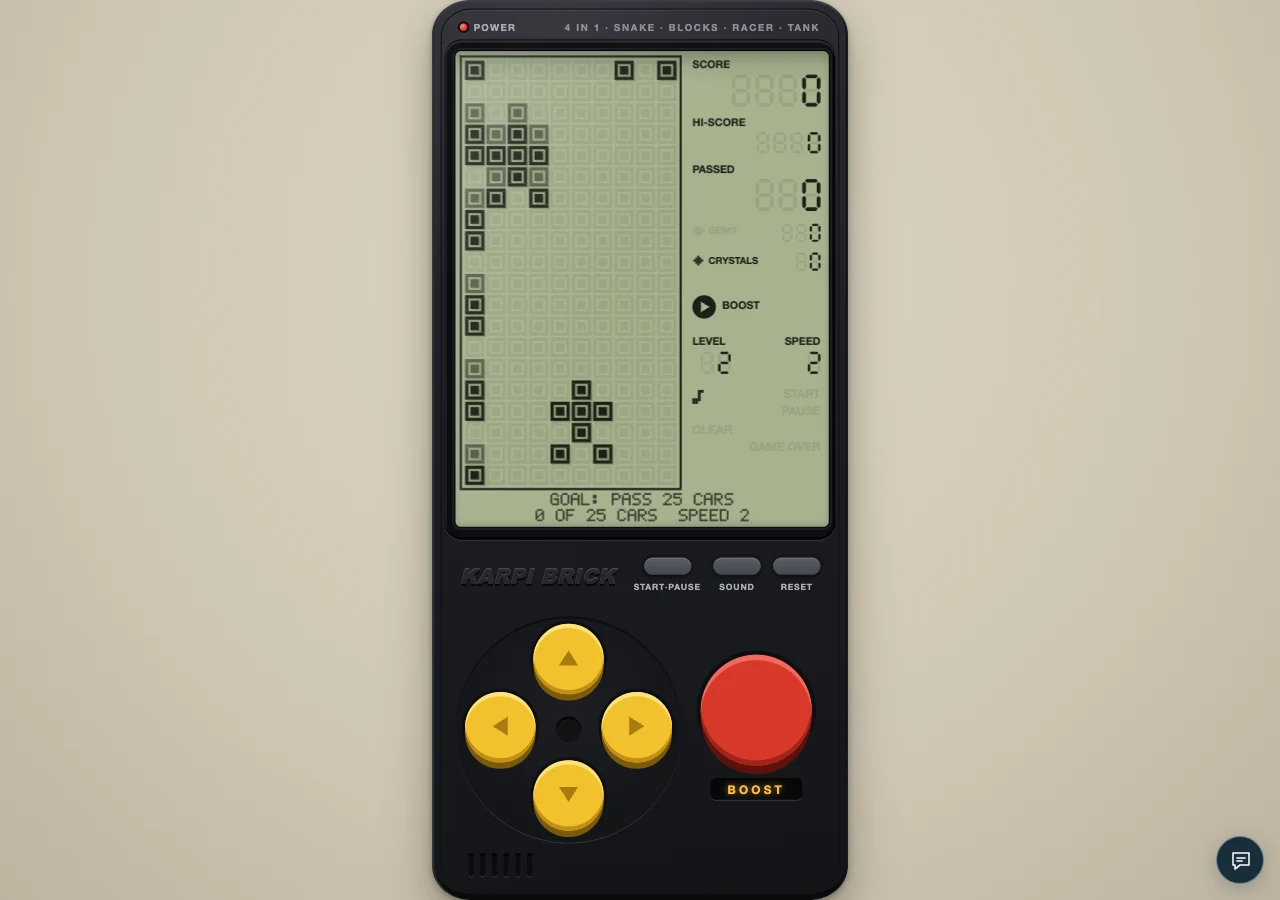
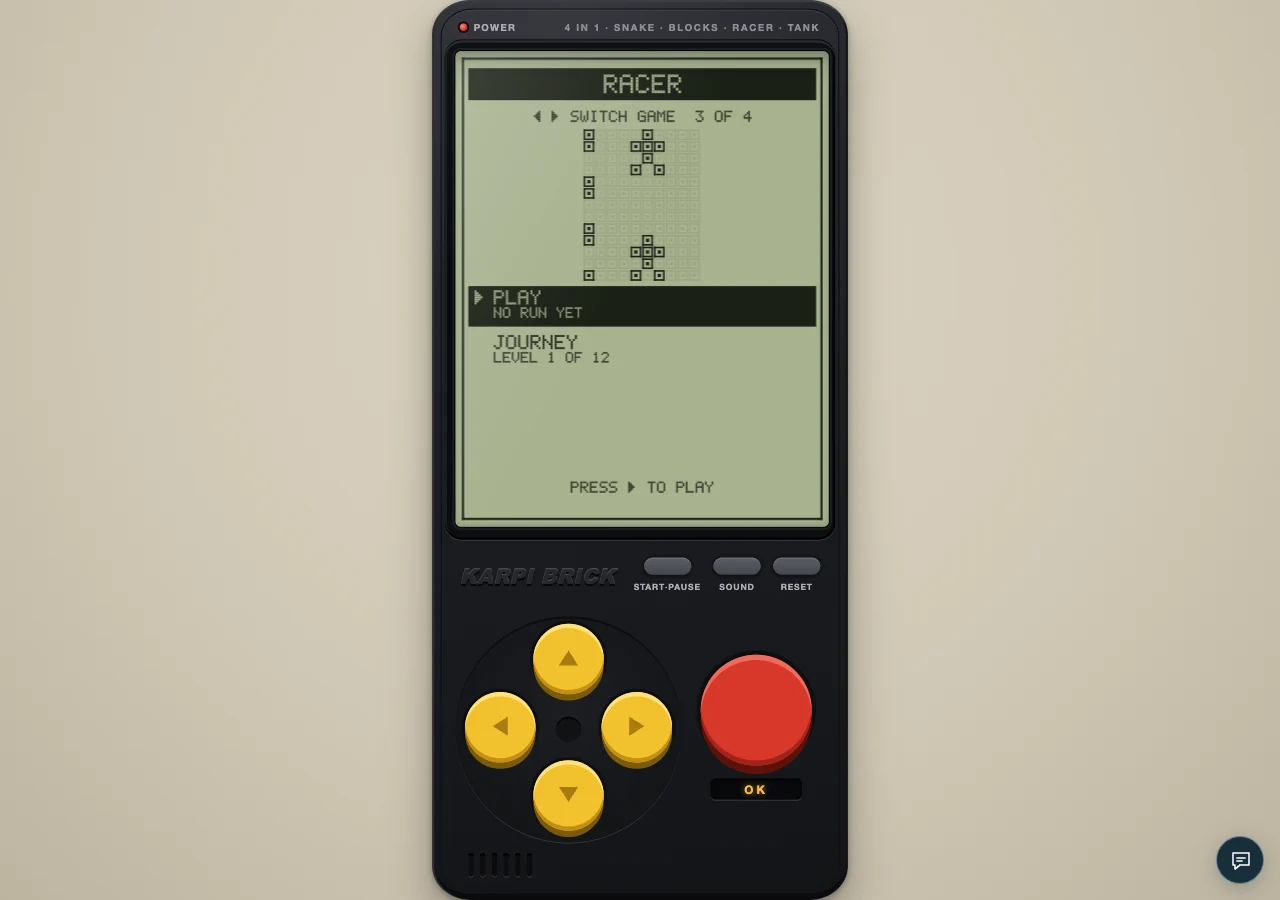
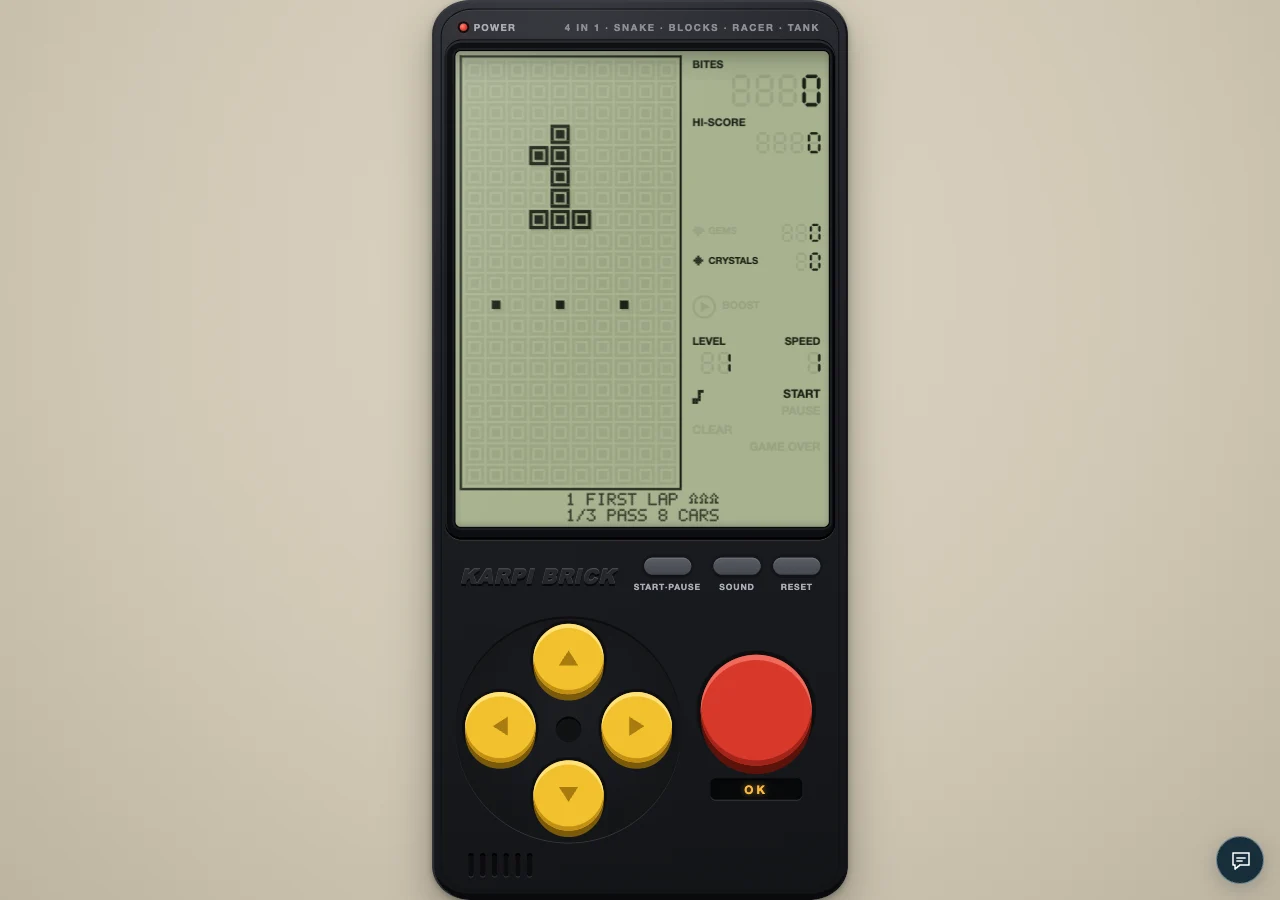
An authentic local capture of the cartridge. The visual guides below explain the decisions to look for.
BOOST makes Racer's road move faster for a short burst and doubles the points for passes during that burst. It does not make the car invulnerable. Treat it as a planned scoring window, with a clear route before and during the acceleration.
Choose the road before the button
Check the current lane, the next incoming car and the space beside you before activating boost. A lane that is empty near the bumper may still contain a problem farther ahead. You need enough room to handle the burst, not merely a safe cell at the moment you press. The decision should feel settled before the pace changes.
The reward is attached to a pass
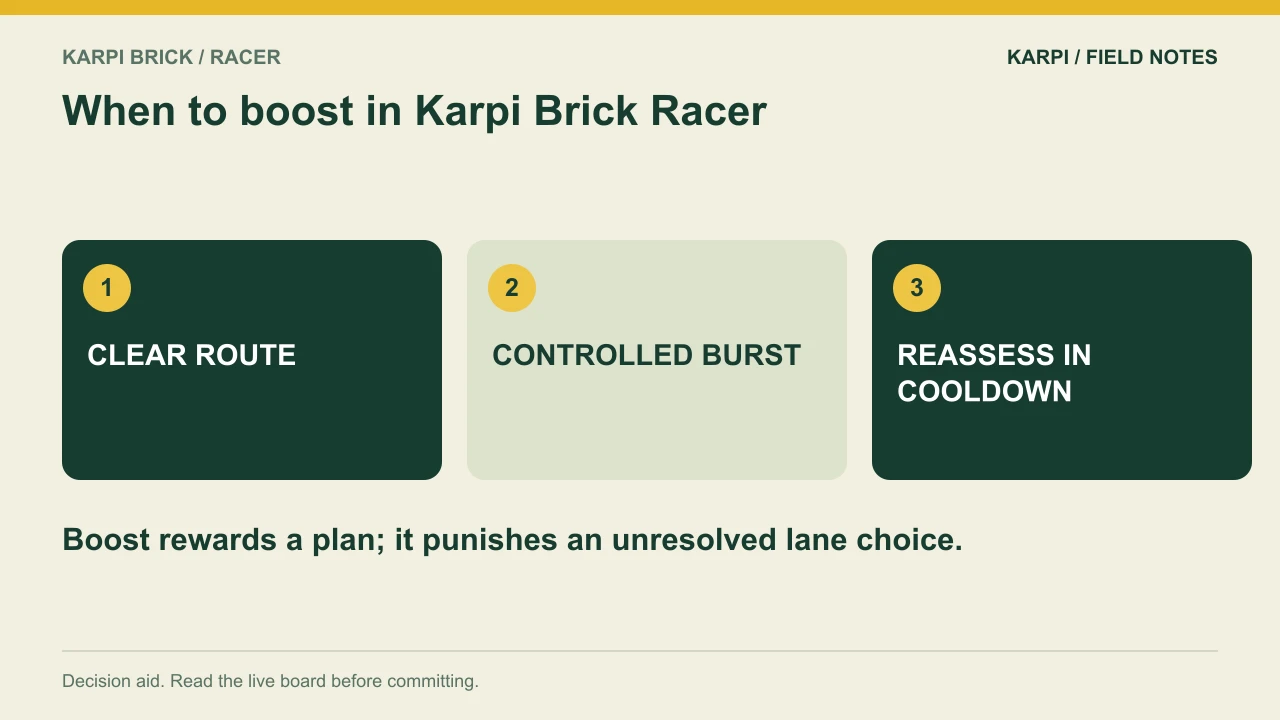
Boosted passes are worth more points than ordinary passes. That can help a score objective, but the value depends on actually getting past traffic safely. A burst that ends in a collision before the pass gives up the rest of the attempt. Do not confuse activating the action with earning its benefit.
Cooldown encourages separate opportunities
The action has a cooldown after use. Plan around distinct windows rather than assuming repeated presses will extend an escape indefinitely. While it recovers, return attention to lane choice. A strong run can contain long stretches without boost; the road does not require you to use every available activation.
An extra can reverse the incentive
Some journey cards ask for a number of boosts; others reward using none. Read the objective before deciding that boosting is always good or always bad. In a survival task, the faster movement may be unnecessary risk. In a score task, a well-read burst can be efficient. Neither choice is universal.
Compare a useful burst with an empty one
Imagine you are at speed two with a clear lane and two cars approaching in the other lanes. If both pass while the boost multiplier is active, they contribute 40 points each instead of 20. That is a reason to use the button: a readable stretch offers a specific scoring return. A burst along a road with no cars close enough to pass may move you forward quickly without producing that immediate bonus.
In the current rules, a burst lasts 20 game steps, or about 1.8 seconds, followed by 70 steps of recovery, about 6.3 seconds. The fast road movement is two rows per step at every starting speed; BOOST does not stack another speed level onto the normal scale. These timings explain why an activation should cover a sequence you have already read. Once committed, you cannot cancel it by releasing the button, and a second press during the burst does not restart its duration.
When BOOST seems to do nothing
First check whether the previous burst is still active or the action is recovering. The game refuses another activation in either state and does not add to the boost-use counter. That matters on cards requiring several boosts: four taps during one burst are still one successful activation. Also distinguish road movement from awarded points. The bonus is evaluated when a car is counted as passed, not when it first appears or when you dodge it. A burst that ends before that moment need not double that car's score.
A focused practice attempt
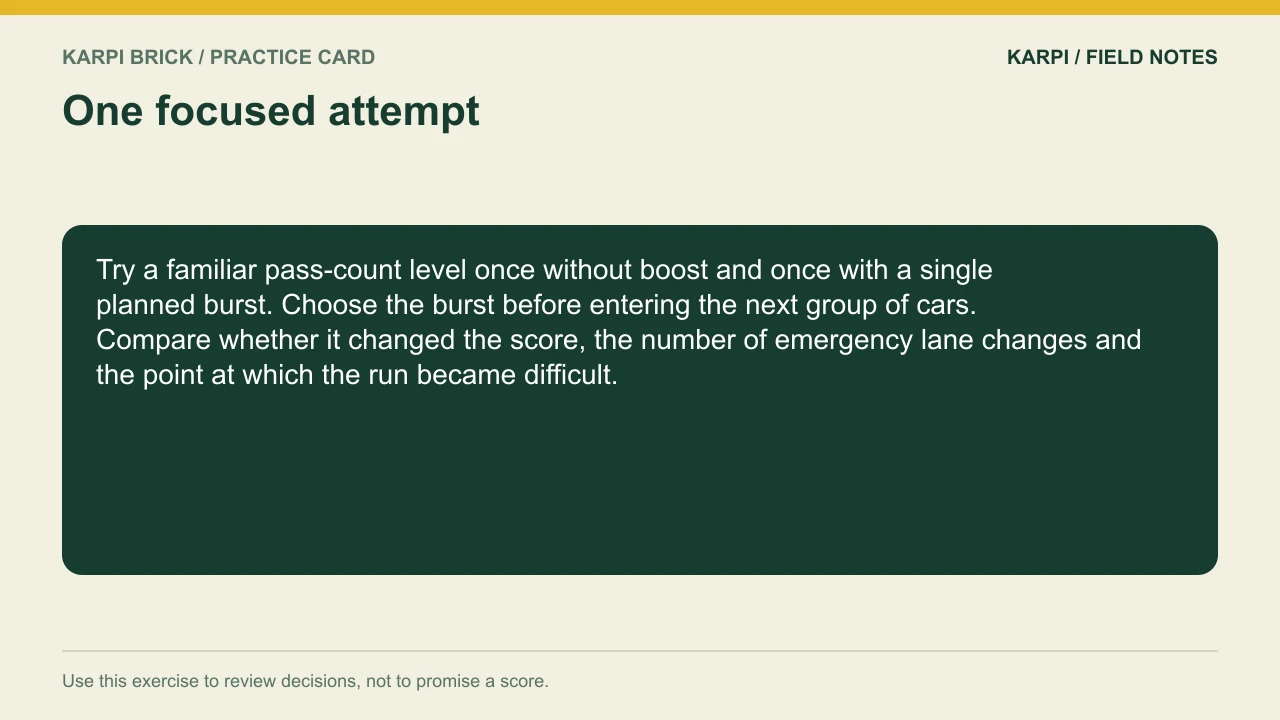
Try a familiar pass-count level once without boost and once with a single planned burst. Choose the burst before entering the next group of cars. Compare whether it changed the score, the number of emergency lane changes and the point at which the run became difficult.
At the console | What to use |
|---|---|
Open this cartridge | |
Main controls | Left/right change lanes; Space or the red key boosts. Read the destination lane before moving. |
Pause | START/PAUSE on the console; Enter or P on a keyboard |
Journey | 12 levels across three chapters; read the goal and two extras |
Take it to the board: Play Racer and test one decision from this guide. The advice describes the current cartridge rules; a practice exercise is not a guaranteed score or clear.
 Take it to the gameBrick GameSnake, Blocks, Racer and Tank on a 90s handheldPlay free
Read next
Racer Lane Changes: Read Two Cars, Not One For the series starting point, read Karpi Brick Racer: Three Lanes, One Way Through.