 KarpiGames Editorial
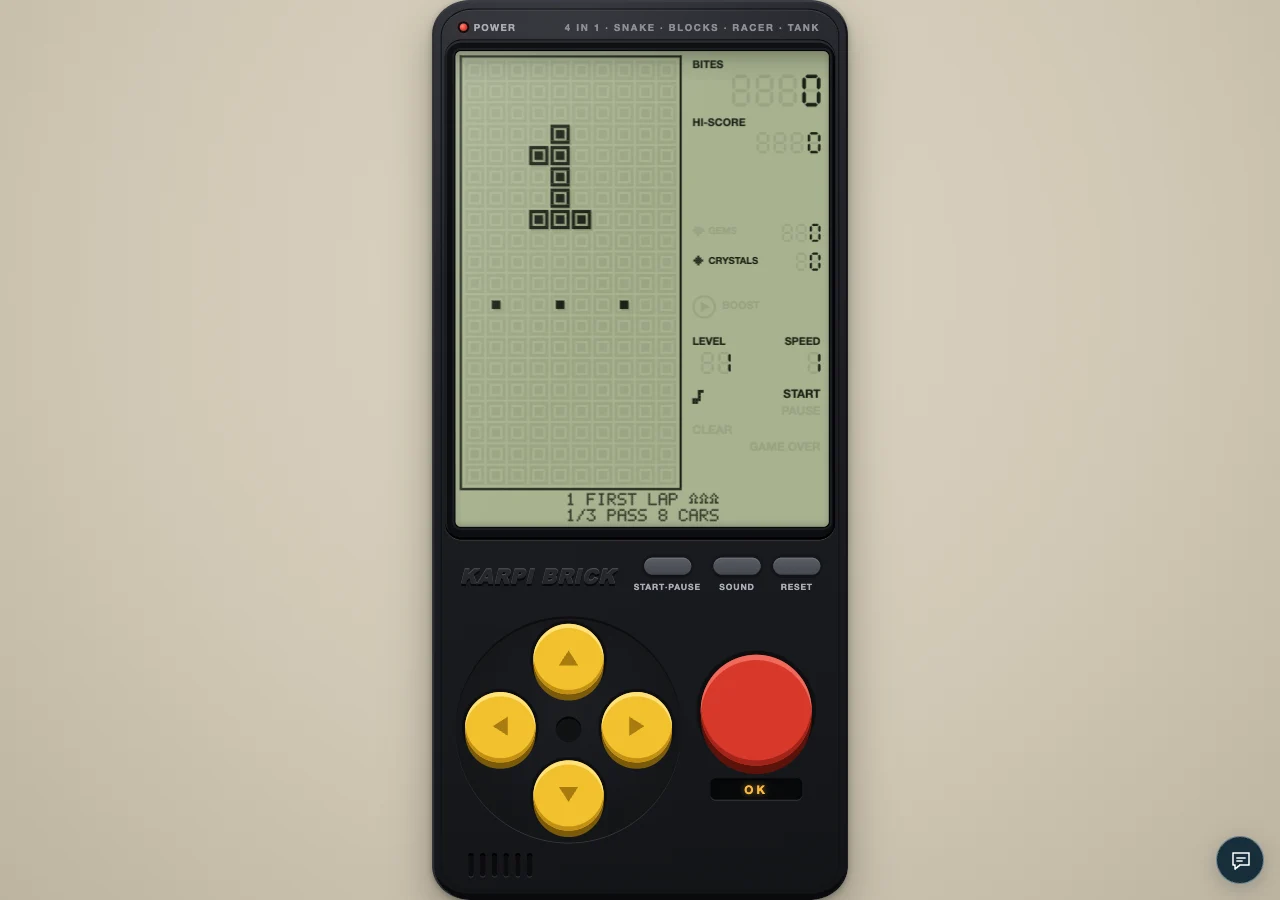
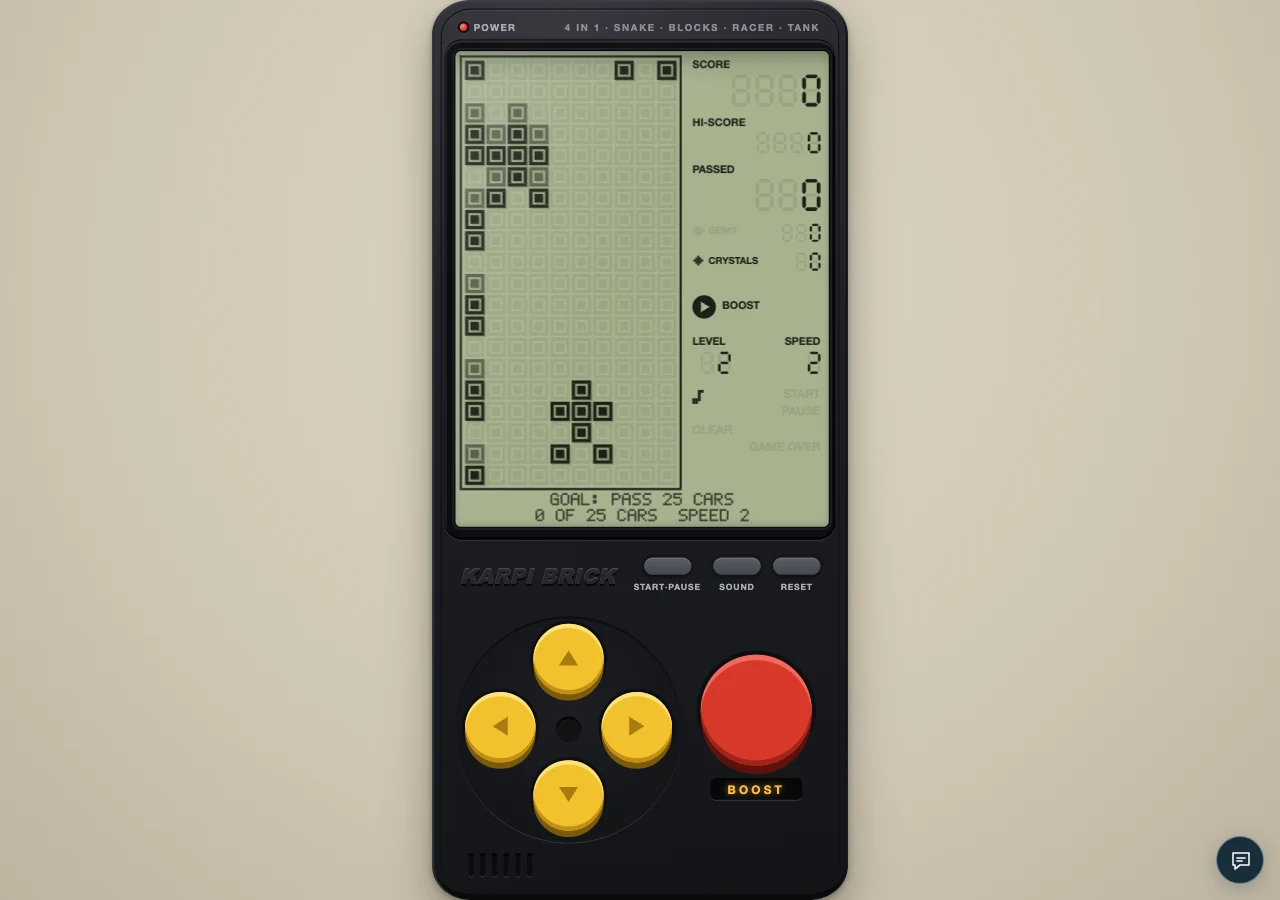
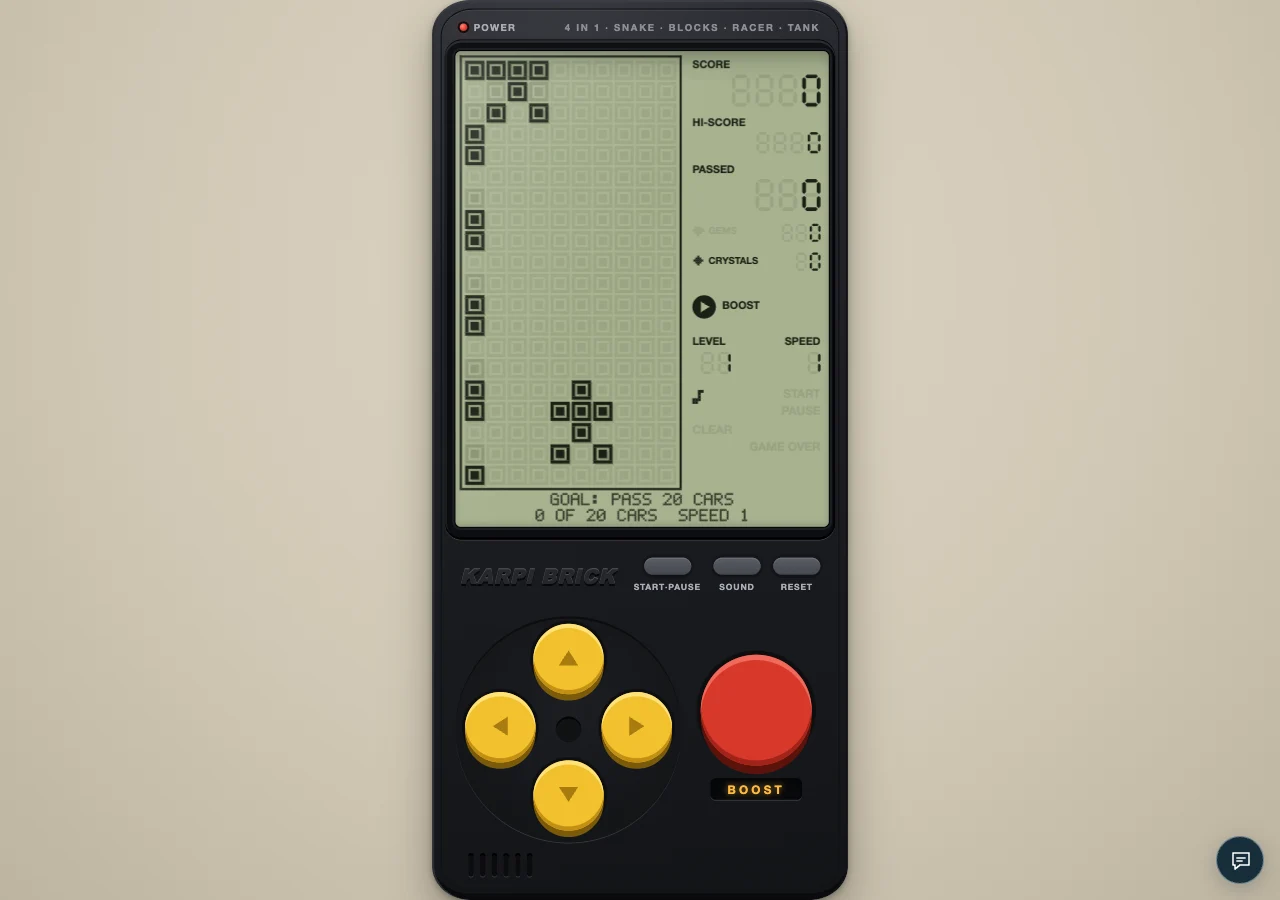
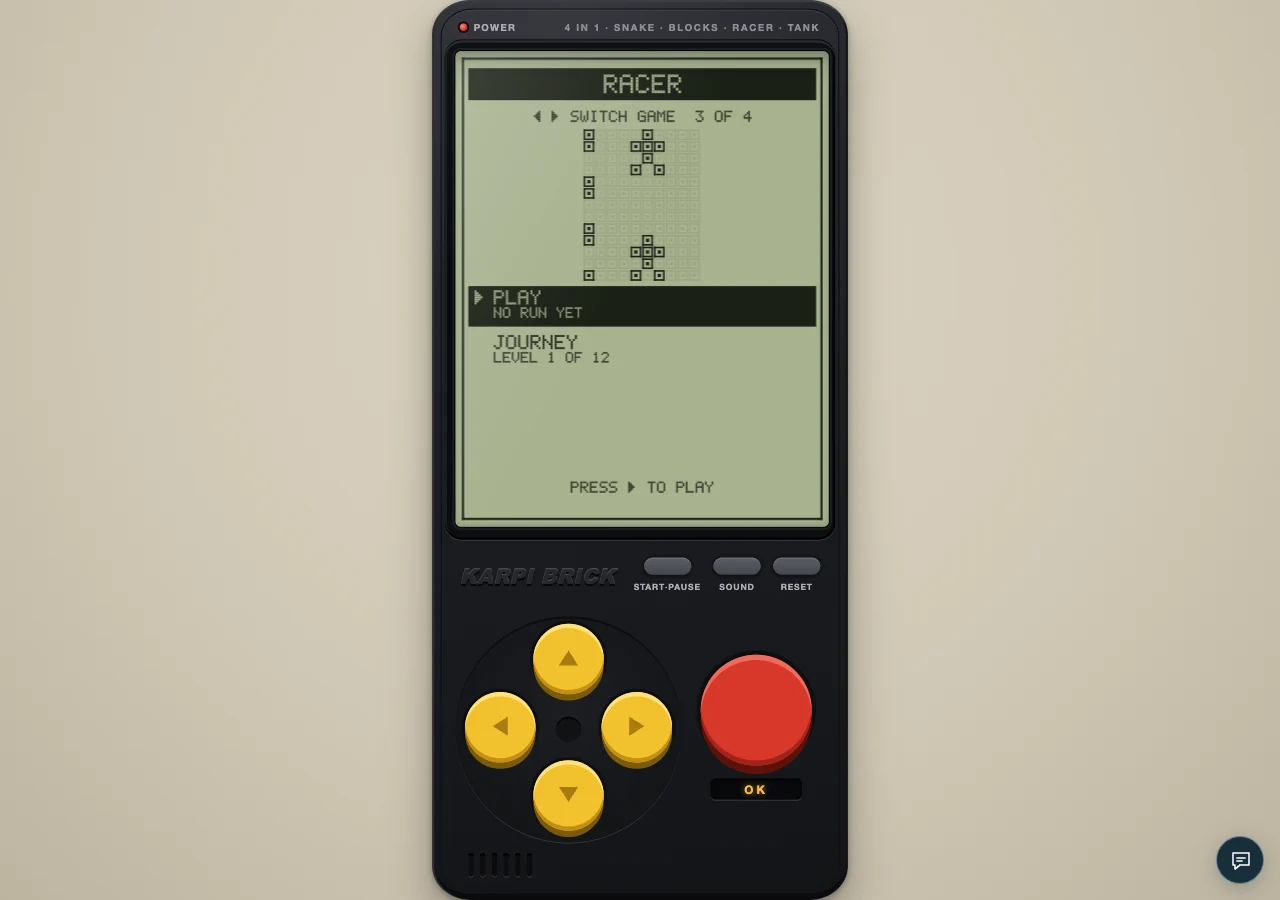
An authentic local capture of the cartridge. The visual guides below explain the decisions to look for.
Racer Journey has twelve stages across OPEN ROAD, RUSH HOUR and FULL SPEED. The progression mixes pass counts, survival time and score. Treat each card as a different driving problem rather than assuming every level is simply a longer run.
OPEN ROAD establishes the lane habit
The opening chapter includes FIRST LAP, OVERTAKE, KEEP LEFT and STEADY. It introduces pass goals and a survival stage, alongside extras involving time, score and boost use. Learn to scan above the player and make purposeful lane changes here. A clear road is the place to practise good decisions before denser traffic makes them urgent.
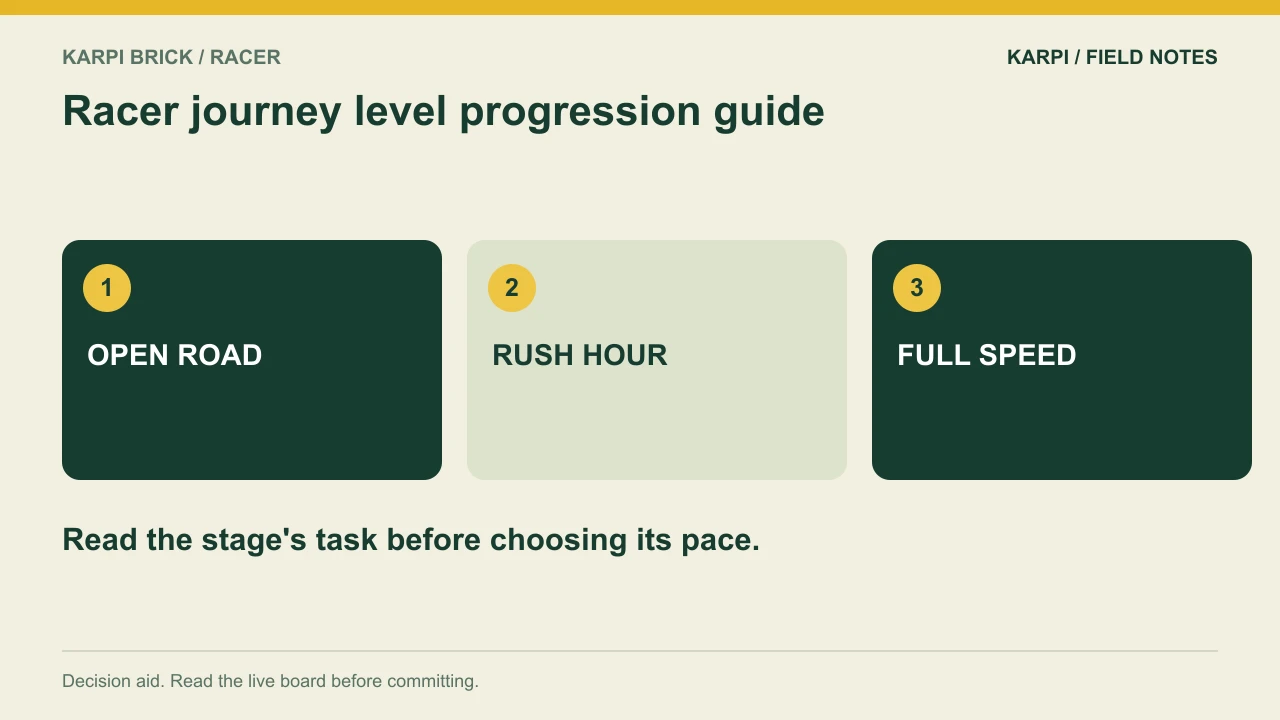
RUSH HOUR reduces comfortable space
The middle stages tighten traffic spacing and introduce more demanding patterns. Names such as TWO ABREAST and GRIDLOCK point toward the pressure, but you still need to read the live arrangement. A gap is a path through time, not just an empty lane in a screenshot. Check the next traffic before celebrating the car you just passed.
FULL SPEED removes the warm-up
The final chapter begins at higher speed and makes boost or scoring efficiency relevant on some cards. THIRD GEAR, NITRO, FLAT OUT and GRAND PRIX ask for different combinations. Read the starting conditions and the goal. A technique useful for a short score push may not be appropriate for a survival attempt at the fastest pace.
A replay is where the extras become a plan
The main clear opens the next stage. Return for missed extras with a specific intention: no boost, more score, enough activations or a quicker finish. This makes the result screen actionable. You can decide what to change instead of repeating a run and hoping the stars look different.
Choose a replay by the skill you need
A missed star is useful only if you turn it into a specific practice choice. If lane changes still overshoot, return to FIRST LAP: eight passes at the opening speed give a short steering exercise. If your ordinary route is reliable but you activate boosts too close together, OVERTAKE requires one successful use, while RUSH HOUR asks for two. Those provide clearer practice targets than immediately attempting NITRO's four-boost extra.
For fast traffic without depending on boosts, FLAT OUT starts at speed three and asks for 60 seconds alive, with extras for 40 passes and no boost. It tests a different habit from THIRD GEAR's 25-pass target and three-boost extra. You must first reach and open these stages through the journey; this is a guide to choosing useful replays afterward. Do not compare results by level number alone. Compare the starting speed, the main goal and the particular extra you are training.
Not every pair of extras fits one run
The cards are worth reading literally. KEEP LEFT's 20-pass clear yields 280 unboosted points under the current speed rules, while its extras ask for NO BOOST and SCORE 300. Those two conditions are not simultaneously reachable in that clear. Treat them as separate practice aims and do not interpret the conflict as a hidden mechanic. Other cards may have an easier overlap: GRAND PRIX's 50 ordinary top-speed passes already exceed its 900-point extra. Check the arithmetic before deciding that every missing star demands more aggressive play.
A focused practice attempt
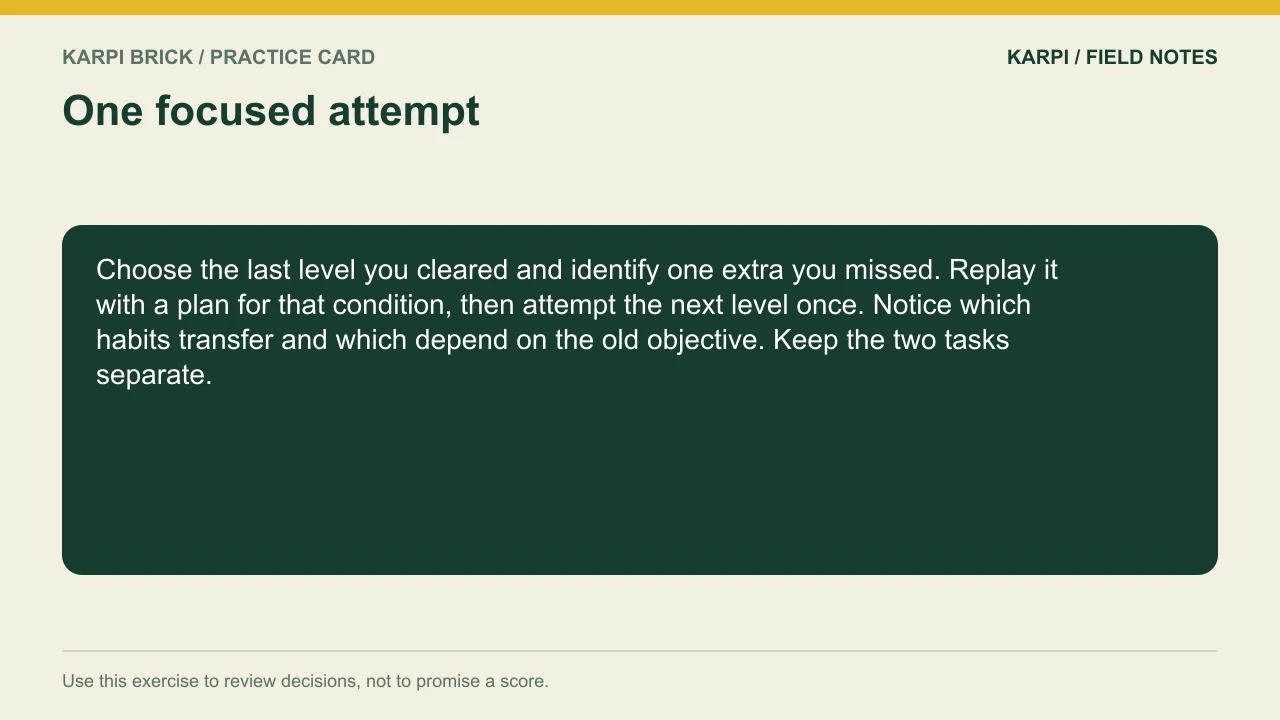
Choose the last level you cleared and identify one extra you missed. Replay it with a plan for that condition, then attempt the next level once. Notice which habits transfer and which depend on the old objective. Keep the two tasks separate.
At the console | What to use |
|---|---|
Open this cartridge | |
Main controls | Left/right change lanes; Space or the red key boosts. Read the destination lane before moving. |
Pause | START/PAUSE on the console; Enter or P on a keyboard |
Journey | 12 levels across three chapters; read the goal and two extras |
Take it to the board: Play Racer and test one decision from this guide. The advice describes the current cartridge rules; a practice exercise is not a guaranteed score or clear.
 Take it to the gameBrick GameSnake, Blocks, Racer and Tank on a 90s handheldPlay free
Read next
Racer on a Phone: Fewer Lane Changes, Clearer Decisions For the series starting point, read Karpi Brick Racer: Three Lanes, One Way Through.