 KarpiGames Editorial
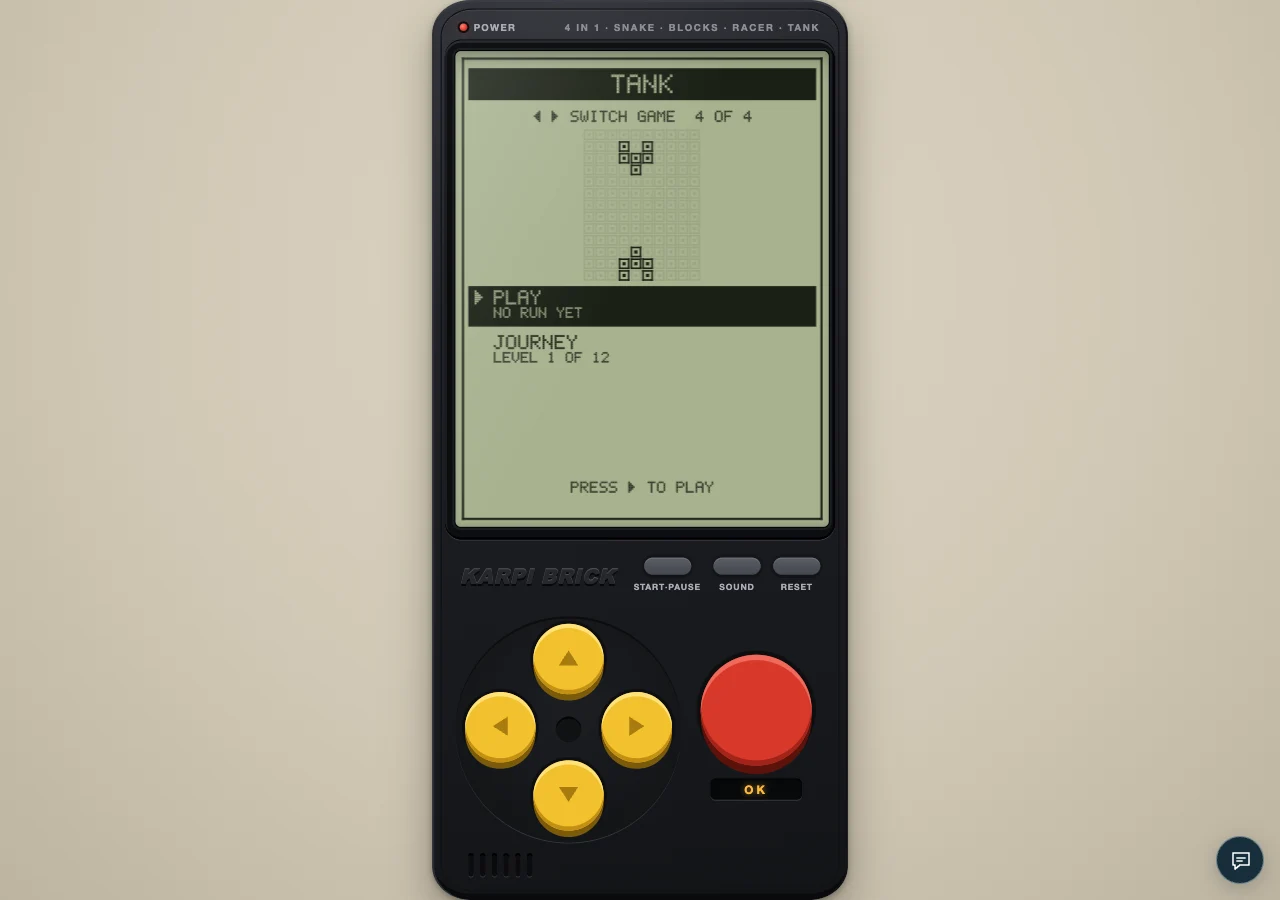
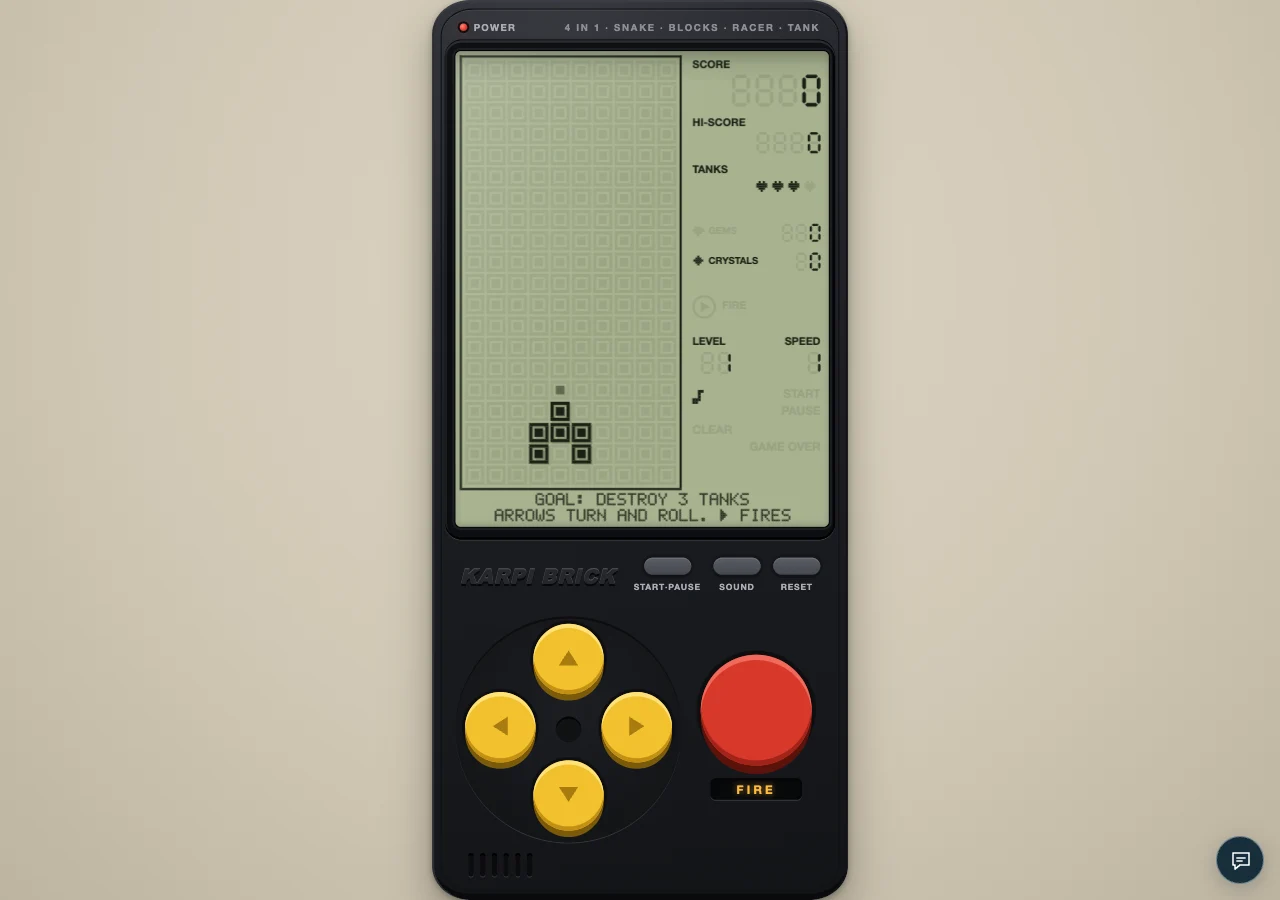
An authentic local capture of the cartridge. The visual guides below explain the decisions to look for.
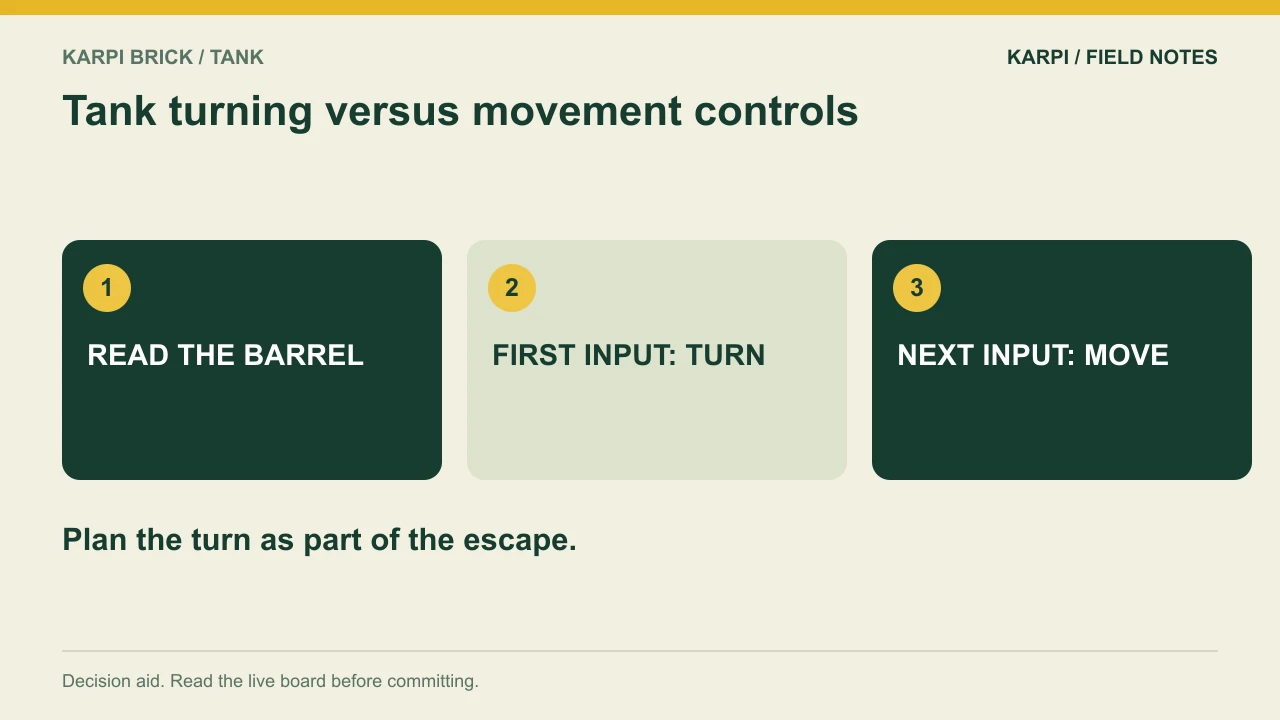
In Karpi Brick Tank, changing direction turns the vehicle before moving it. If the tank faces up and you press right, that input changes its facing. A further right input can move it. Plan escapes with that extra step in mind.
Facing is part of the current state
The barrel is the visual cue to the tank's direction. Read it before deciding what the next input will do. A command that moved the tank on the previous moment may now rotate it because you changed facing to fire. Keeping track of that state makes the controls feel consistent rather than unexpectedly slow.
Turning is useful even without movement
Rotation lets you aim a shell along another lane while keeping the current position. You can use that deliberately when an enemy crosses a clear firing line. The same behaviour feels frustrating only when you expected an immediate dodge. Separate the decision to aim from the decision to travel.
Escape before the shell is on top of you
A last-second direction change may spend its first input on facing. Read incoming shells early enough to allow the turn and the move. This is one reason to watch the battlefield between shots. Waiting until danger reaches the tank leaves little room for the control sequence you actually need.
The body needs the destination to be clear
Even with the correct facing, movement requires space for the tank's footprint. A blocked move is not necessarily an ignored input. Look at nearby enemies and the board edge. If the intended route is unavailable, choose another escape before repeatedly pressing the same direction into an obstruction.
Turn, move, then aim again
Suppose your tank faces up and a shell threatens the column you occupy. You choose a clear space to the right. One right input rotates the tank while leaving its top-left position unchanged. A second right input can move it one cell. If you need additional room, further right inputs continue moving while that direction remains selected, provided each destination fits the tank and avoids other vehicles.
After the dodge, you want to shoot at an enemy above. Pressing up now turns the barrel upward in place; you can fire without making another upward movement. This is the same rule working in your favour. The controls do not impose a compulsory move after every turn. Learning that distinction lets you escape sideways, restore a firing line, and stay out of a location you did not intend to enter. Practise the sequence in an early level before trying to perform it with a shell immediately beside the hull.
What blocks movement, and what does not
Movement is checked using the tank's three-by-three box, even where the drawn sprite has gaps. You cannot squeeze that box between an enemy and the edge just because a few pixels look empty. Turning itself does not use that movement-clearance check, so a tank may rotate in place when it cannot advance. If facing already matches your input and the tank stays put, inspect the destination. If facing changes, you have just performed the aiming step; another matching input is needed to travel.
A focused practice attempt
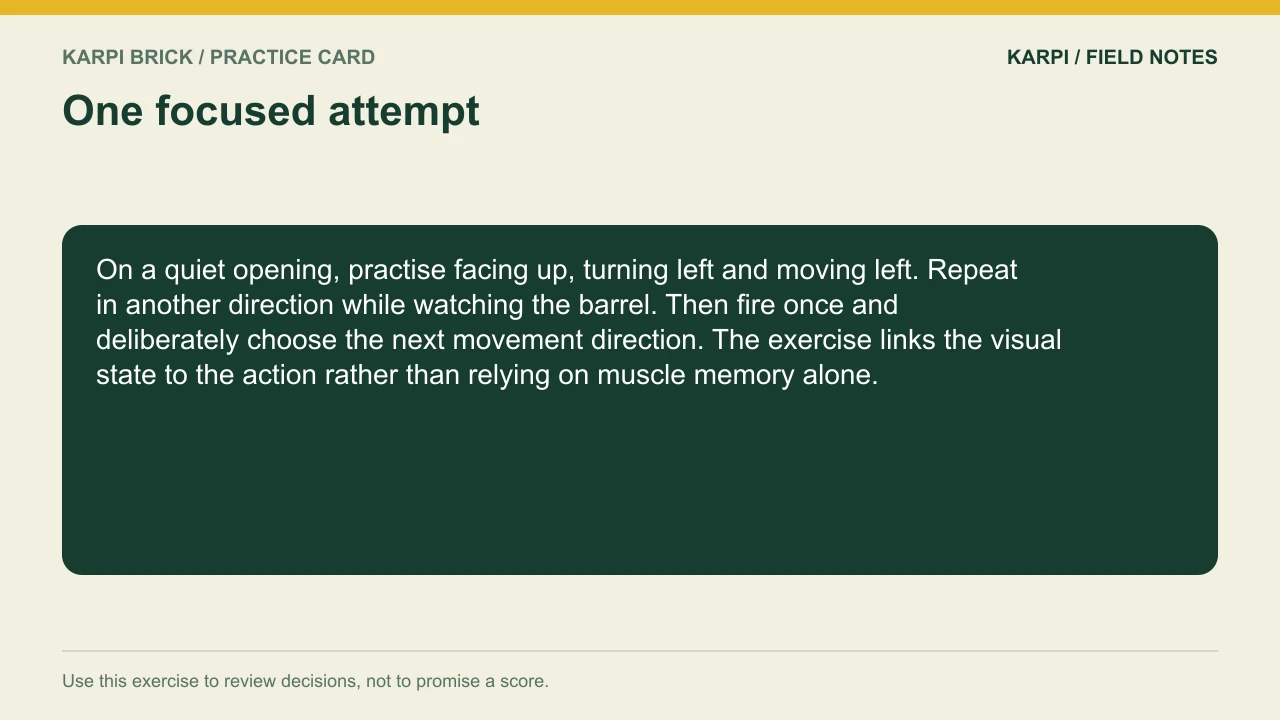
On a quiet opening, practise facing up, turning left and moving left. Repeat in another direction while watching the barrel. Then fire once and deliberately choose the next movement direction. The exercise links the visual state to the action rather than relying on muscle memory alone.
At the console | What to use |
|---|---|
Open this cartridge | |
Main controls | A new direction turns the tank first; another input in that direction moves it. Space or the red key fires. |
Pause | START/PAUSE on the console; Enter or P on a keyboard |
Journey | 12 levels across three chapters; read the goal and two extras |
Take it to the board: Play Tank and test one decision from this guide. The advice describes the current cartridge rules; a practice exercise is not a guaranteed score or clear.
 Take it to the gameBrick GameSnake, Blocks, Racer and Tank on a 90s handheldPlay free
Read next
Tank MARKSMAN: Seventy Percent Starts Before FIRE For the series starting point, read Karpi Brick Tank: Aim First, Then Make Room.