 KarpiGames Editorial
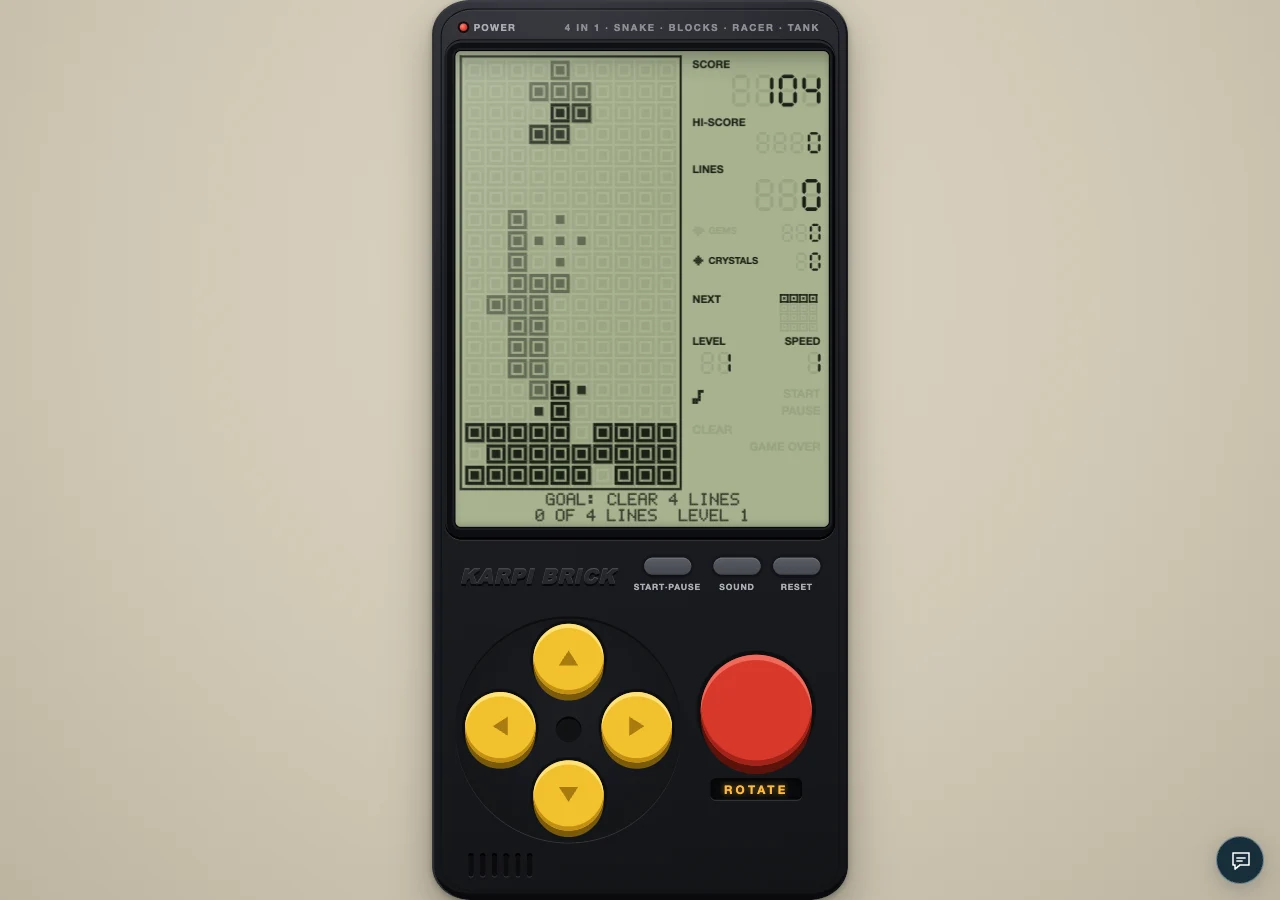
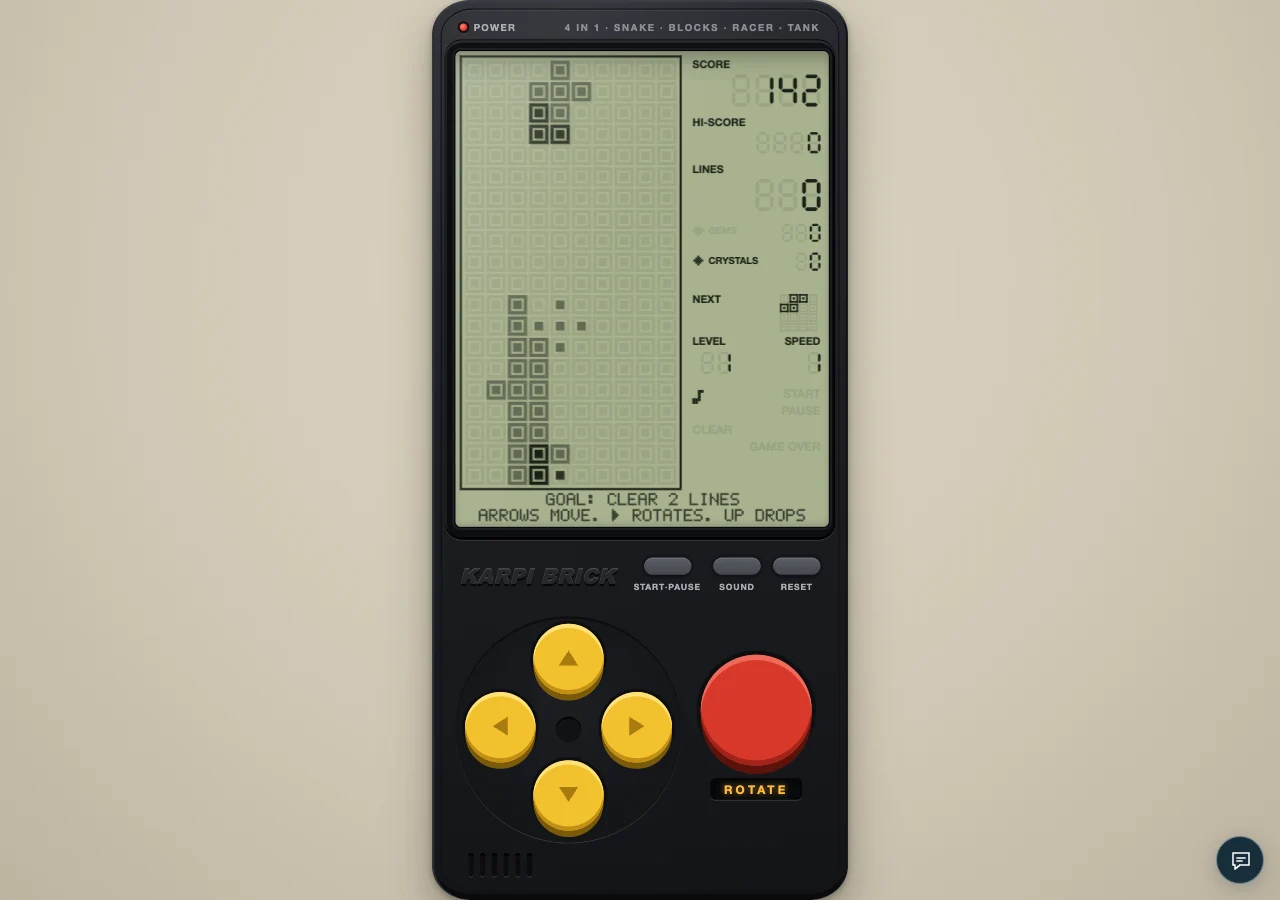
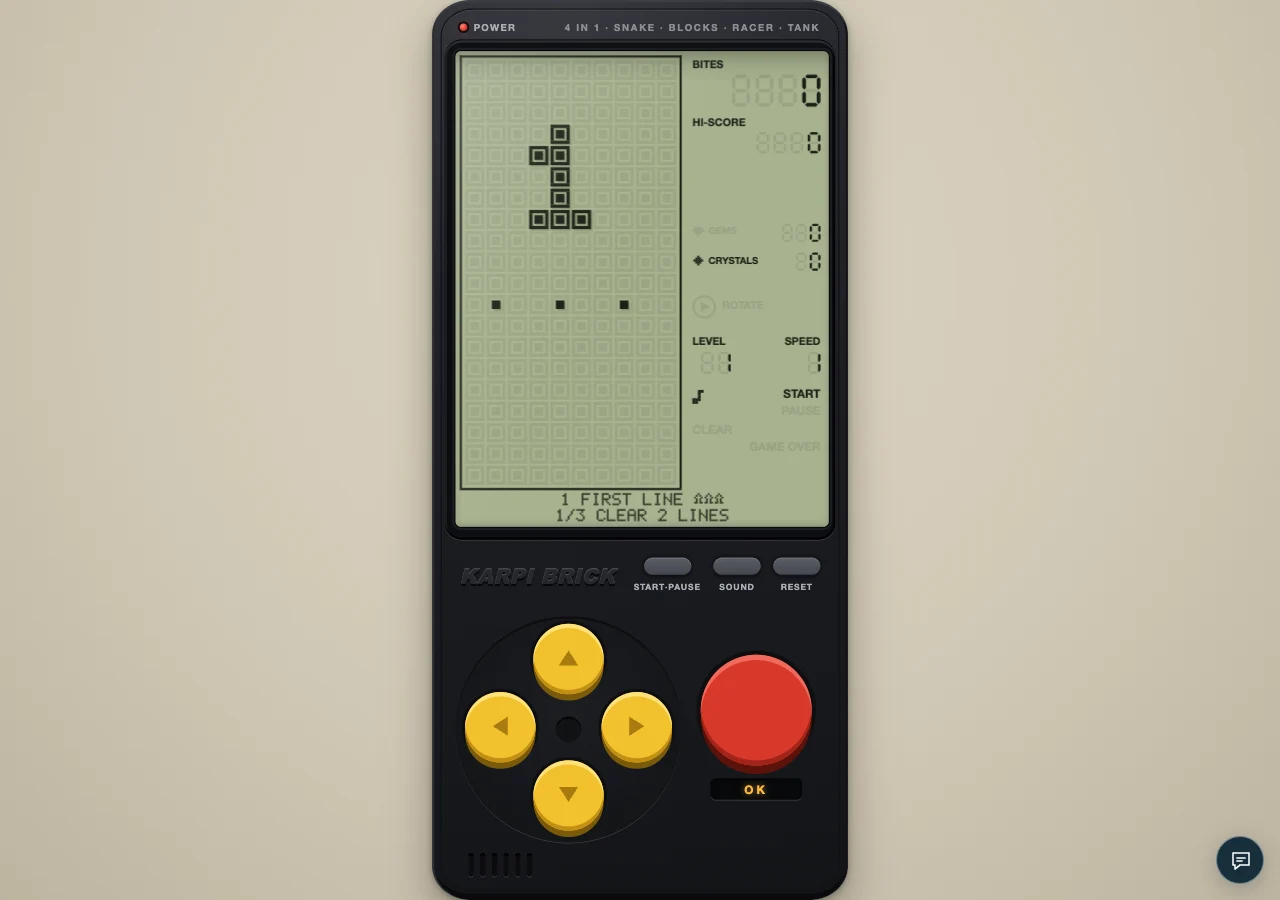
An authentic local capture of the cartridge. The visual guides below explain the decisions to look for.
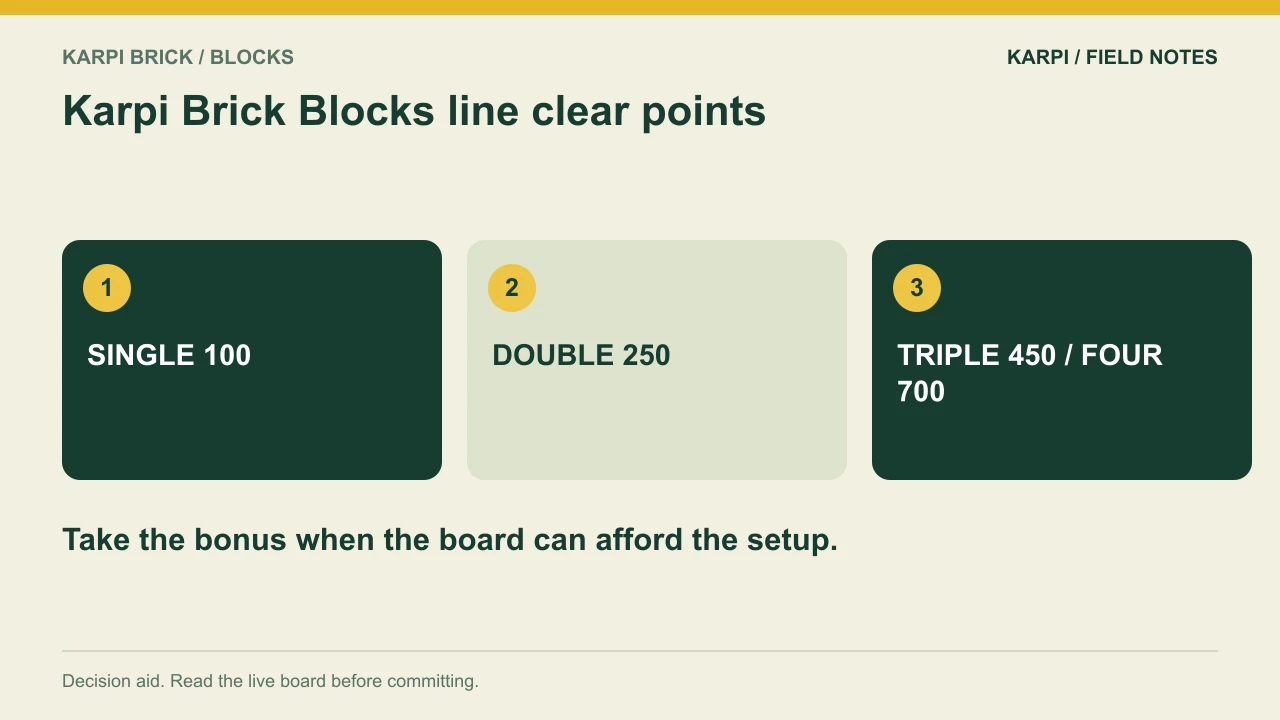
Blocks rewards clearing several rows together. At the same level, a double clear gives 250 base points versus 200 for two separate singles. That bonus is useful, but it is not a reason to keep a dangerous stack alive indefinitely.
Know the current values
The base line-clear values are 100 for one row, 250 for two, 450 for three and 700 for four. The game multiplies the clear value by the current level. Drop actions contribute separately. These numbers explain why a larger clear can move the score sharply, but they describe the scoring system rather than the probability that your planned placement will work.
The comparison assumes the same level
Two clears made at different levels are not a clean comparison with one earlier clear. Endless mode raises the level as lines accumulate, and journey stages can begin higher. When reviewing a result, read the level as well as the number of rows. Do not infer a scoring bug merely because a later single was worth more than an earlier one.
Build a clear with an exit plan
A double is attractive when you can complete it without burying new holes or blocking the spawn. It is less attractive when you must wait through several unsuitable shapes. Look at NEXT and the available surface. If the board is already crowded, a single that restores space can be the move that lets you score anything afterward.
Objectives can change the best choice
A level may ask for a particular maximum clear, a score threshold, a line count or a restricted number of pieces. Those are different tasks. For a line-count clear, survival and reliable placement may matter more than the bonus. For a multi-row extra, you need to create the opportunity deliberately. Let the card determine the tradeoff.
Work through a same-level comparison
At level two, a single clear is worth 200 line-clear points and a double is worth 500. Two separate singles at that same level total 400, so the double adds 100. A triple at level two is 900, while three separate same-level singles total 600. These comparisons exclude drop points and assume the level stays the same across the clears being compared. That assumption matters near a level-up threshold. The calculation gives a reason to combine rows when the geometry supports it; it does not include the risk of stacking too high while waiting. If the attempted double causes a spawn failure, the theoretical bonus is never collected. Use the numbers to value an available opportunity, then use the board to decide whether creating that opportunity is sensible.
A focused practice attempt
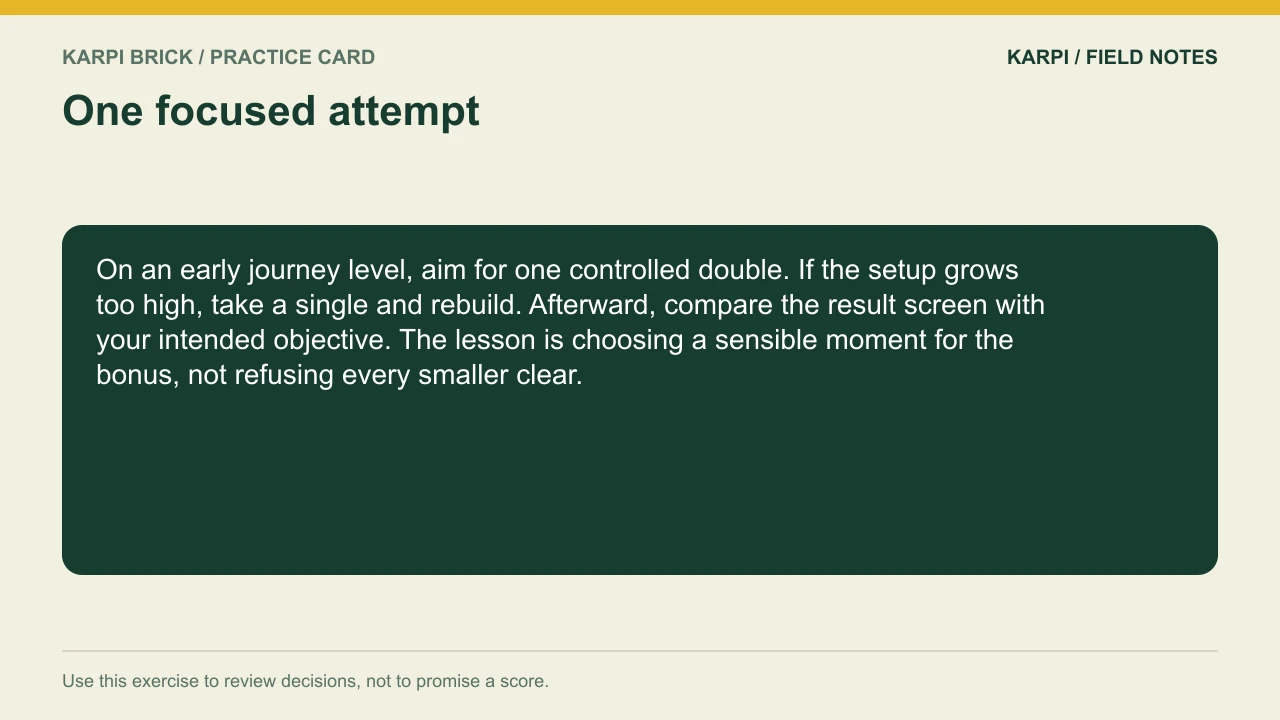
On an early journey level, aim for one controlled double. If the setup grows too high, take a single and rebuild. Afterward, compare the result screen with your intended objective. The lesson is choosing a sensible moment for the bonus, not refusing every smaller clear.
At the console | What to use |
|---|---|
Open this cartridge | |
Main controls | Left/right move; Down soft-drops; Up hard-drops; Space or the red key rotates. |
Pause | START/PAUSE on the console; Enter or P on a keyboard |
Journey | 12 levels across three chapters; read the goal and two extras |
Take it to the board: Play Blocks and test one decision from this guide. The advice describes the current cartridge rules; a practice exercise is not a guaranteed score or clear.
 Take it to the gameBrick GameSnake, Blocks, Racer and Tank on a 90s handheldPlay free
Read next
Blocks DIG Levels: Find the Hole Before Building Over It For the series starting point, read Karpi Brick Blocks: Build a Floor, Not a Tower.