 KarpiGames Editorial
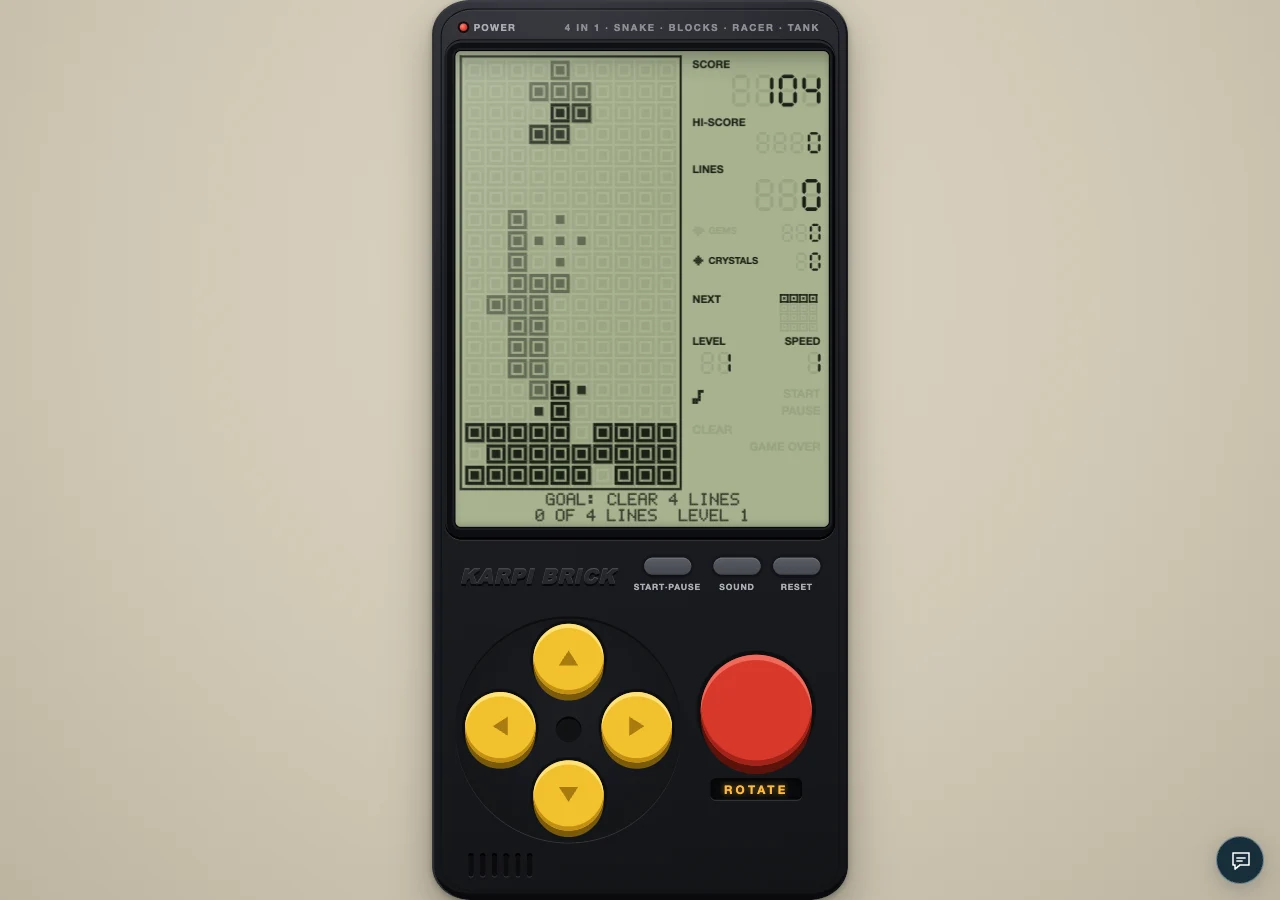
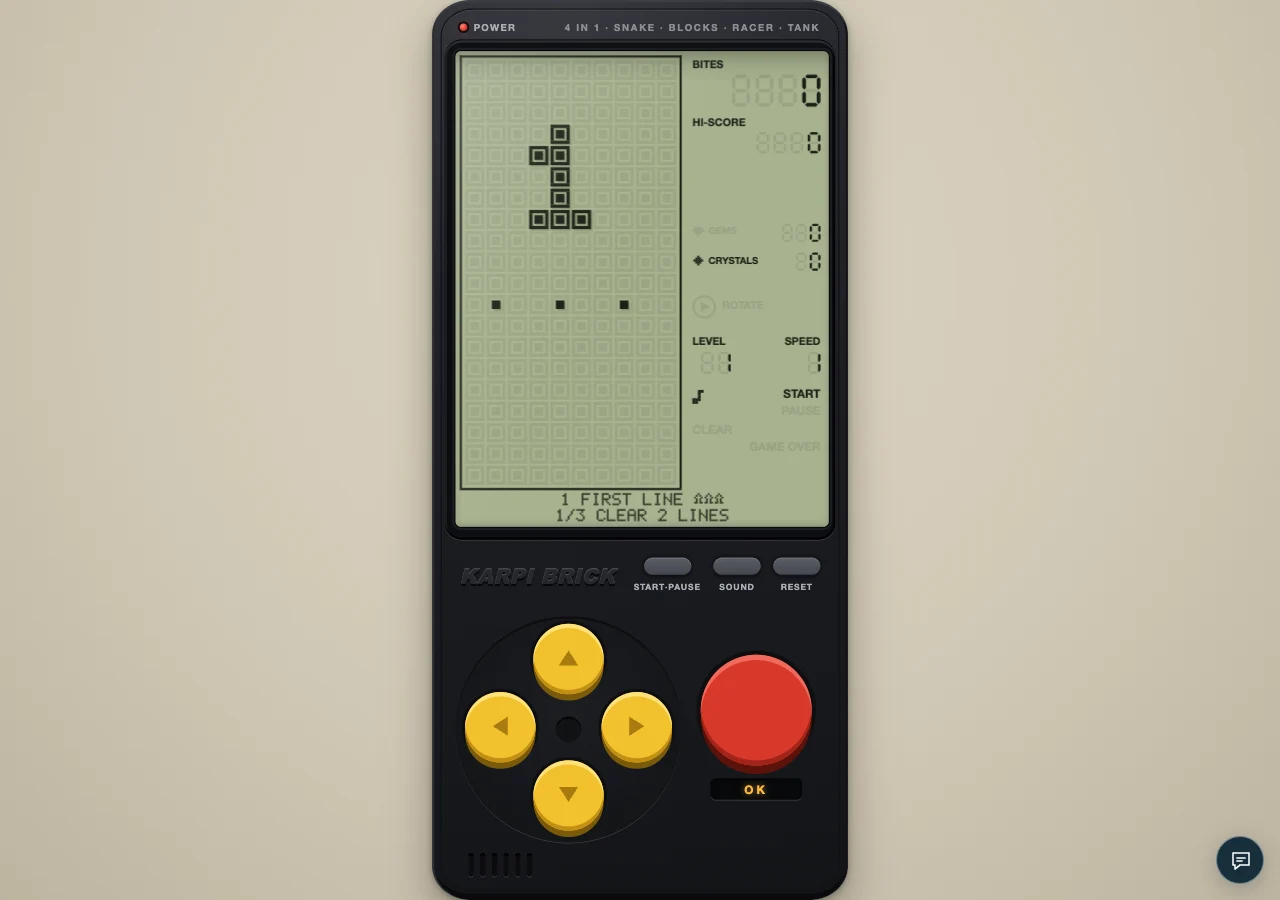
An authentic local capture of the cartridge. The visual guides below explain the decisions to look for.
The DIG chapter starts with rows already occupying the bottom of the board. Your job is to work through their holes while keeping enough room above them. The first useful scan is downward: find the gap you need to reach before placing a roof over it.
The starting board is part of the puzzle
DIG OUT begins with three garbage rows; later levels add deeper or more complicated starting stacks. These cells are not the result of a mistake you made. Read them as the problem the level gives you. Identify the uppermost accessible gaps, then consider which clears could expose the rows below.
Depth makes an early mistake costly
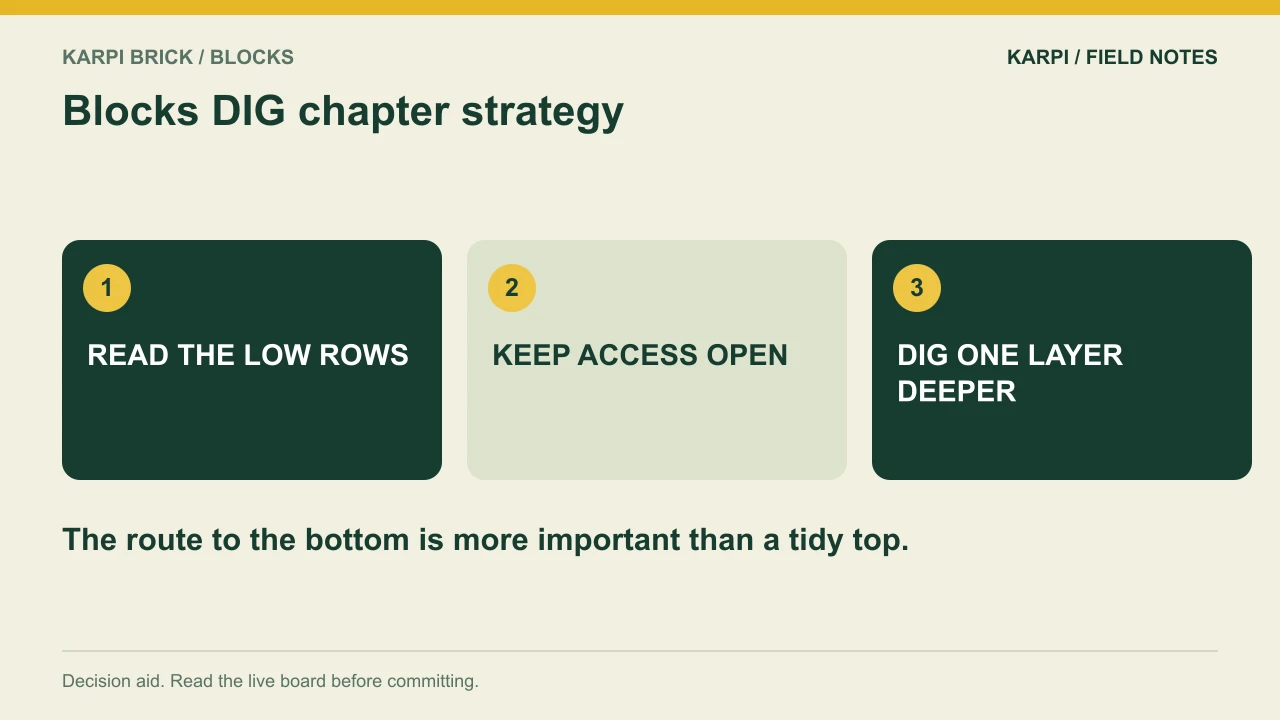
A new buried hole above the starting garbage adds work before you can reach the original task. Keep your first placements conservative. An attractive top-row clear can be misleading if it seals the route into the lower stack. You want each placement either to contribute to a clear or preserve access for a useful future piece.
SWISS CHEESE changes the reading task
The chapter includes a stage with two holes per garbage row rather than one. Do not assume a single straight well runs through the board. Look across each visible layer. A shape that solves one opening can leave the other awkward, so evaluate the entire resulting row rather than focusing on the first gap you notice.
The extras are different repair constraints
Some DIG levels reward speed, some fewer pieces, some no hard drop, and some larger clears or score. A route good for one extra can be poor for another. First find a reliable clear. Then revisit the board with a particular extra in mind, using the known layout to make the attempt more deliberate.
Plan one layer, then inspect again
On a board with several garbage rows, the first accessible hole may sit above another hole in a different column. Filling the upper one can clear its row and reveal a new surface. Do not assume the same piece orientation will solve the layer underneath. Stop your mental plan at the next actual clear, then inspect what changed. This is particularly useful in SWISS CHEESE, where two openings per row create more than one incomplete area to consider. A placement that fills one opening while burying the other can leave the row no closer to completion. Count the entire row and preserve a route to every necessary cell. The chapter rewards reading the given board; an opening that worked on an empty field is only a candidate, not a default you must force onto the garbage.
A focused practice attempt
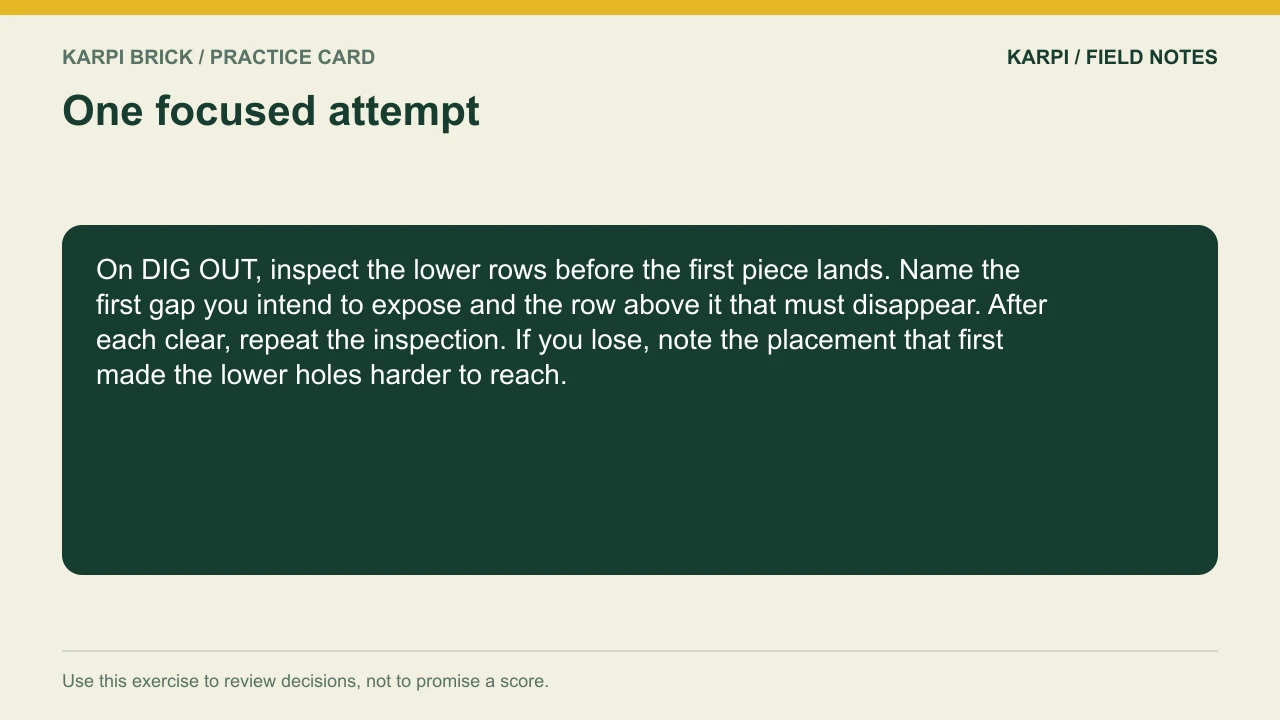
On DIG OUT, inspect the lower rows before the first piece lands. Name the first gap you intend to expose and the row above it that must disappear. After each clear, repeat the inspection. If you lose, note the placement that first made the lower holes harder to reach.
At the console | What to use |
|---|---|
Open this cartridge | |
Main controls | Left/right move; Down soft-drops; Up hard-drops; Space or the red key rotates. |
Pause | START/PAUSE on the console; Enter or P on a keyboard |
Journey | 12 levels across three chapters; read the goal and two extras |
Take it to the board: Play Blocks and test one decision from this guide. The advice describes the current cartridge rules; a practice exercise is not a guaranteed score or clear.
 Take it to the gameBrick GameSnake, Blocks, Racer and Tank on a 90s handheldPlay free
Read next
Blocks Gets Faster: Make the Decision Higher Up For the series starting point, read Karpi Brick Blocks: Build a Floor, Not a Tower.