 KarpiGames Editorial
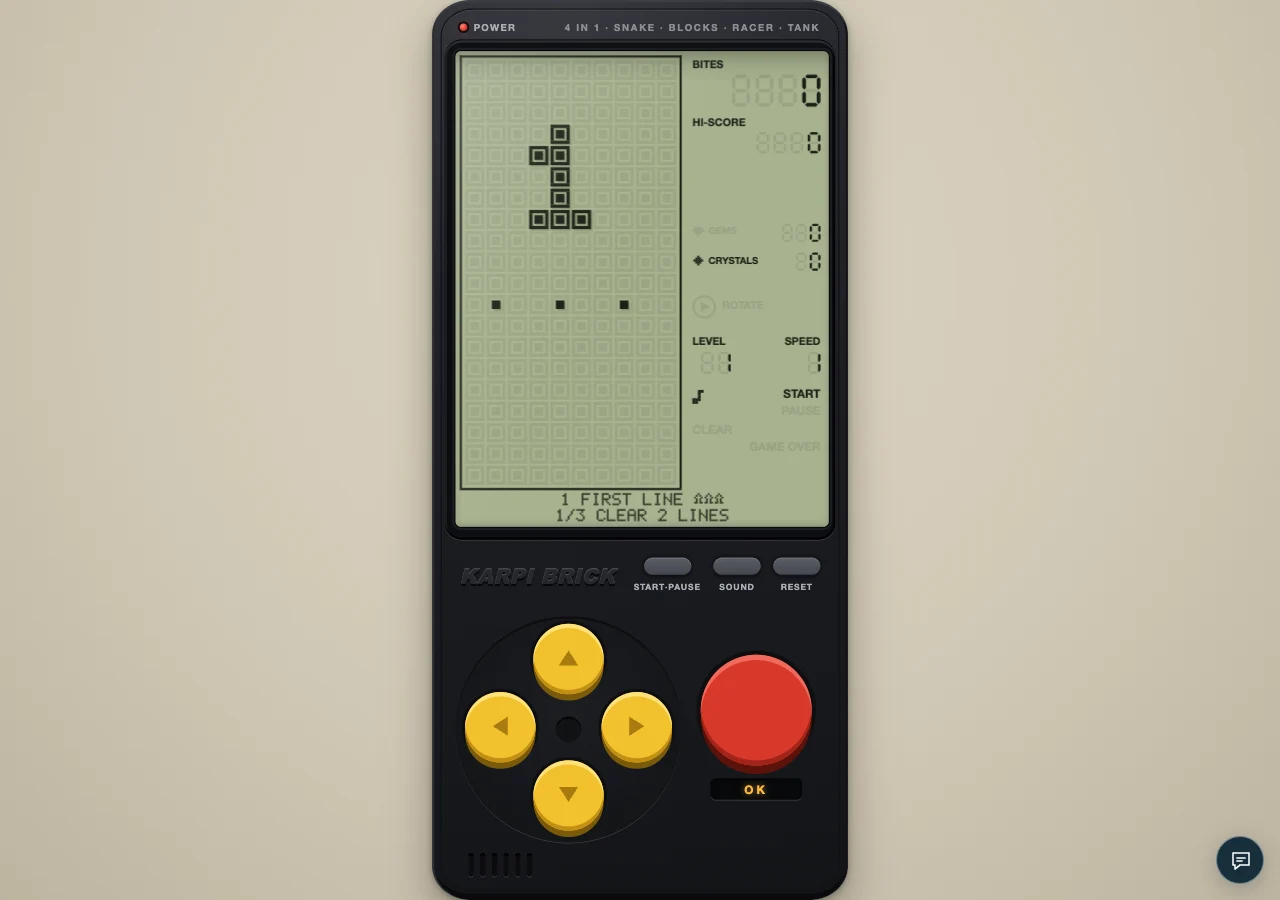
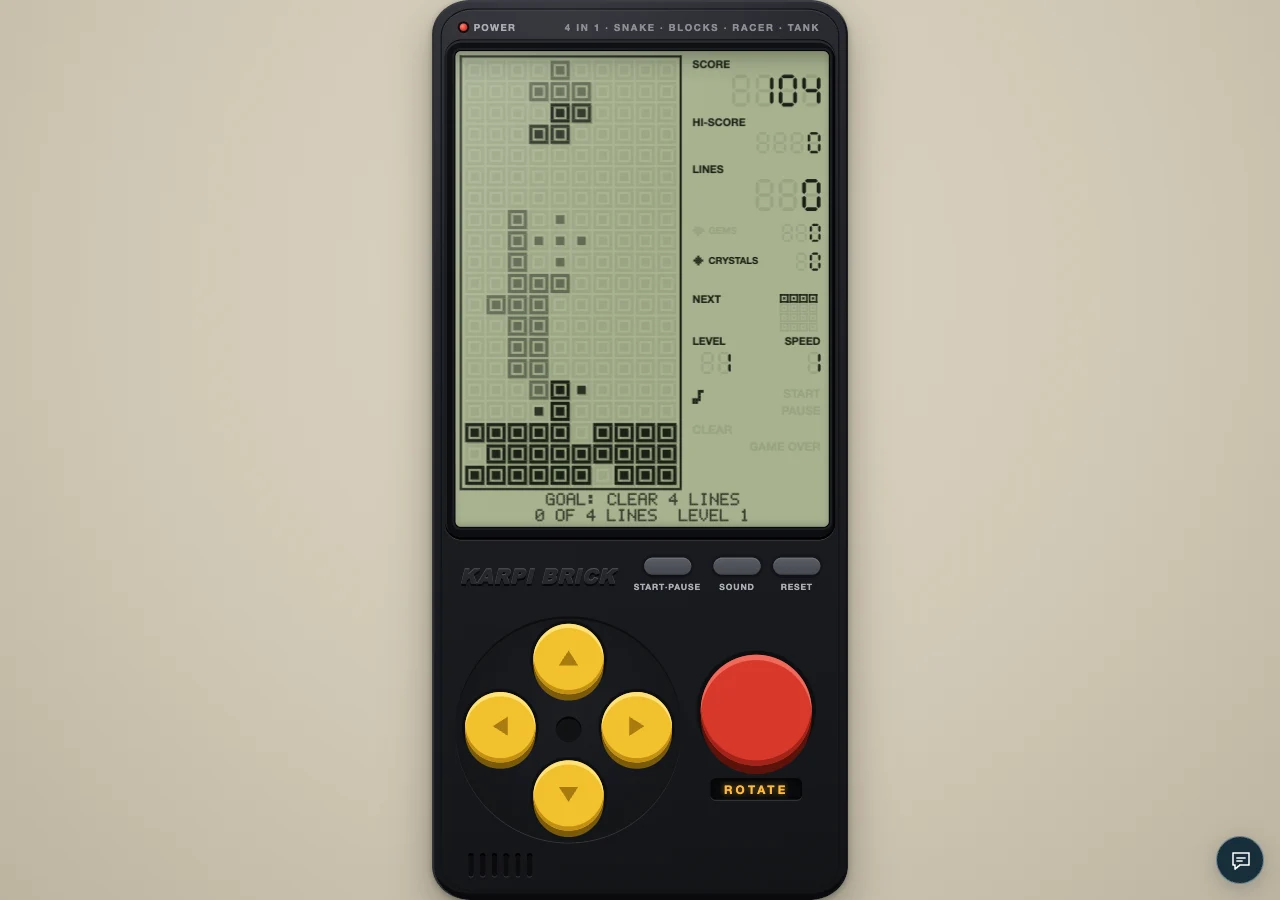
An authentic local capture of the cartridge. The visual guides below explain the decisions to look for.
Blocks Journey has twelve levels across FIRST LINES, DIG and SPEED. The chapters change the kind of problem: build clean rows, repair an occupied board, then handle pressure. Each level has a main goal and two extras.
FIRST LINES teaches reliable placement
The opening chapter starts with straightforward line goals and introduces extras such as speed, fewer pieces and larger clears. Use it to learn the eight shapes and the drop controls. A clear is useful evidence that your surface stayed playable. If you repeatedly need a rescue piece, practise the opening placements before moving to a deeper starting stack.
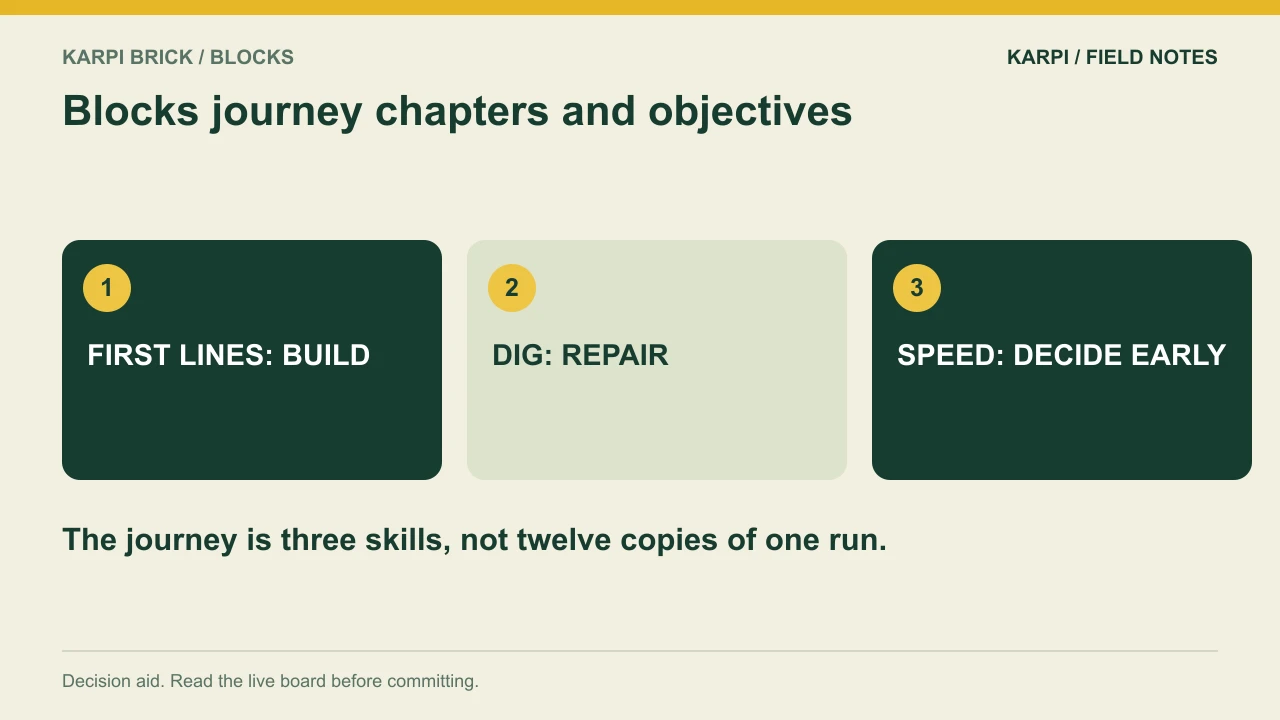
DIG begins with a debt of space
The middle chapter places garbage rows beneath your active piece. You must clear toward their holes without making the top harder to manage. The board is a puzzle before the first move. Read the lower rows and preserve access; do not use the same opening plan just because it worked on an empty field.
SPEED changes when you decide
The final chapter starts at higher falling levels and mixes score, time and line goals. It asks for earlier decisions and more fluent recognition of the preview. BLOCK MASTER combines a substantial line target with score and large-clear extras. Treat that as a set of tasks to learn, not a reason to expect a perfect first attempt.
Replays let you separate the objectives
You can clear a level and return for a missed extra. That is especially useful when one attempt benefits from speed while another rewards restraint, such as avoiding hard drops. Read the result screen carefully. A missed star should point to a specific condition, not trigger a vague conclusion that you played badly.
A concrete example from STACK UP
STACK UP asks for eight cleared lines, with extras involving 1,200 points and no hard drop. You can therefore satisfy the main line goal while missing an extra because you used Up. That is an understandable result, not a contradiction. Plan the no-hard-drop attempt before starting, since the action history cannot be erased by a strong finish. The score extra adds another question: can your clears and ordinary placement play reach the threshold while respecting that restraint? Read the displayed result after the clear and identify which condition actually remains. On another level, a fewer-pieces extra may favour larger combined clears instead. The lesson is that star hunting begins on the card. It is not simply playing every board faster or with a higher endless-mode score.
A focused practice attempt
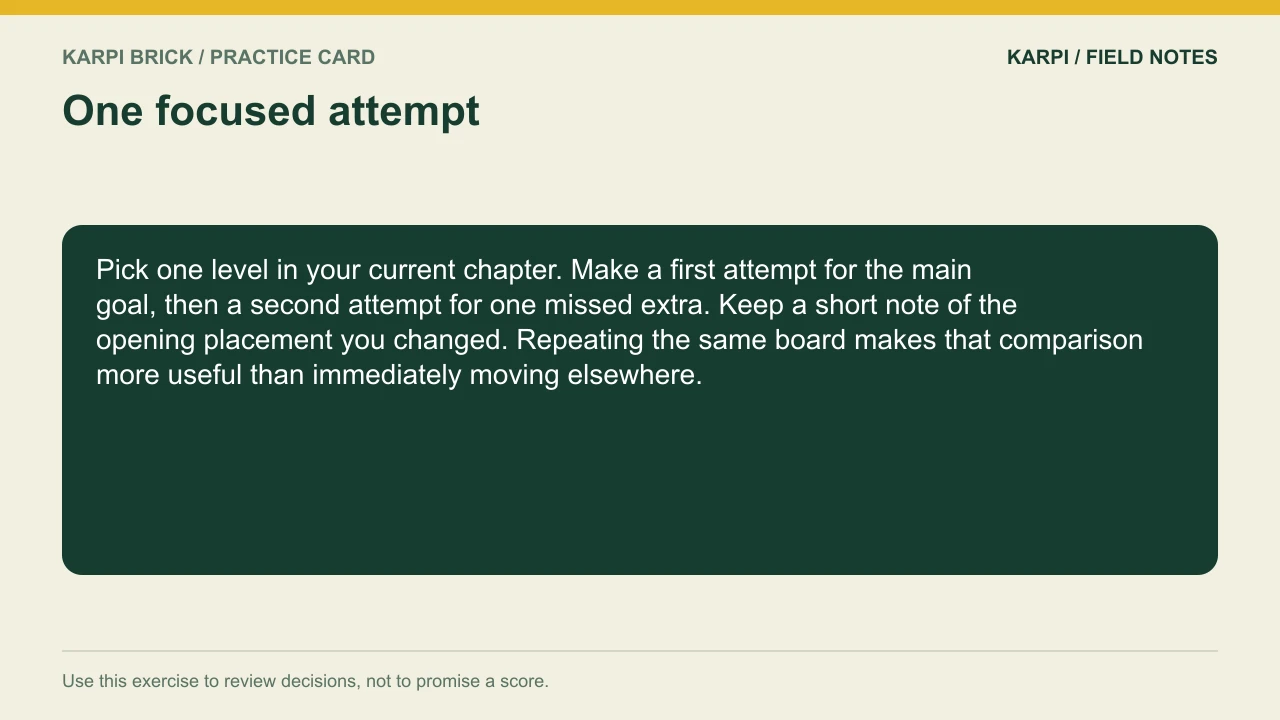
Pick one level in your current chapter. Make a first attempt for the main goal, then a second attempt for one missed extra. Keep a short note of the opening placement you changed. Repeating the same board makes that comparison more useful than immediately moving elsewhere.
At the console | What to use |
|---|---|
Open this cartridge | |
Main controls | Left/right move; Down soft-drops; Up hard-drops; Space or the red key rotates. |
Pause | START/PAUSE on the console; Enter or P on a keyboard |
Journey | 12 levels across three chapters; read the goal and two extras |
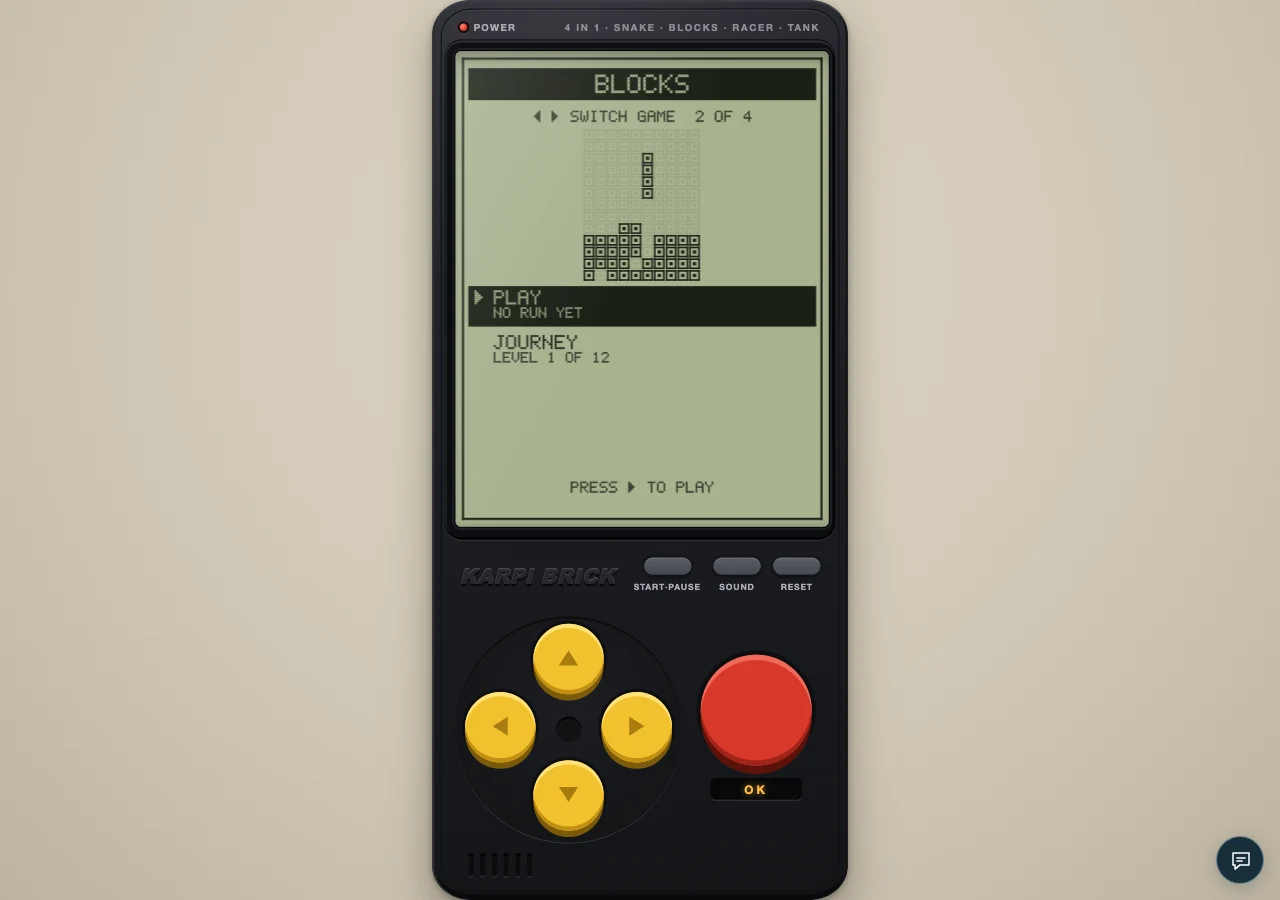
Take it to the board: Play Blocks and test one decision from this guide. The advice describes the current cartridge rules; a practice exercise is not a guaranteed score or clear.
 Take it to the gameBrick GameSnake, Blocks, Racer and Tank on a 90s handheldPlay free
Read next
The NEXT Box Can Save Your Blocks Run For the series starting point, read Karpi Brick Blocks: Build a Floor, Not a Tower.