 KarpiGames Editorial
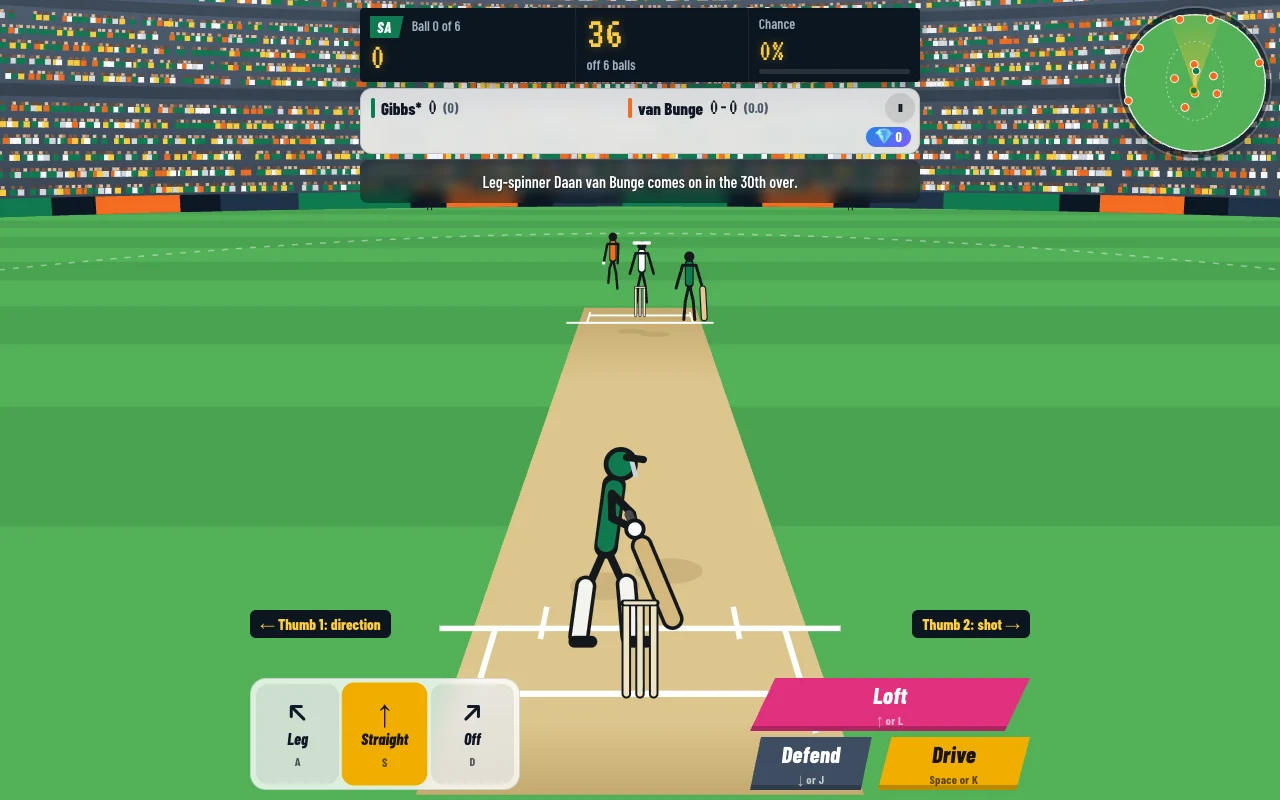
Game recreation captured locally; this is not an archival match photograph.
Herschelle Gibbs' six sixes against the Netherlands made one World Cup over a complete event of its own. The matchup with Daan van Bunge is also a sharp game challenge: six balls, a thirty-six-run target and no ordinary room for a four.
What happened in the real match
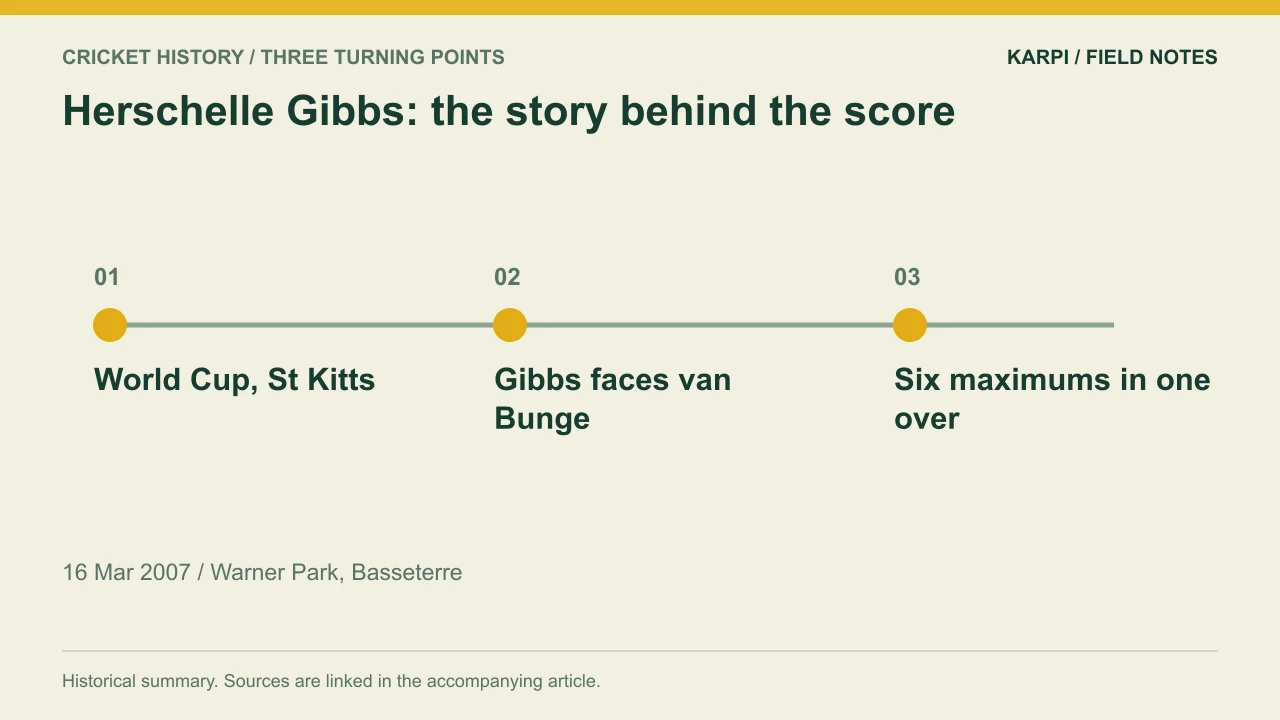
Gibbs struck every delivery of a van Bunge over for six during the 2007 World Cup in St Kitts. It was the first six-sixes over in one-day international cricket. Years later, the ICC recalled the feat when van Bunge spoke about facing Gibbs again. The record is simple to state, but its fascination lies in the requirement to repeat a maximum outcome across the entire over. ICC's retrospective on Gibbs and van Bunge.
A spin scenario asks for a fresh timing read
It is easy to carry a rhythm from a pace-bowling challenge into a new opponent. That is a poor shortcut. The game identifies van Bunge as a spin bowler, and the useful habit is to observe the actual arrival rather than tapping on the beat you remember from Broad or another scenario. The target is identical to Yuvraj's feat, but the delivery you must meet is not.
Step into the game scenario
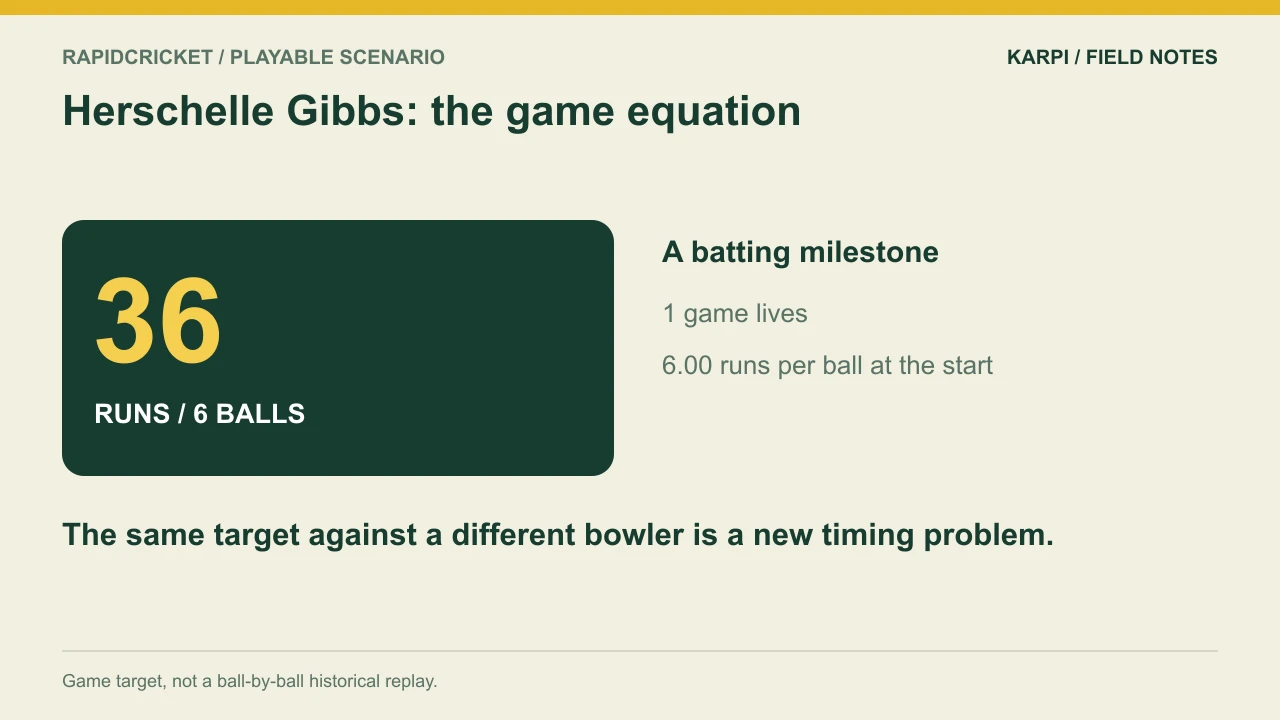
The recreation asks for 36 from six with one life. Use the first delivery to establish the visual rhythm while still committing to a scoring shot; there is no free practice ball inside the target. Check the field before choosing leg, straight or off, and reassess timing after every contact. Do not assume a familiar result sequence implies an identical input sequence.
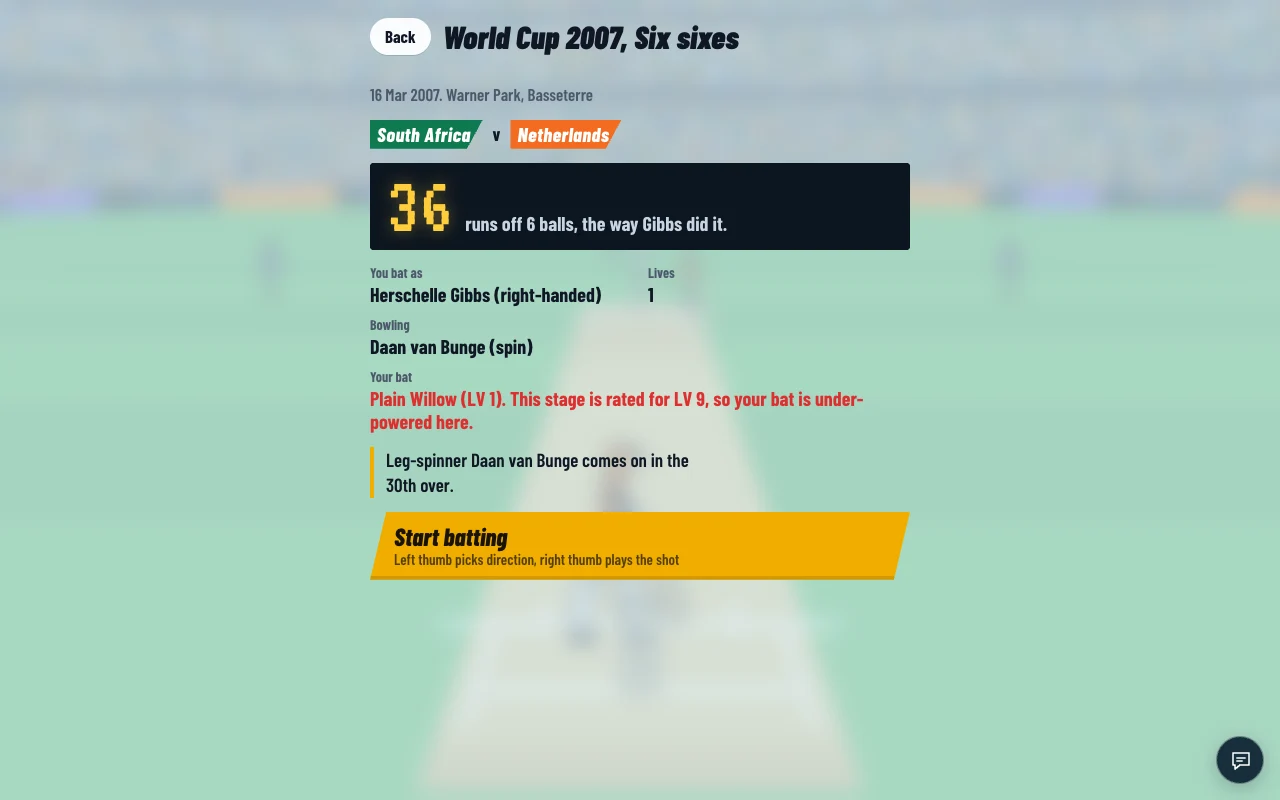
In this game challenge | Starting value |
|---|---|
Target | 36 runs in 6 balls |
Format | Batting feat inspired by the innings |
Game lives | 1 |
Rated bat level | 9 |
Before the first ball
The left controls choose leg, straight or off; the right controls choose defend, drive or loft. The brief shows your equipped bat against the scenario's rating. A lower-rated bat can make a demanding boundary target harder, so use that information when judging a missed attempt. The numbers in the table are the game's starting conditions; its lives, delivery sequence and progression are not a historical scorecard.
Alternate this scenario with the Yuvraj feat. Before each attempt, deliberately forget the previous bowling rhythm and watch the new delivery. Compare the timing feedback instead of only the final total.
Try this finish: Play the Herschelle Gibbs scenario. If it is ahead of your career progress, the link opens an exhibition: you use your own bat and kit, and it does not advance the career or award diamonds. An already-open stage follows normal career rules.
 Take it to the gameRapidCricketReal last-over finishes, two thumbsPlay free
Read next
Gayle's 30-Ball Hundred: The Record Inside the 175 For the series starting point, read Dhoni's 2011 World Cup Six: Four Runs From History.