 KarpiGames Editorial
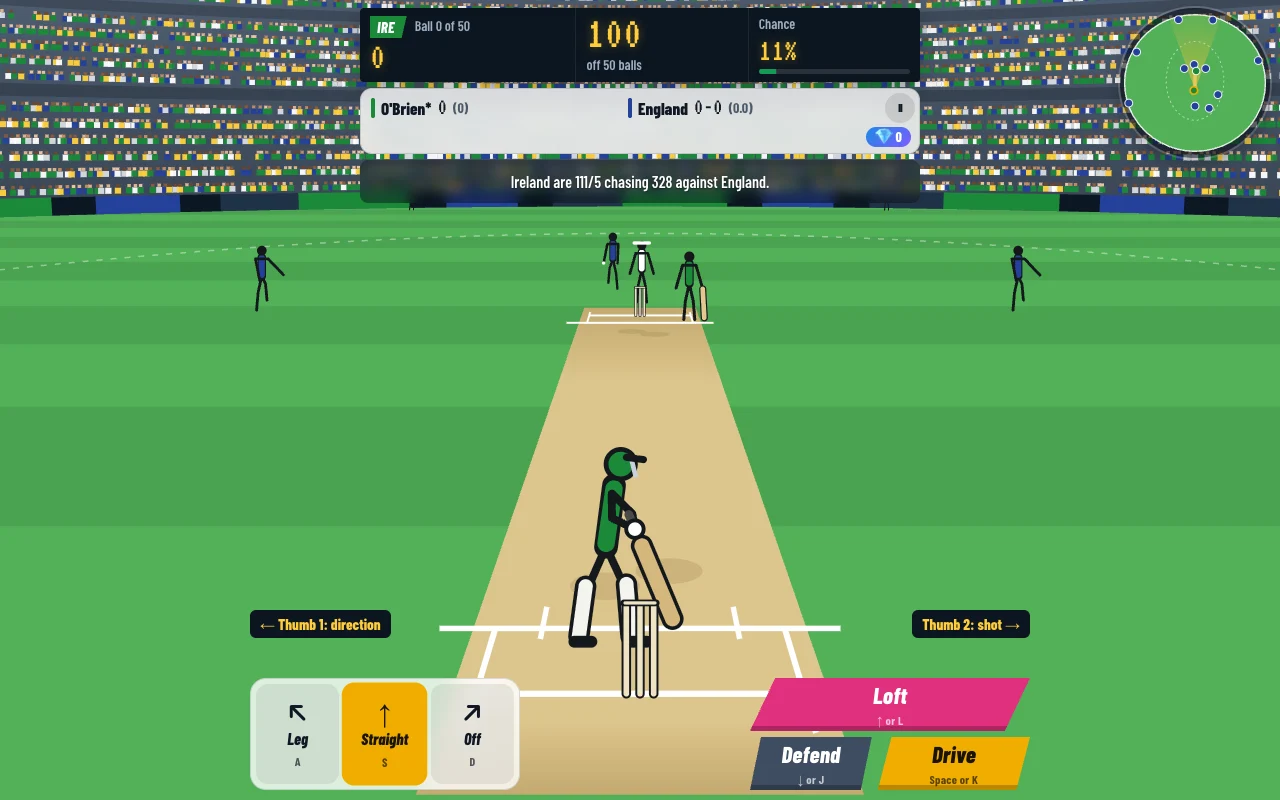
Game recreation captured locally; this is not an archival match photograph.
Ireland's chase against England in 2011 became a different match when Kevin O'Brien began finding the boundary. His fifty-ball hundred did more than set a record at the time: it changed what the rest of the team was being asked to finish.
What happened in the real match
England made 327 for eight in Bengaluru. O'Brien reached a hundred from fifty balls and was eventually run out for 113, while Ireland completed a three-wicket victory with five balls left. The innings was then the fastest century in men's World Cup history, and the chase was then the tournament's highest successful pursuit. The important final detail is collective: O'Brien created the position, and his teammates completed the result after his dismissal. ICC's Ireland–England 2011 report.
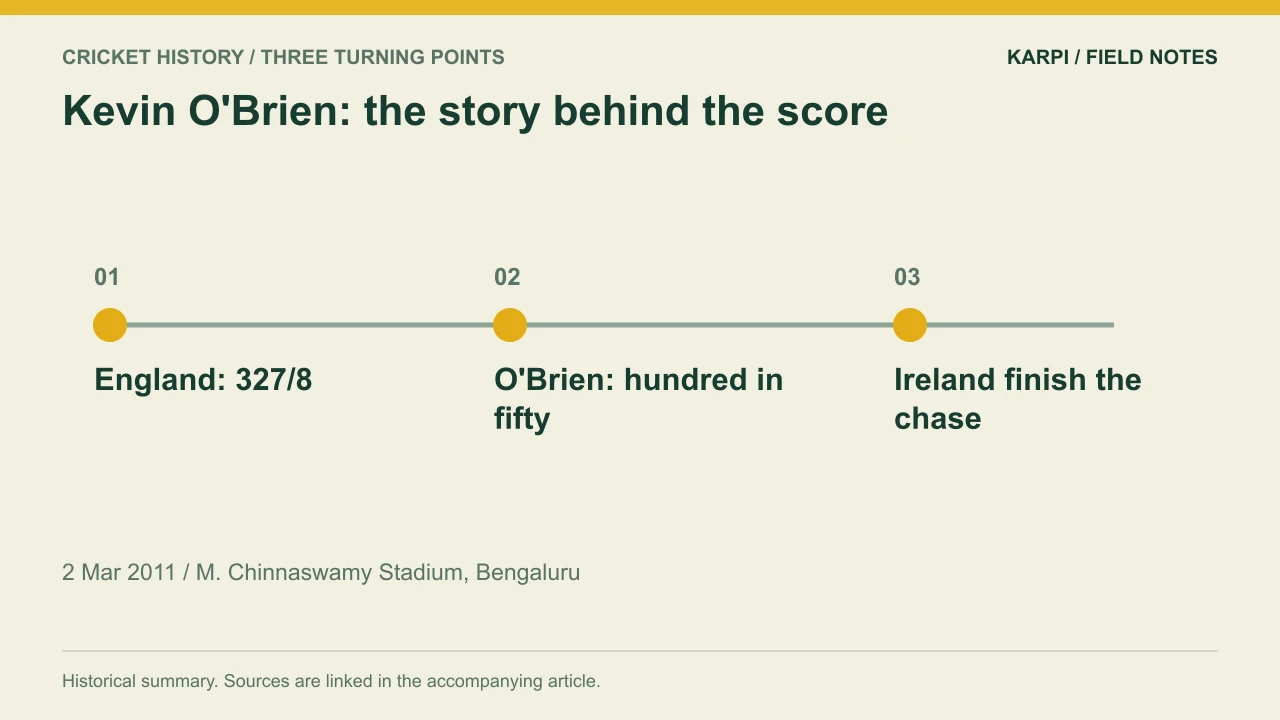
A record can create room for someone else
This story is a useful counterweight to last-ball hero worship. The decisive innings need not include the final winning stroke. A productive burst can reduce a target enough for the team to finish by other means. The game isolates the hundred as a feat, so it is worth remembering that the historical achievement and the eventual winning run occupy different parts of the match.
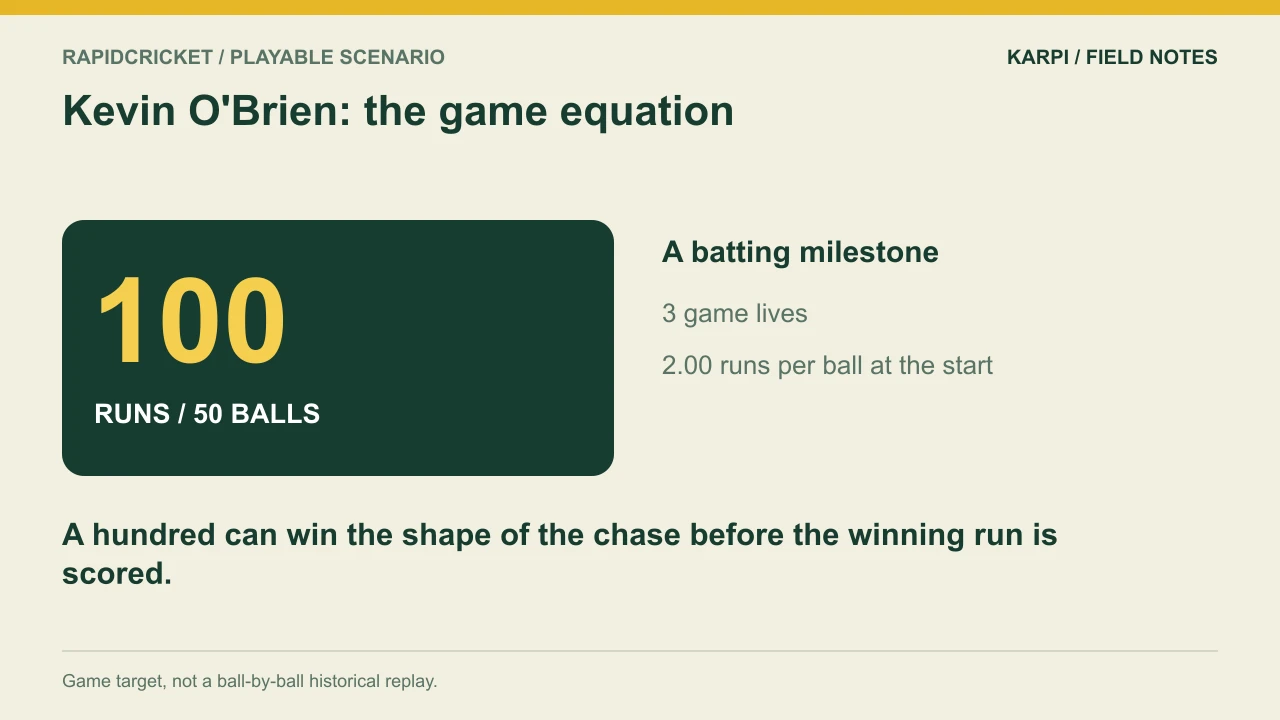
Step into the game scenario
RapidCricket gives you one hundred from fifty balls with three game lives and England pace and spin. The average requirement is two per ball, but that does not mean every delivery must produce exactly two. Boundaries can offset quieter balls. Watch the field and contact timing, and avoid turning the longer allowance into permission to stop tracking the required rate. The challenge is the milestone, not a full 328-run chase.
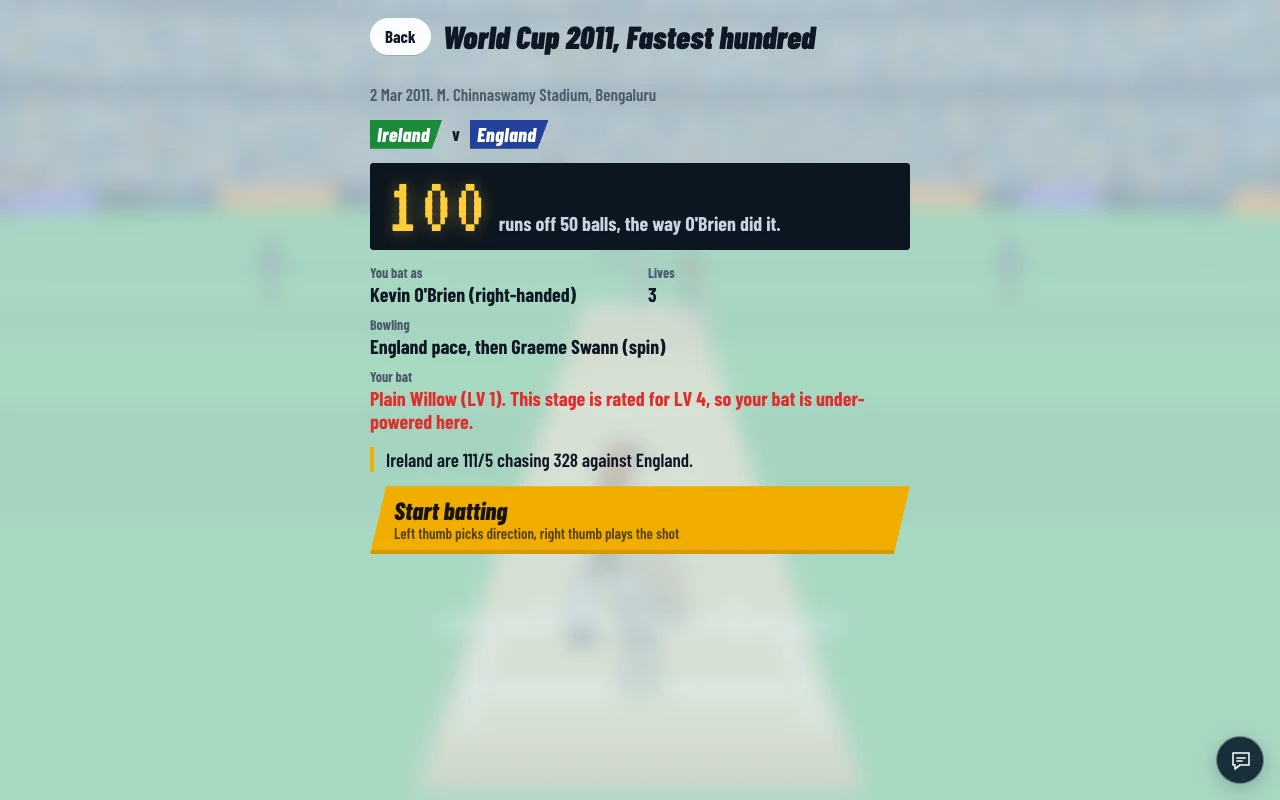
In this game challenge | Starting value |
|---|---|
Target | 100 runs in 50 balls |
Format | Batting feat inspired by the innings |
Game lives | 3 |
Rated bat level | 4 |
Before the first ball
The left controls choose leg, straight or off; the right controls choose defend, drive or loft. The brief shows your equipped bat against the scenario's rating. A lower-rated bat can make a demanding boundary target harder, so use that information when judging a missed attempt. The numbers in the table are the game's starting conditions; its lives, delivery sequence and progression are not a historical scorecard.
Play in five-ball checkpoints. Compare your score with a simple ten-runs-per-five reference, then read the actual remaining equation. Use the reference to notice drift, not as a rigid shot script.
Try this finish: Play the Kevin O'Brien scenario. If it is ahead of your career progress, the link opens an exhibition: you use your own bat and kit, and it does not advance the career or award diamonds. An already-open stage follows normal career rules.
 Take it to the gameRapidCricketReal last-over finishes, two thumbsPlay free
Read next
Maxwell's Delhi Hundred: Forty Balls That Changed the Record For the series starting point, read Dhoni's 2011 World Cup Six: Four Runs From History.