 KarpiGames Editorial
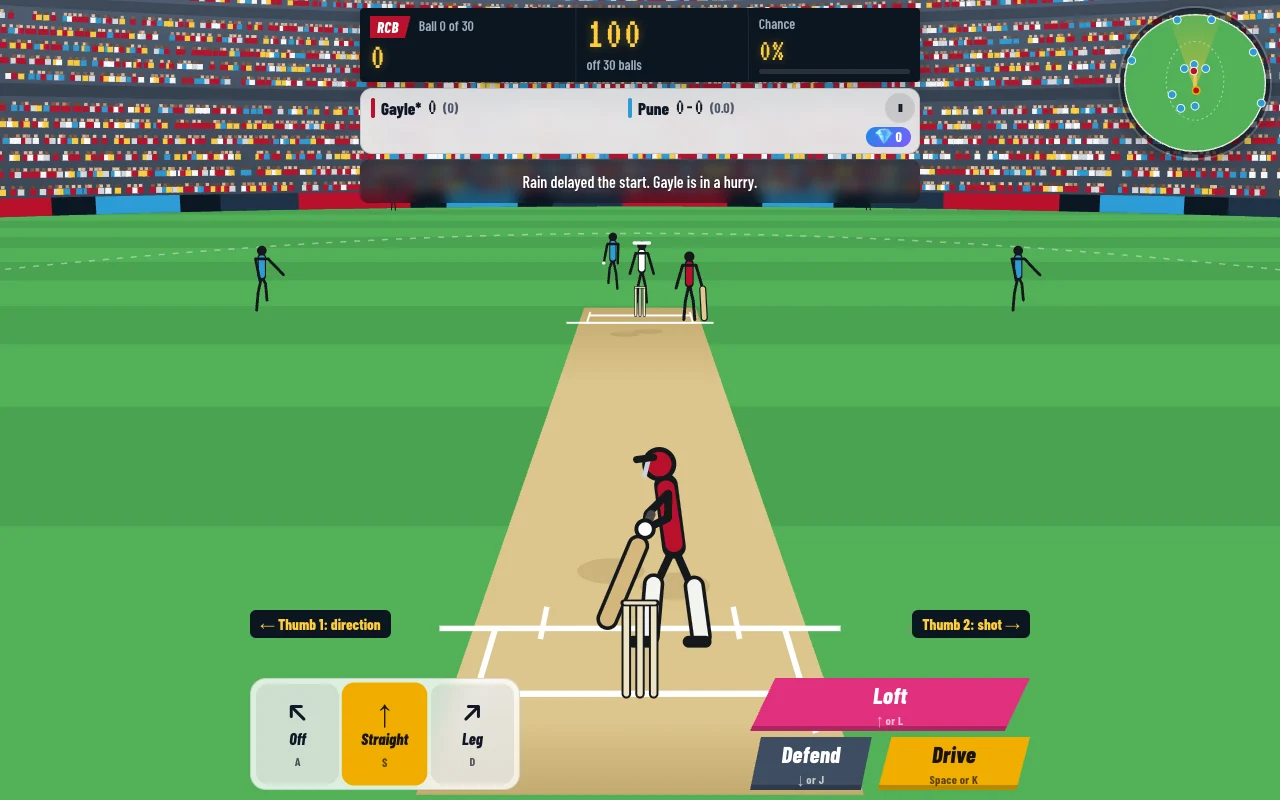
Game recreation captured locally; this is not an archival match photograph.
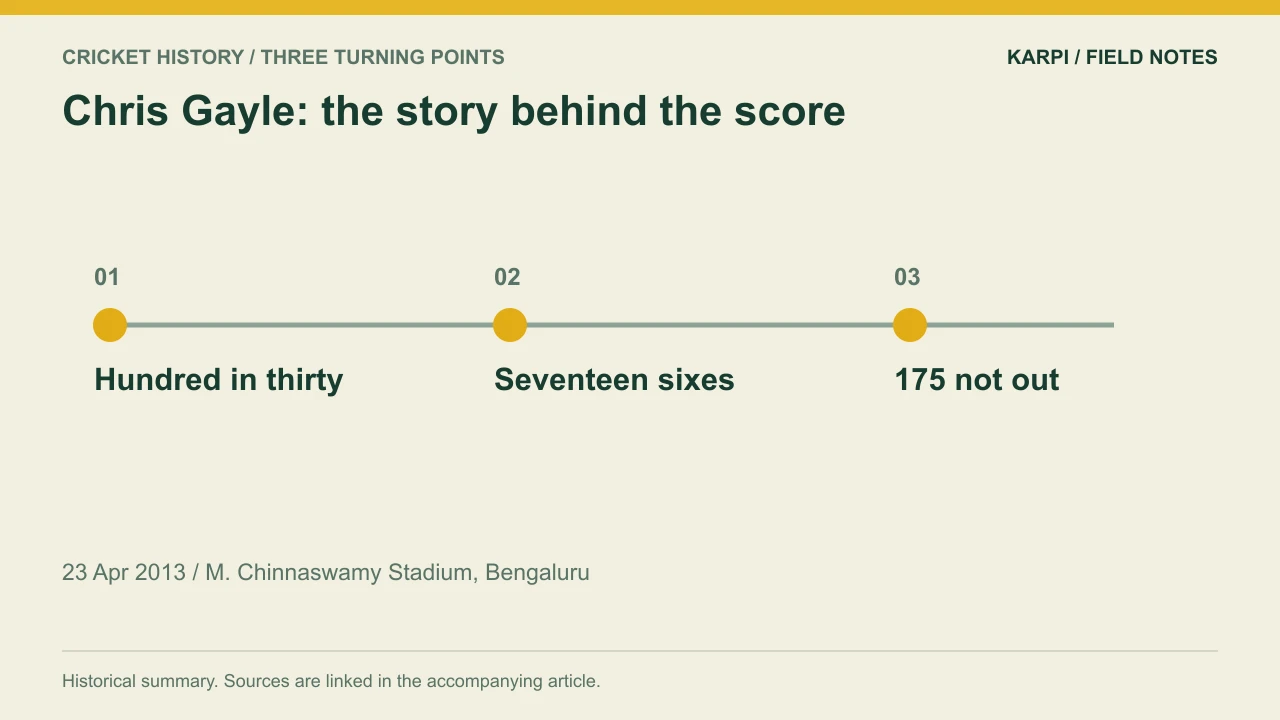
Chris Gayle's 175 not out is the headline. The hundred reached in thirty balls is the challenge inside it. The Bengaluru innings against Pune in 2013 turned a milestone that usually defines a full performance into a point on the way to something much larger.
What happened in the real match
On 23 April 2013, Gayle reached a hundred from thirty balls for Royal Challengers Bangalore against Pune Warriors India. He finished unbeaten on 175, with seventeen sixes. IPL's contemporary statistics recorded both the extraordinary century speed and the highest individual Twenty20 score at that time. The hundred and the final score are different landmarks; reaching one in a game recreation does not mean replaying the whole innings. IPL's contemporary Gayle innings statistics.
A century target is a pacing problem
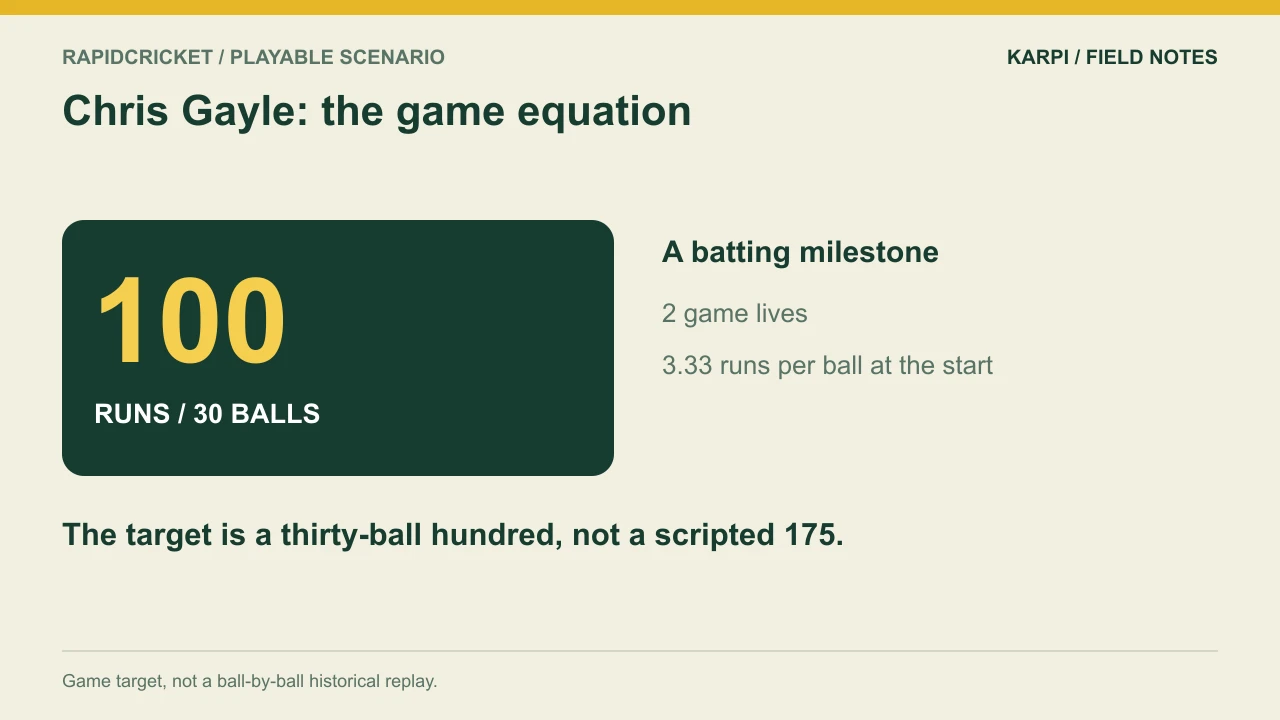
One hundred from thirty requires more than three runs per ball on average. That is demanding, but it is not six sixes in every over. A few low-scoring deliveries can be absorbed only if other balls compensate. The longer format gives you room to build a pattern and enough time for a poor habit to repeat. It tests sustained judgement as well as a spectacular opening.
Step into the game scenario
The game uses a 100-from-thirty feat with two lives and a mix of Pune pace and spin. Read each bowler's delivery rather than using one timing rhythm for the whole attempt. Keep track of the remaining target after each over-sized group of six balls. If you are ahead of the arithmetic, do not assume that every ball still needs the highest-risk option; if you are behind, identify the contact problem before simply tapping faster.
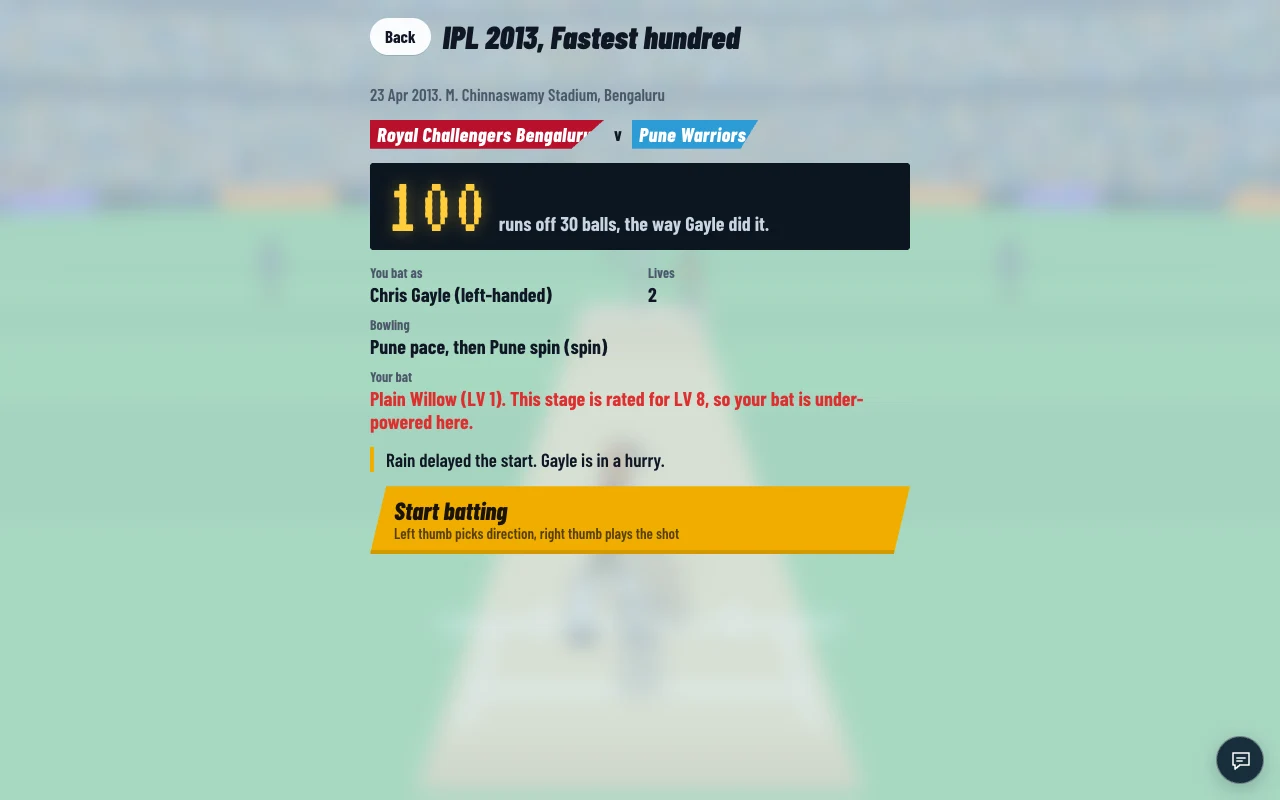
In this game challenge | Starting value |
|---|---|
Target | 100 runs in 30 balls |
Format | Batting feat inspired by the innings |
Game lives | 2 |
Rated bat level | 8 |
Before the first ball
The left controls choose leg, straight or off; the right controls choose defend, drive or loft. The brief shows your equipped bat against the scenario's rating. A lower-rated bat can make a demanding boundary target harder, so use that information when judging a missed attempt. The numbers in the table are the game's starting conditions; its lives, delivery sequence and progression are not a historical scorecard.
Review the score after each six-ball block. Note whether lost ground came from dots, wickets or low-value contact, then adjust one habit on the replay.
Try this finish: Play the Chris Gayle scenario. If it is ahead of your career progress, the link opens an exhibition: you use your own bat and kit, and it does not advance the career or award diamonds. An already-open stage follows normal career rules.
 Take it to the gameRapidCricketReal last-over finishes, two thumbsPlay free
Read next
AB de Villiers' 31-Ball Hundred: A Sprint With No Quiet Middle For the series starting point, read Dhoni's 2011 World Cup Six: Four Runs From History.