 KarpiGames Editorial
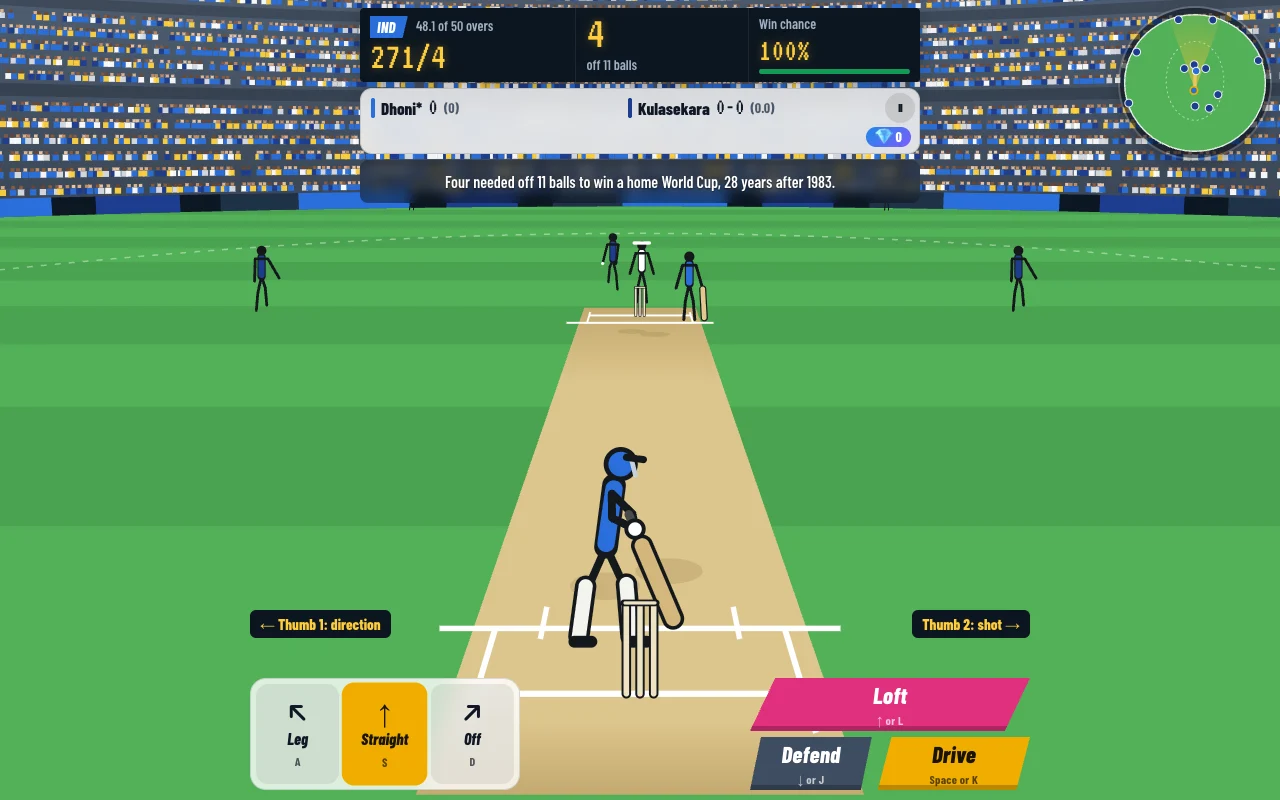
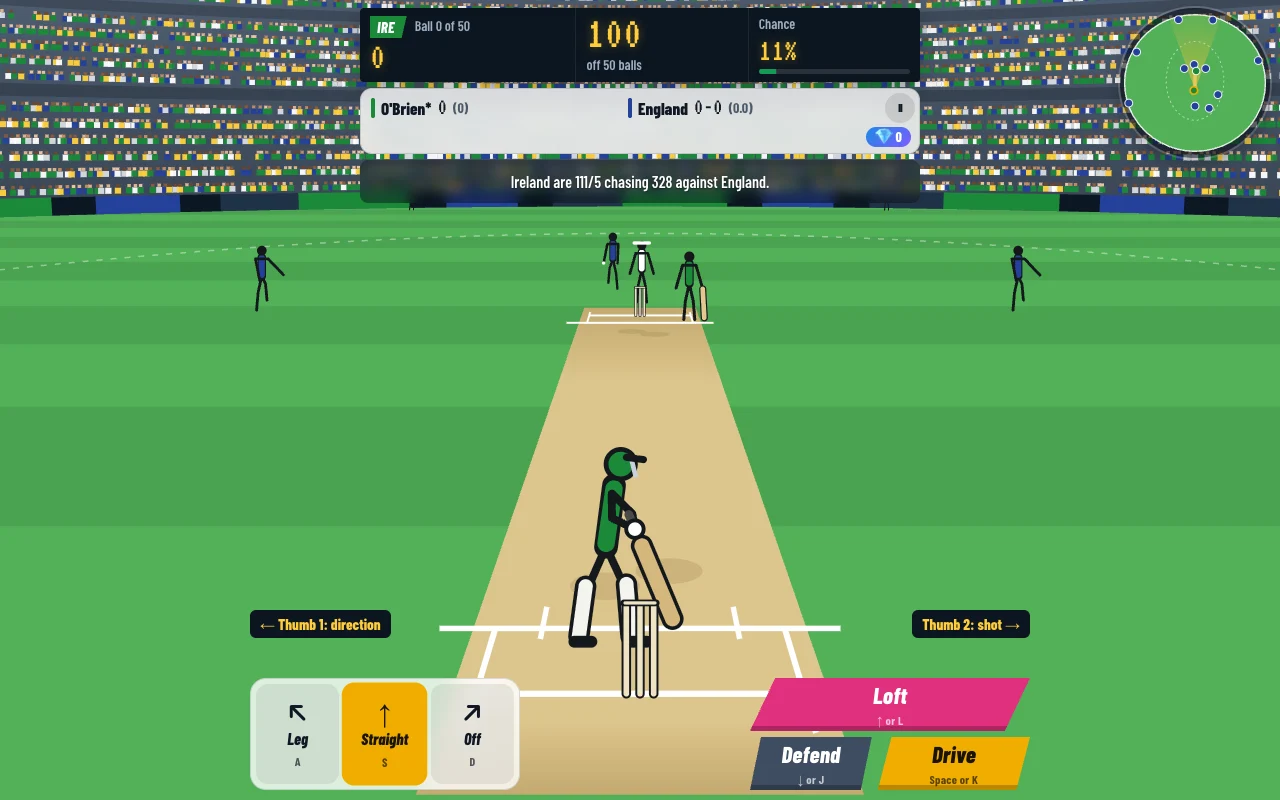
Game recreation captured locally; this is not an archival match photograph.
Four runs were needed. MS Dhoni chose six. The finish at Wankhede on 2 April 2011 remains a perfect doorway into a larger story: a chase rebuilt patiently enough that its last stroke could look inevitable.
What happened in the real match
Sri Lanka made 274 for six, and India lost Virender Sehwag and Sachin Tendulkar early. Gautam Gambhir's 97 kept the chase moving; Dhoni, promoted ahead of Yuvraj Singh, finished unbeaten on 91 from 79 balls. India won by six wickets with ten balls left. The winning blow off Nuwan Kulasekara travelled over long-on and ended India's 28-year wait for another men's ODI World Cup. The six is the image people remember, but the recovery before it is what made that image possible. BCCI's 2011 final report.
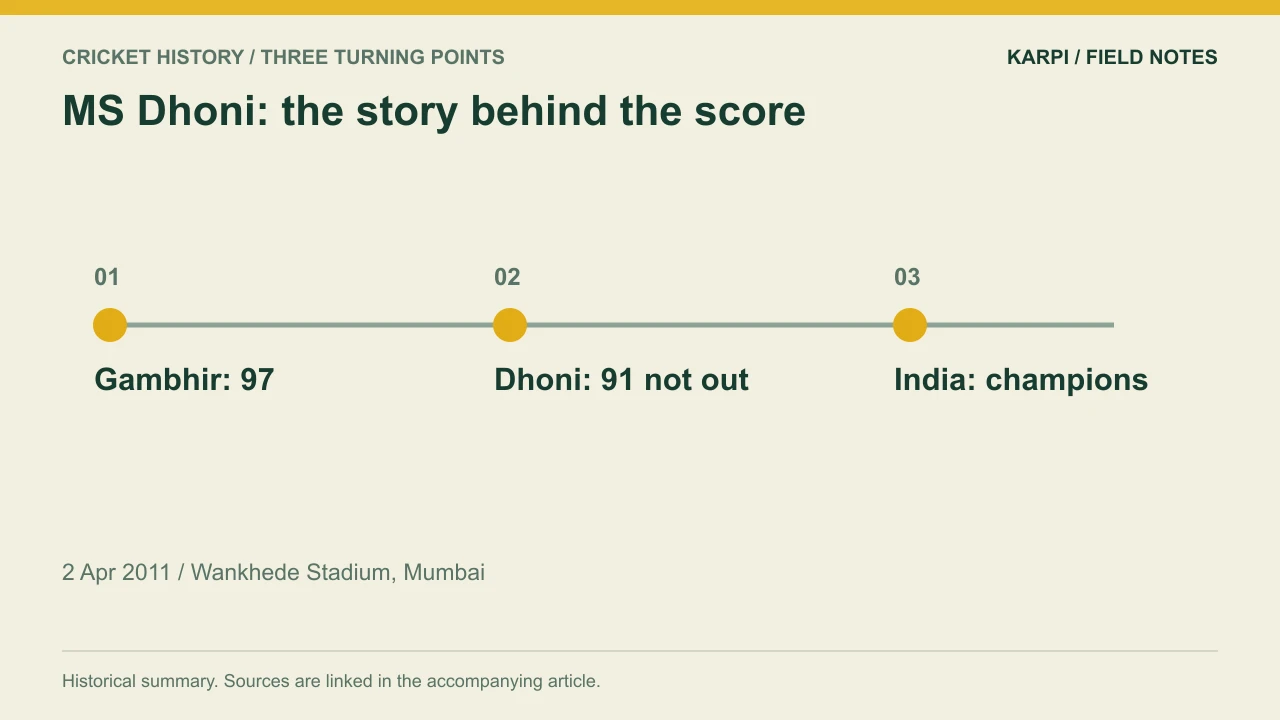
The finish was dramatic because it did not need panic
This is a useful contrast with a last-ball rescue. At four from eleven, the batter has options. A boundary can finish it, but the equation does not demand an airborne shot at every delivery. The emotional scale of a World Cup final is enormous; the remaining arithmetic is manageable. Replaying that small slice makes you notice the difference between the crowd's urgency and the decision the ball actually asks for.
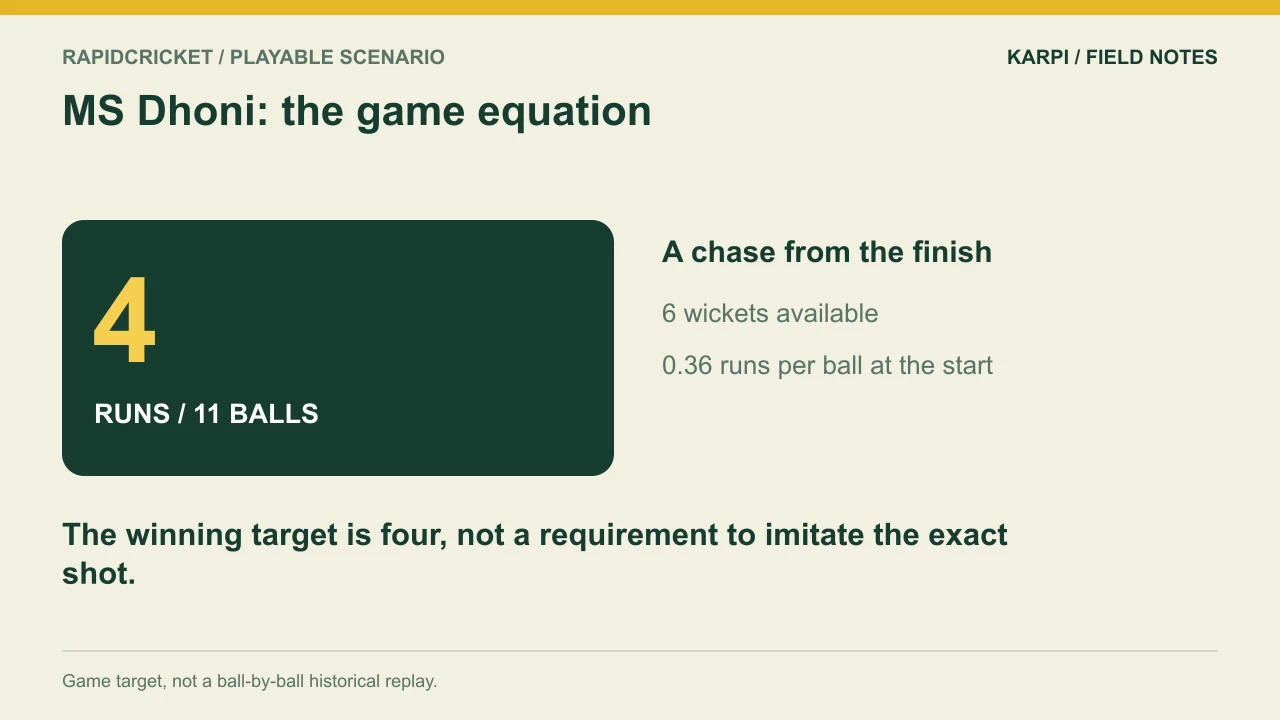
Step into the game scenario
Begin by reading the direction controls and the arriving ball. A well-timed drive is a sensible experiment when four runs can complete the chase; lofting is a choice with a different flight, not a historical obligation. Use the field map to see where defenders are placed. If the first ball does not finish it, update the requirement instead of treating the attempt as ruined because it did not copy the famous six.
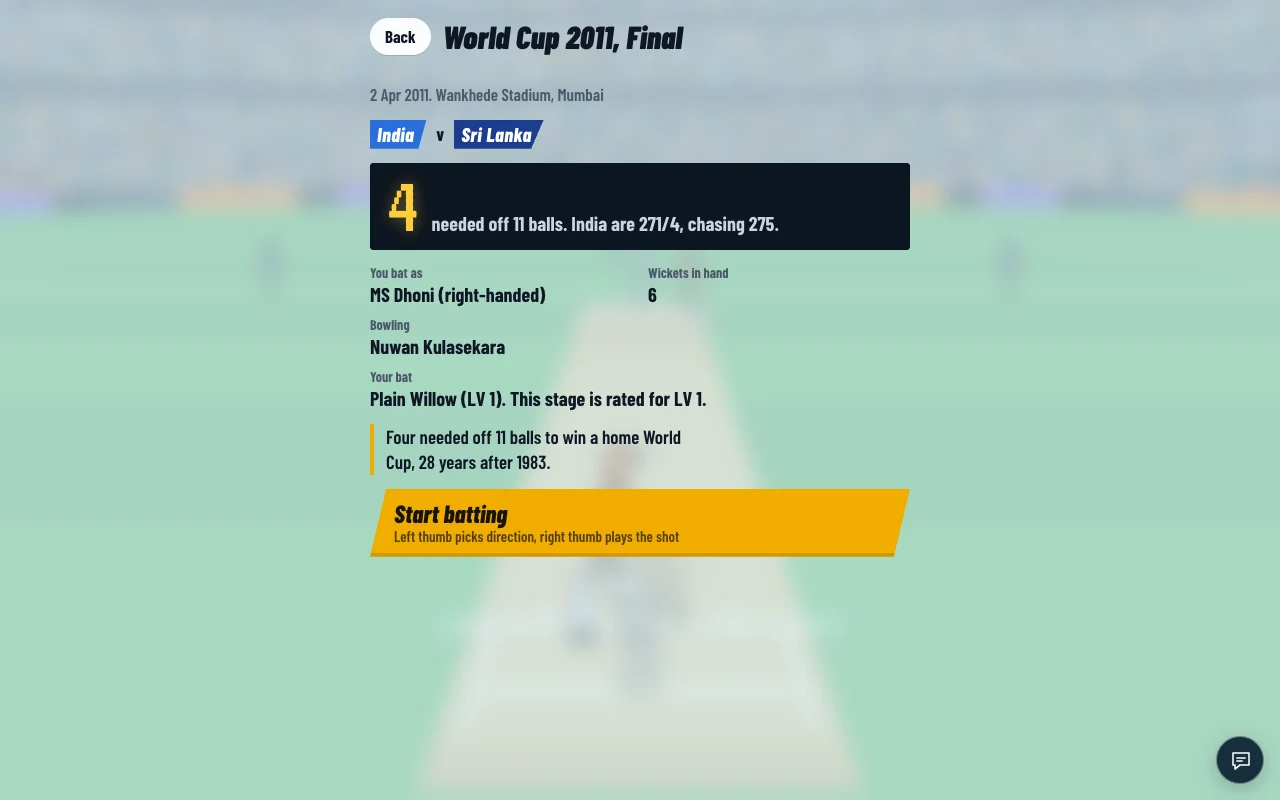
In this game challenge | Starting value |
|---|---|
Target | 4 runs in 11 balls |
Format | Chase inspired by the finish |
Wickets available | 6 |
Rated bat level | 1 |
Before the first ball
The left controls choose leg, straight or off; the right controls choose defend, drive or loft. The brief shows your equipped bat against the scenario's rating. A lower-rated bat can make a demanding boundary target harder, so use that information when judging a missed attempt. The numbers in the table are the game's starting conditions; its lives, delivery sequence and progression are not a historical scorecard.
Try one attempt with a ground-shot plan, then another with a lofted finish in mind. Compare timing and the field, not just whether the ball looked like the television moment.
Try this finish: Play the MS Dhoni scenario. If it is ahead of your career progress, the link opens an exhibition: you use your own bat and kit, and it does not advance the career or award diamonds. An already-open stage follows normal career rules.
 Take it to the gameRapidCricketReal last-over finishes, two thumbsPlay free
Read next
Kohli at the MCG: The Two Sixes That Reopened the Chase Explore the full RapidCricket collection.