 KarpiGames Editorial
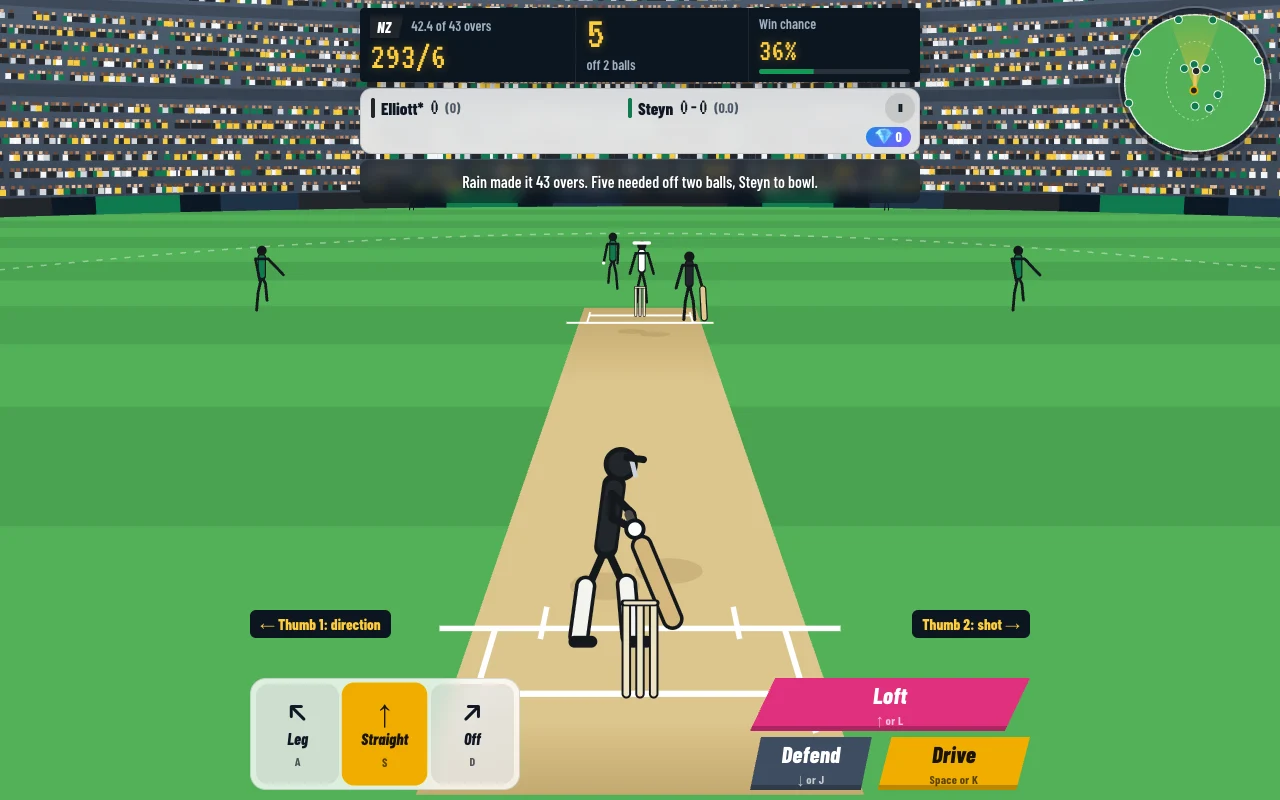
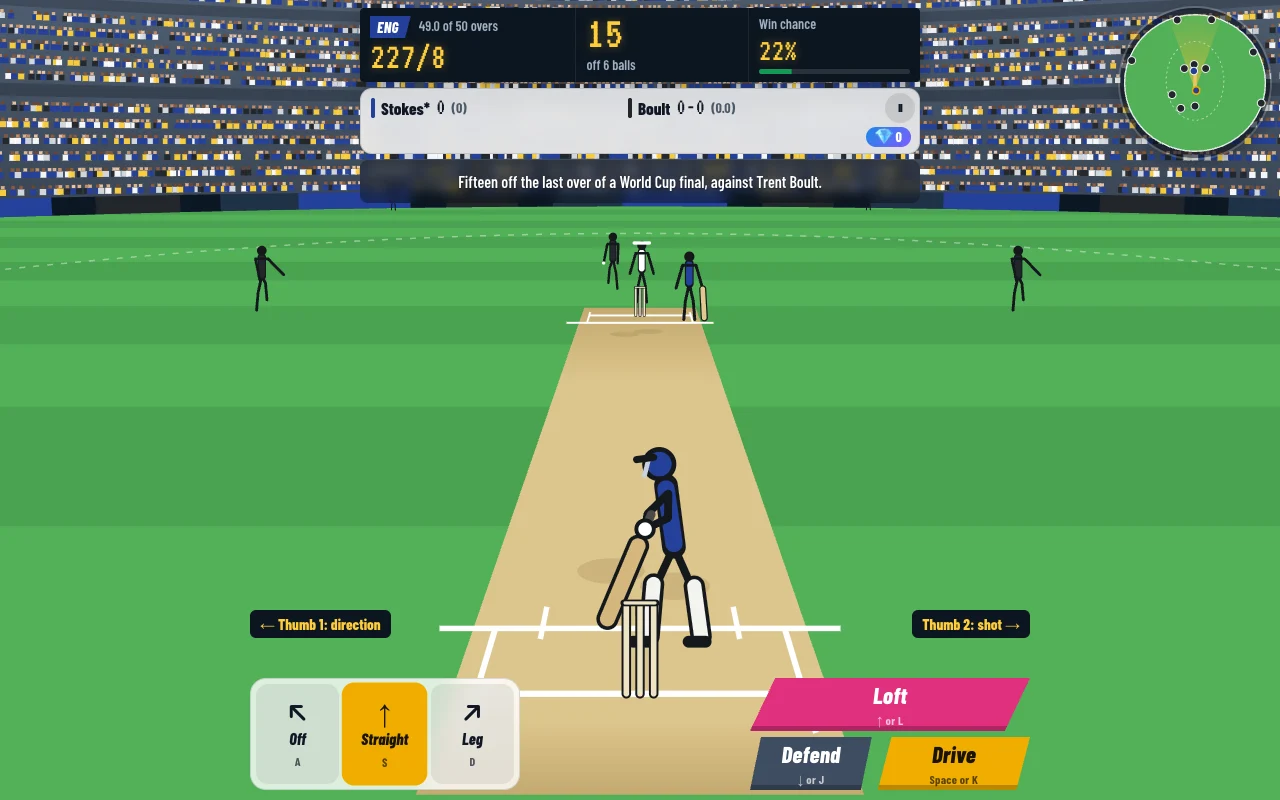
Game recreation captured locally; this is not an archival match photograph.
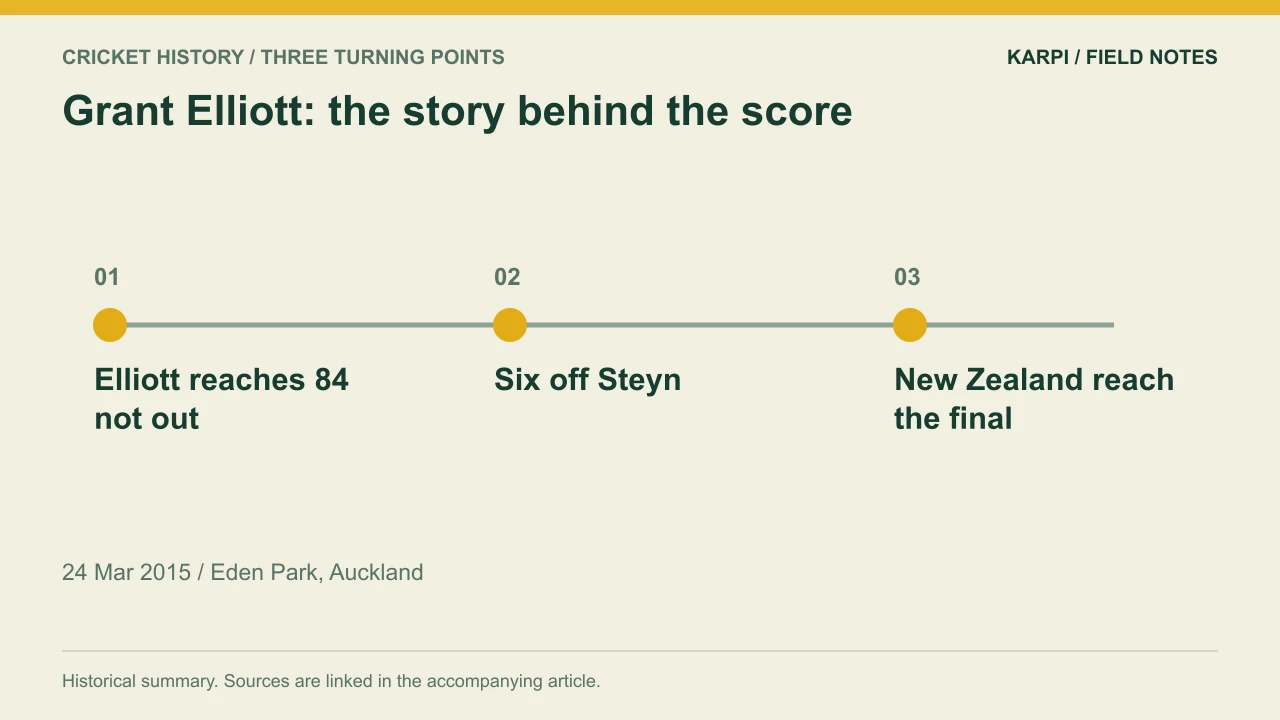
Five from two balls put Grant Elliott opposite Dale Steyn with a World Cup final waiting beyond the boundary. Elliott's six at Eden Park ended the calculation in one stroke and sent New Zealand into its first men's World Cup final.
What happened in the real match
In the rain-affected 2015 semi-final against South Africa, Elliott finished unbeaten on 84 from 73 balls. With five needed from the final two deliveries, he hit Steyn over long-on for six. New Zealand won by four wickets with a ball left. The ICC's retrospective also remembers Elliott reaching toward Steyn afterward: the celebration and the disappointment occupied the same patch of grass. ICC's retrospective on the 2015 World Cup.
A two-ball chase still offers more than one route
Five from two is not the same puzzle as six from one. A boundary followed by another run can be enough in a simple win-target calculation; a six settles it immediately. That distinction makes this short scenario worth replaying. The historical shot is clear, but the decision in front of the player remains open until the ball arrives and the field reveals what is available.
Step into the game scenario
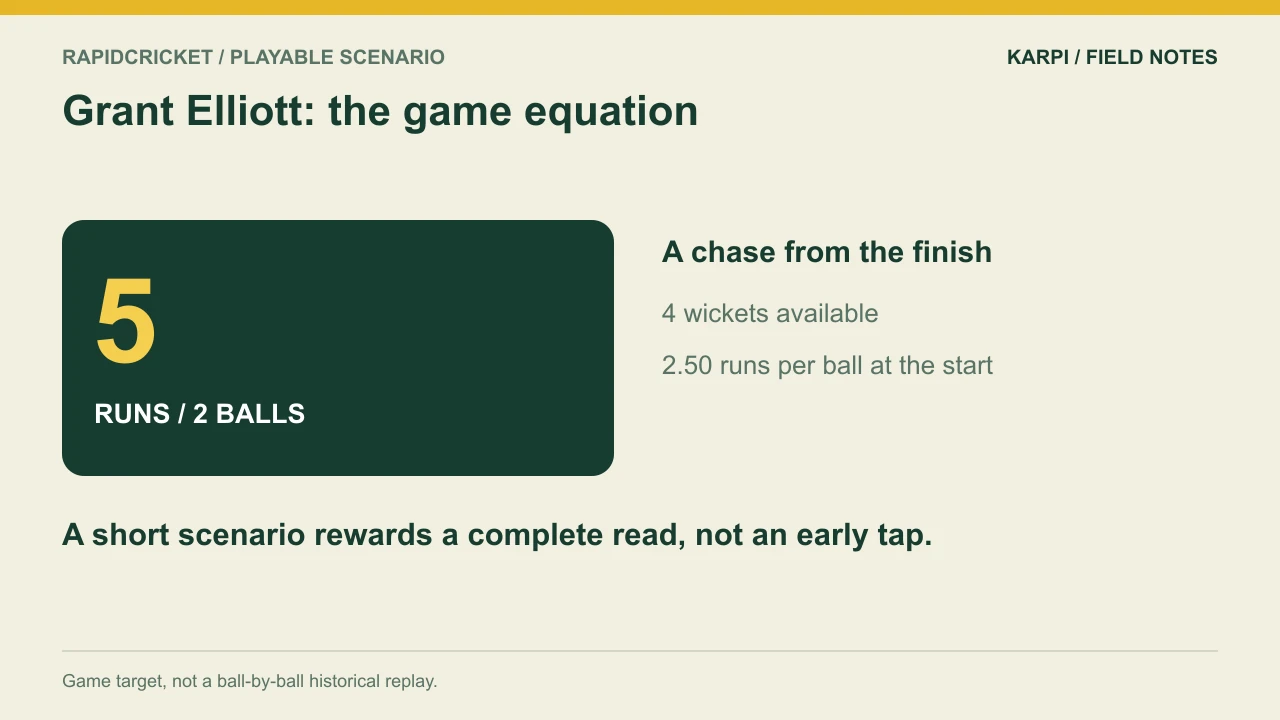
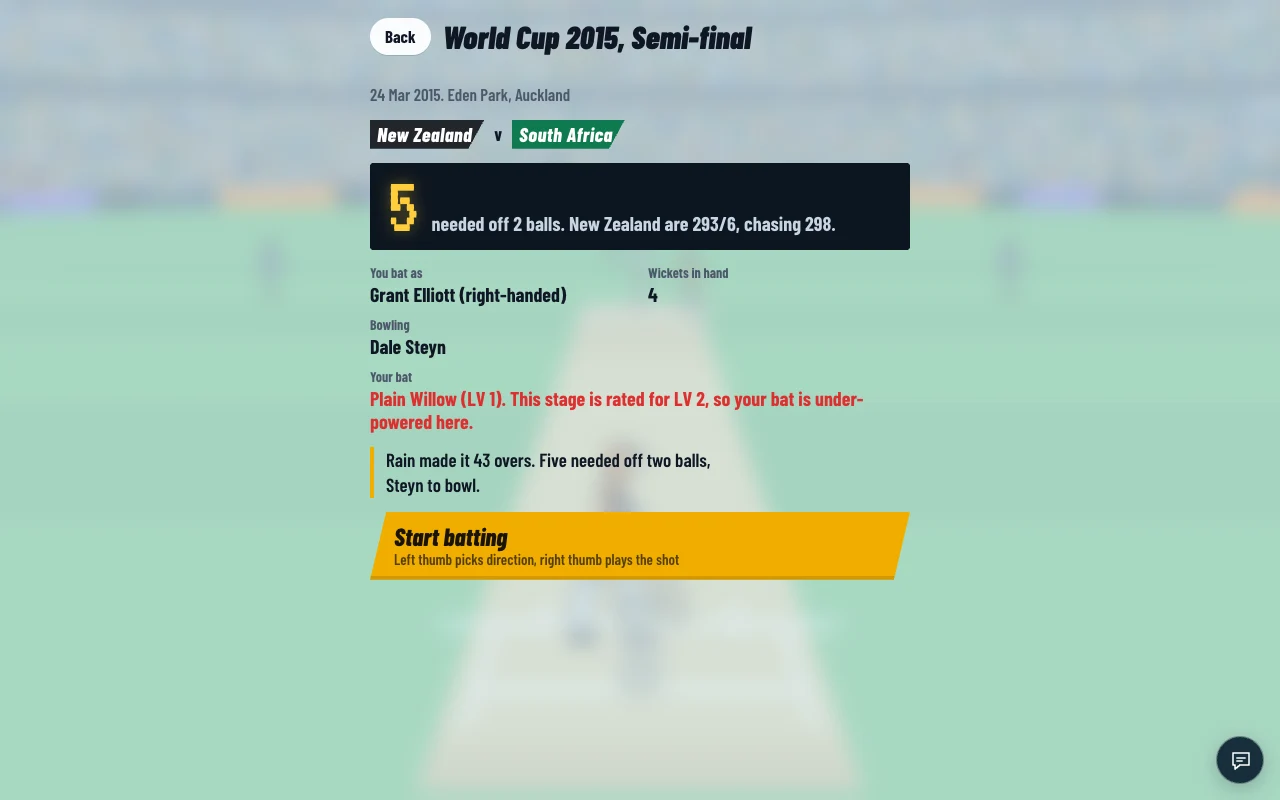
The game starts with five runs required from two balls against Steyn. Read the first delivery without rushing just because the scenario is short. Choose a direction from the field map, then time the shot. If the first ball produces four, the next target is very different from the opening one. Do not keep playing the original five-run problem after most of it has been solved.
In this game challenge | Starting value |
|---|---|
Target | 5 runs in 2 balls |
Format | Chase inspired by the finish |
Wickets available | 4 |
Rated bat level | 2 |
Before the first ball
The left controls choose leg, straight or off; the right controls choose defend, drive or loft. The brief shows your equipped bat against the scenario's rating. A lower-rated bat can make a demanding boundary target harder, so use that information when judging a missed attempt. The numbers in the table are the game's starting conditions; its lives, delivery sequence and progression are not a historical scorecard.
Try the two-ball challenge several times, judging only your first-ball decision. Did you choose a shot for the actual delivery and field, or because the historical six was already in your head?
Try this finish: Play the Grant Elliott scenario. If it is ahead of your career progress, the link opens an exhibition: you use your own bat and kit, and it does not advance the career or award diamonds. An already-open stage follows normal career rules.
 Take it to the gameRapidCricketReal last-over finishes, two thumbsPlay free
Read next
1999's One-Run Nightmare: Klusener, Donald and the Tie For the series starting point, read Dhoni's 2011 World Cup Six: Four Runs From History.