 KarpiGames Editorial
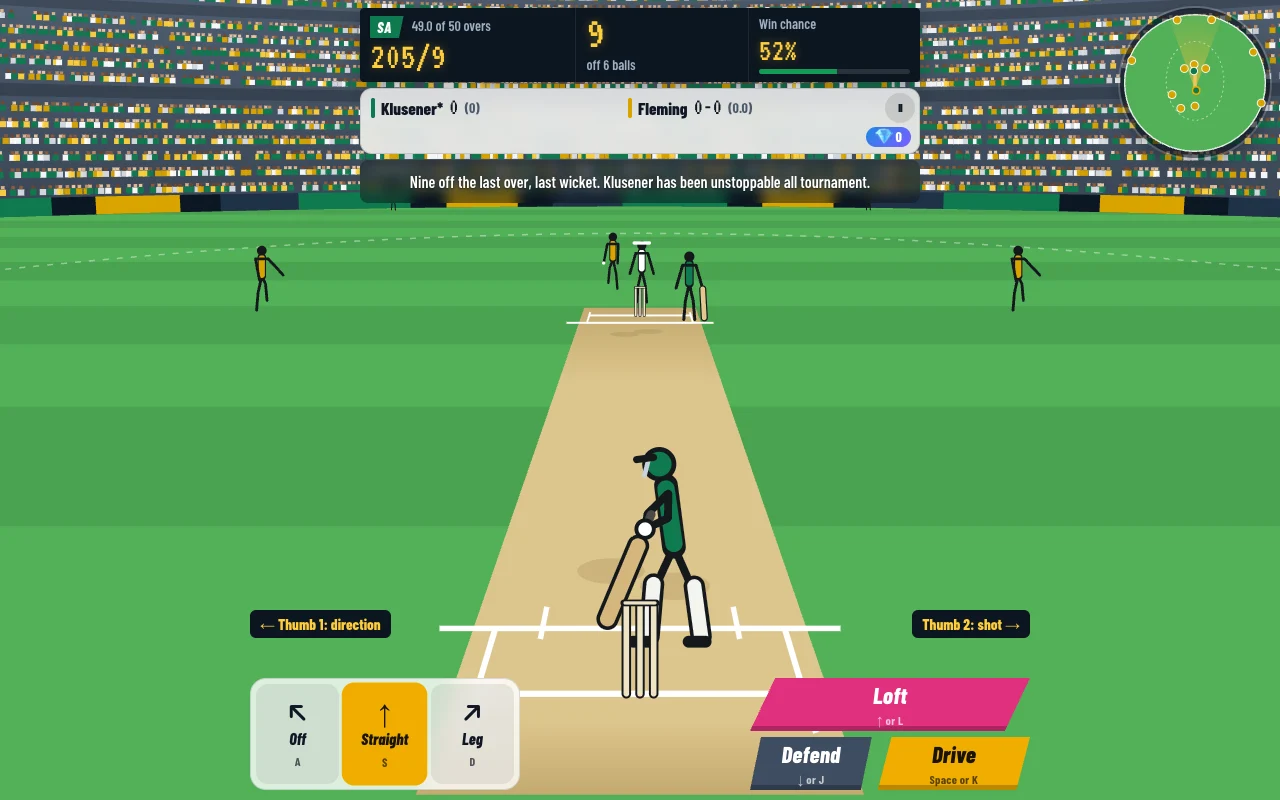
Game recreation captured locally; this is not an archival match photograph.
South Africa drew level with four balls still available. One run remained for a place in the final. The 1999 World Cup semi-final is unforgettable because the arithmetic became simple just before the cricket became chaotic.
What happened in the real match
Australia were bowled out for 213 at Edgbaston. In the last over, Lance Klusener hit Damien Fleming's first two balls for four, bringing South Africa to 213 for nine. The winning run never arrived: a later attempt ended with Allan Donald run out, leaving the match tied and Australia advancing. The finish shows why a level score, time remaining and a near-certain feeling are not the same as a completed chase. ICC's account of the 1999 semi-final.
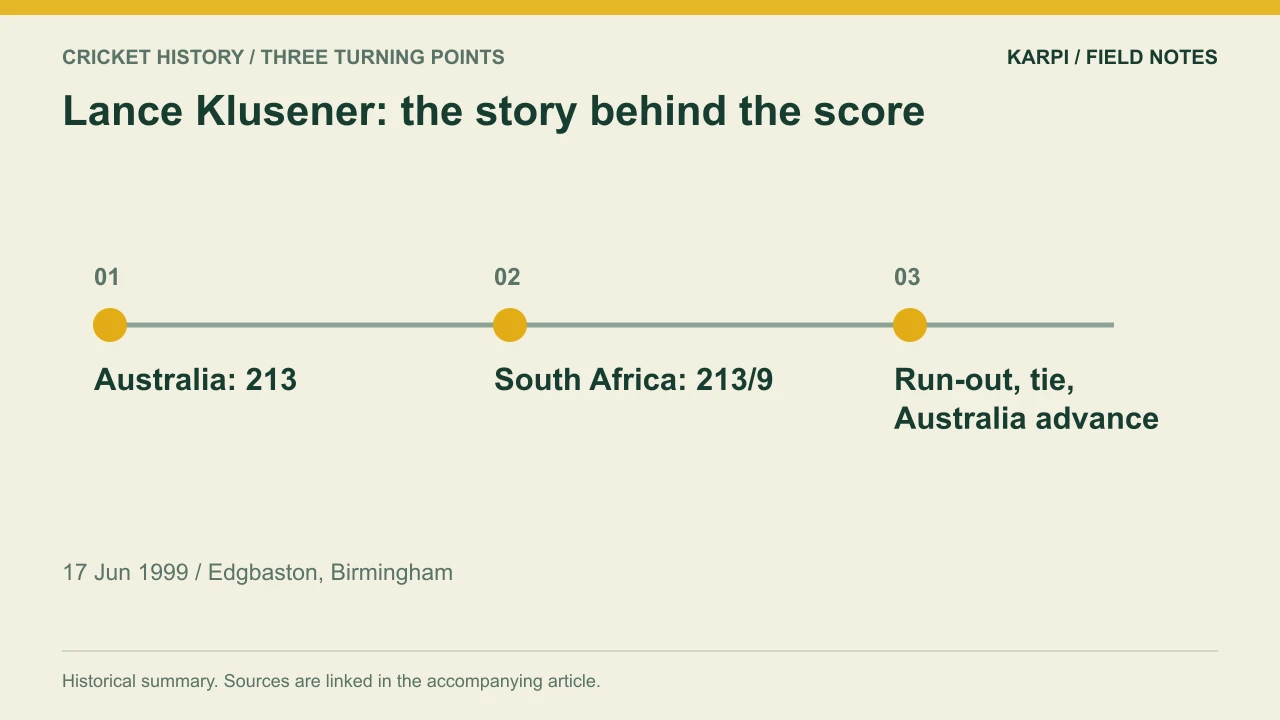
The problem changes when eight runs become one
Two boundaries can make an aggressive plan obsolete. Once the requirement is one, the relevant question is how to complete that run safely. That is an interpretation of the situation, not a claim about what either batter thought. It makes the scenario unusually instructive: success early in the over should change the next decision, while the last wicket still makes an error terminal.
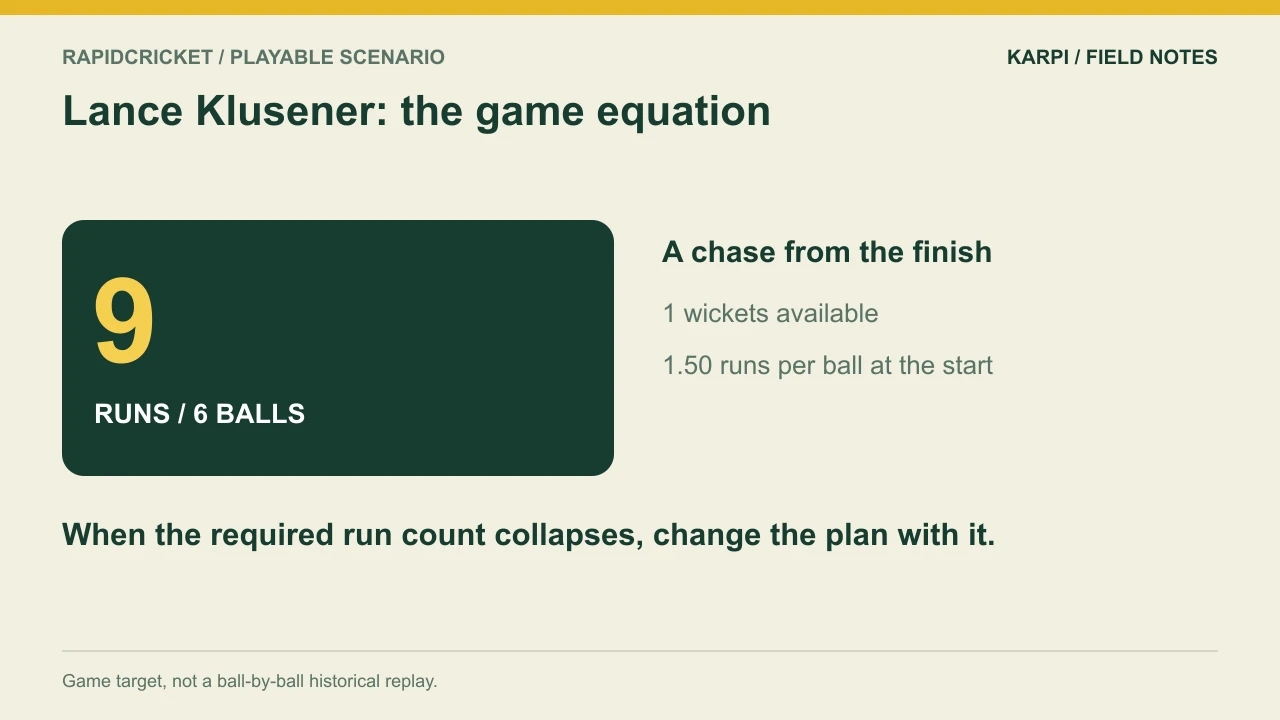
Step into the game scenario
RapidCricket opens at nine from six with one wicket available. If you score heavily early, read the new target and field before choosing another loft. Running settings matter to how you manage ground shots, but the game is not a recreation of the historical communication between Klusener and Donald. Play the visible ball and the game's own running cues. Do not assume a tied total completes a win target.
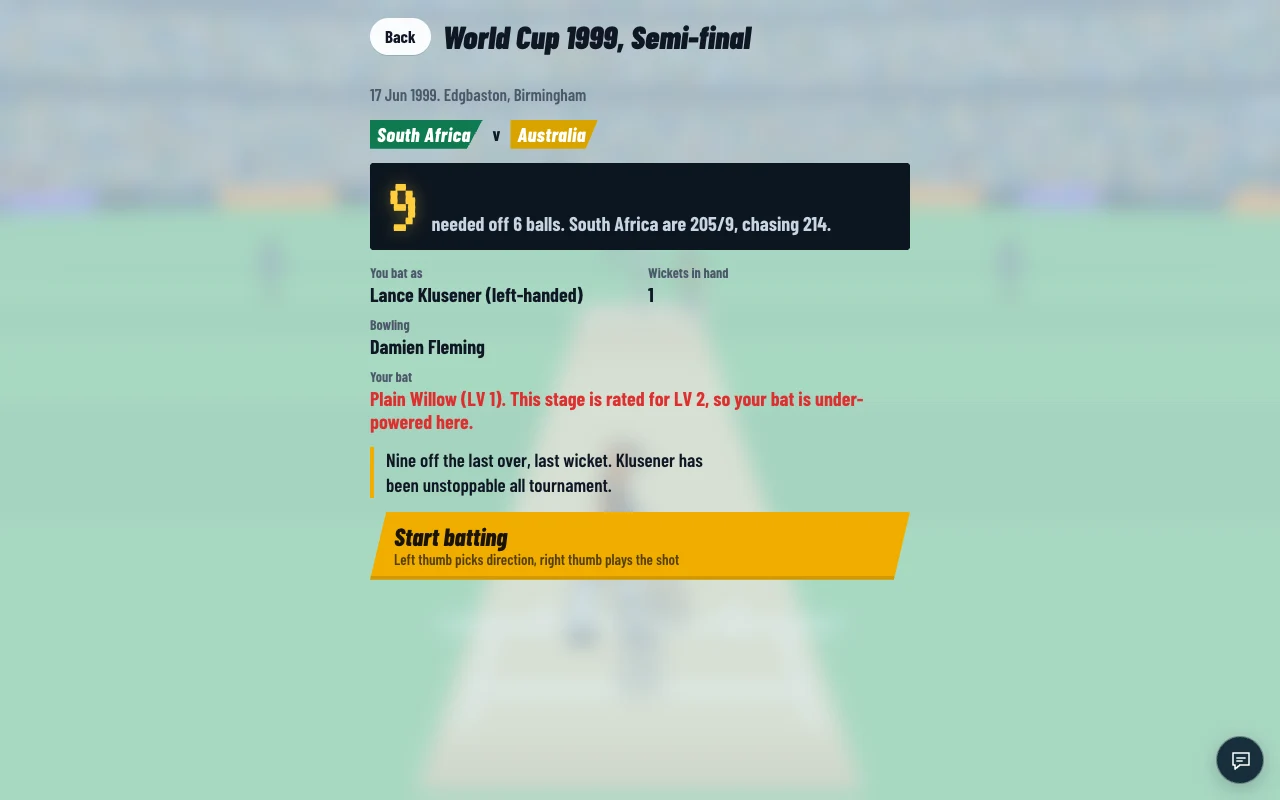
In this game challenge | Starting value |
|---|---|
Target | 9 runs in 6 balls |
Format | Chase inspired by the finish |
Wickets available | 1 |
Rated bat level | 2 |
Before the first ball
The left controls choose leg, straight or off; the right controls choose defend, drive or loft. The brief shows your equipped bat against the scenario's rating. A lower-rated bat can make a demanding boundary target harder, so use that information when judging a missed attempt. The numbers in the table are the game's starting conditions; its lives, delivery sequence and progression are not a historical scorecard.
On each attempt, deliberately reassess after the first boundary. If you reduce the target to one, choose the next shot for that new requirement rather than the drama of the opening over.
Try this finish: Play the Lance Klusener scenario. If it is ahead of your career progress, the link opens an exhibition: you use your own bat and kit, and it does not advance the career or award diamonds. An already-open stage follows normal career rules.
 Take it to the gameRapidCricketReal last-over finishes, two thumbsPlay free
Read next
Lord's 2019: The Last Over That Still Couldn't Separate Them For the series starting point, read Dhoni's 2011 World Cup Six: Four Runs From History.