 KarpiGames Editorial
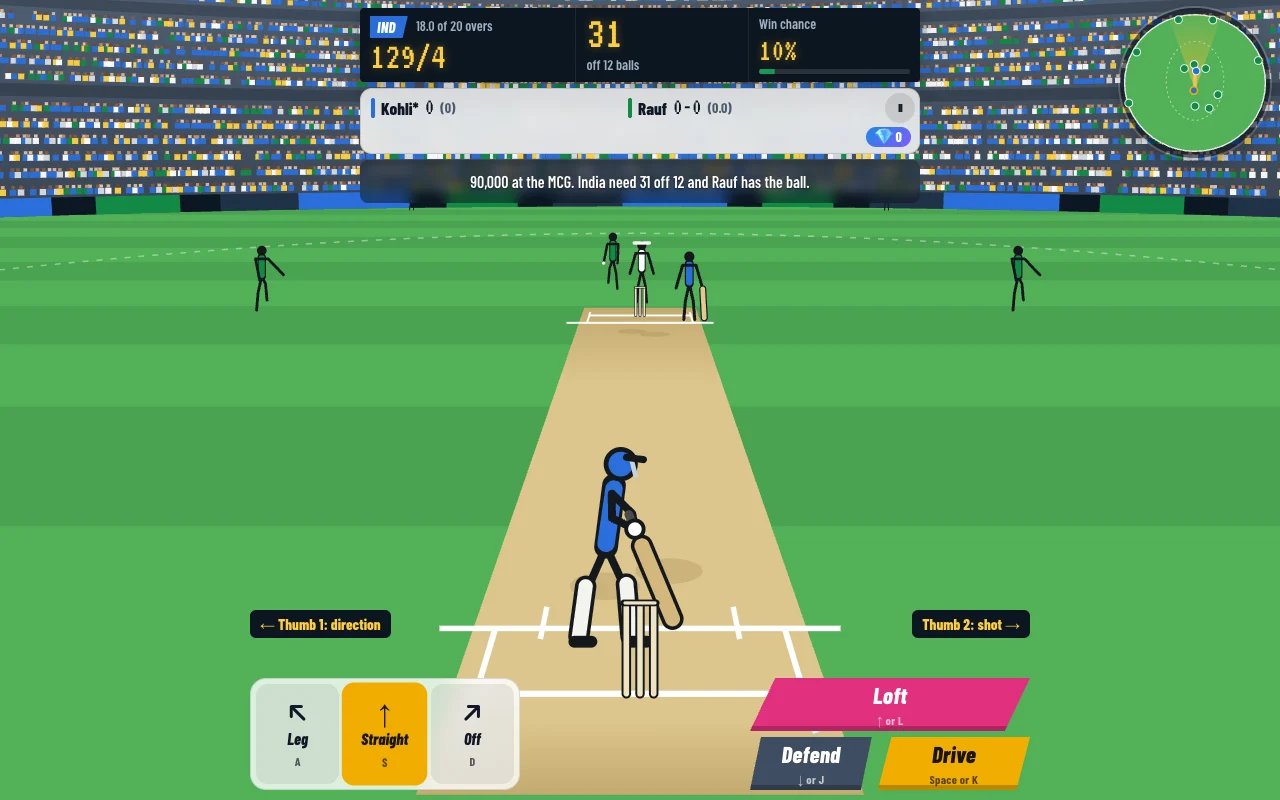
Game recreation captured locally; this is not an archival match photograph.
India's chase against Pakistan in Melbourne looked almost closed. Virat Kohli's two late sixes off Haris Rauf made the last over a contest again. The 2022 finish is compelling because the equation changes faster than the audience can settle on an ending.
What happened in the real match
On 23 October 2022, Kohli made an unbeaten 82 from 53 deliveries as India won off the final ball. Pakistan's early wickets had put India under severe pressure, but Kohli and Hardik Pandya rebuilt the innings. The final two balls of Rauf's nineteenth over went for six, leaving a frantic last over against Mohammad Nawaz. India eventually won by four wickets. The famous straight hit is one instant within an innings whose shape moved from repair to acceleration to a chaotic finish. ICC's India–Pakistan match report.
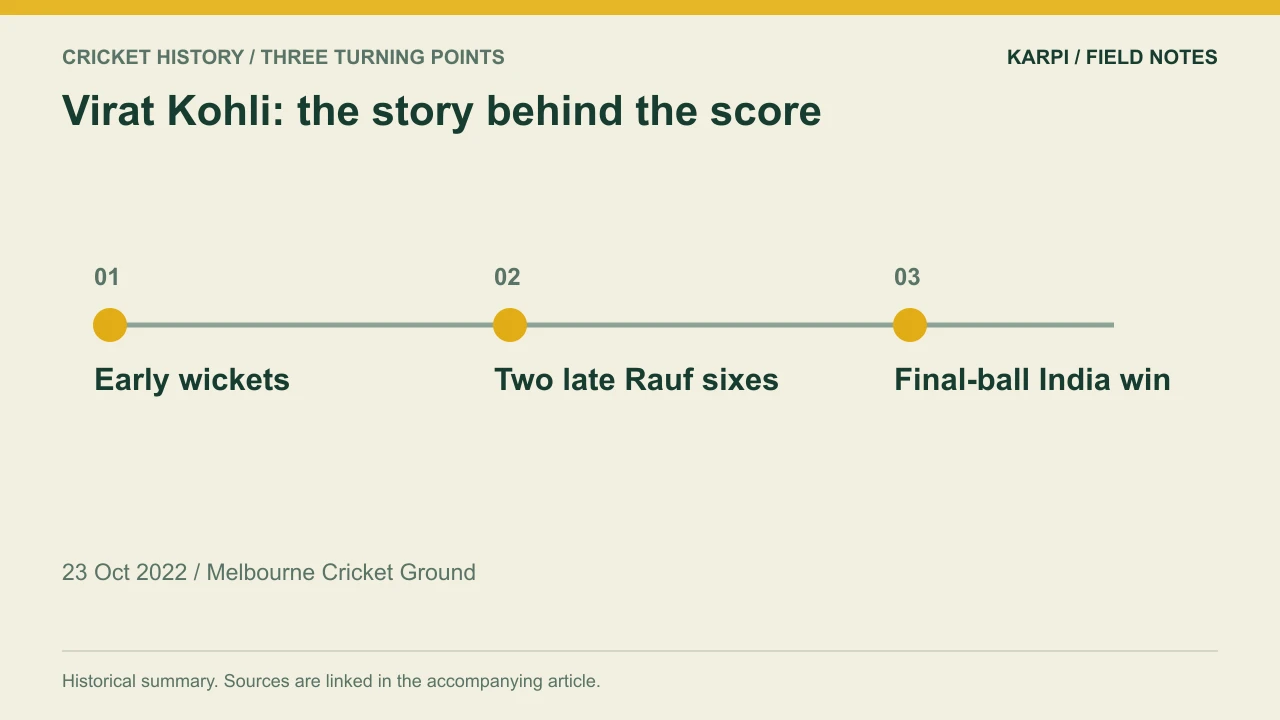
One boundary changes the question; two change the mood
A steep chase invites an all-or-nothing response, but the useful unit is still the next delivery. After a boundary, the required rate and available combinations change. The second successful shot is not simply a repeat of the first decision. This scenario is interesting because it compresses that reassessment into two overs: you can feel the tension between trying to recover the whole deficit immediately and keeping enough control to use the next ball.
Step into the game scenario
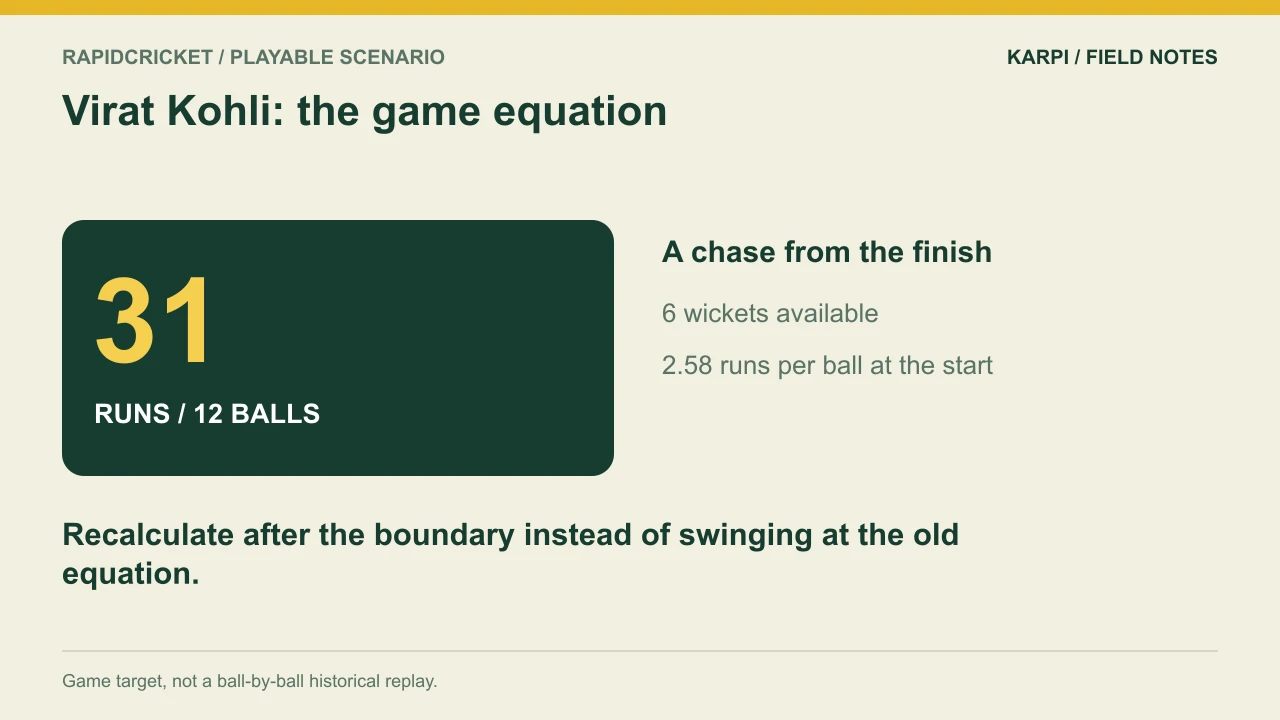
The game begins at 31 from twelve. Read each delivery rather than carrying a fixed swing rhythm from the previous one. Pick a direction, watch the arrival and judge the timing feedback. After a six, count what is still required. A less dramatic scoring shot can become useful once the equation improves. The recreation offers your own outcome; it does not reproduce the real final over's exact extras and dismissals on command.
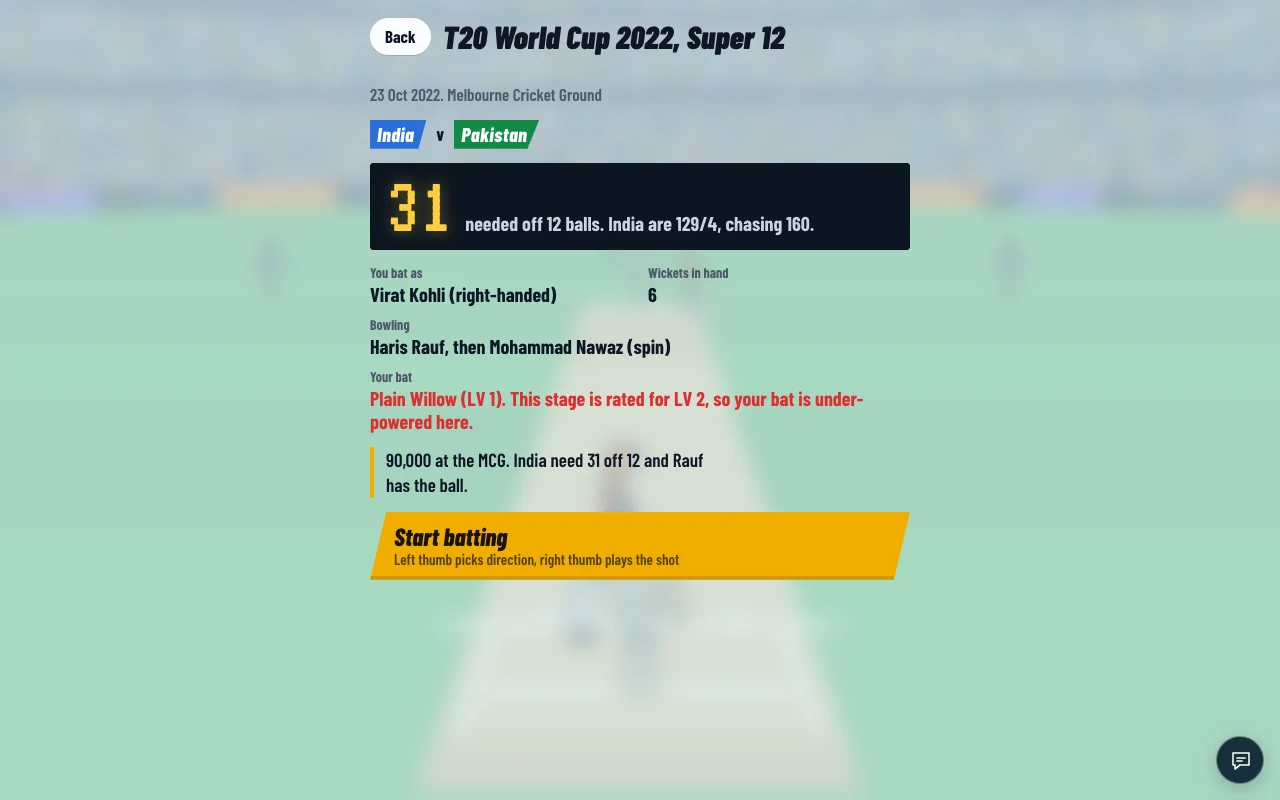
In this game challenge | Starting value |
|---|---|
Target | 31 runs in 12 balls |
Format | Chase inspired by the finish |
Wickets available | 6 |
Rated bat level | 2 |
Before the first ball
The left controls choose leg, straight or off; the right controls choose defend, drive or loft. The brief shows your equipped bat against the scenario's rating. A lower-rated bat can make a demanding boundary target harder, so use that information when judging a missed attempt. The numbers in the table are the game's starting conditions; its lives, delivery sequence and progression are not a historical scorecard.
On a replay, pause mentally after each scoring ball and name runs and balls remaining. Notice whether a successful loft makes you rush the next input.
Try this finish: Play the Virat Kohli scenario. If it is ahead of your career progress, the link opens an exhibition: you use your own bat and kit, and it does not advance the career or award diamonds. An already-open stage follows normal career rules.
 Take it to the gameRapidCricketReal last-over finishes, two thumbsPlay free
Read next
Brathwaite's Four Sixes: Nineteen Needed, No Fifth Ball For the series starting point, read Dhoni's 2011 World Cup Six: Four Runs From History.