 KarpiGames Editorial
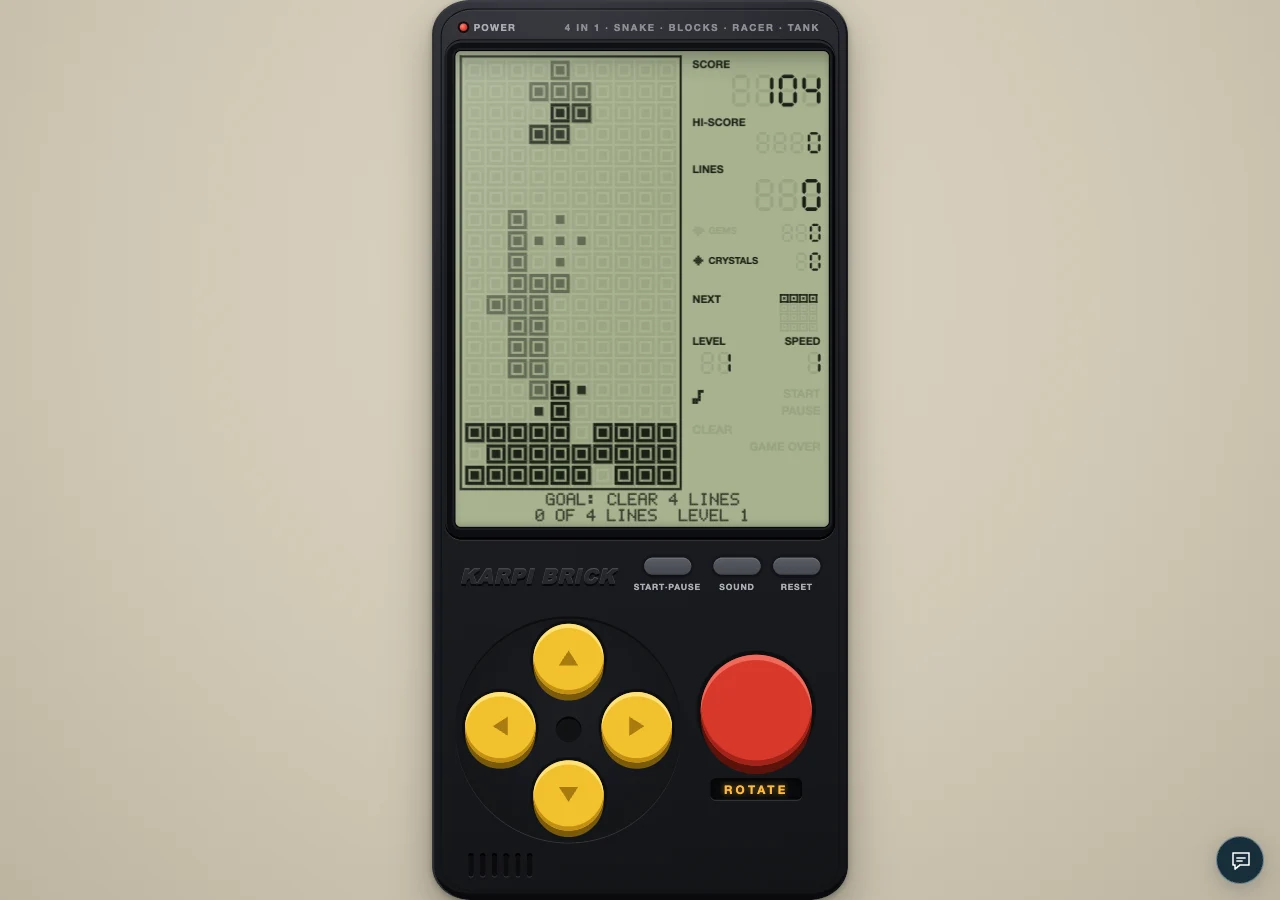
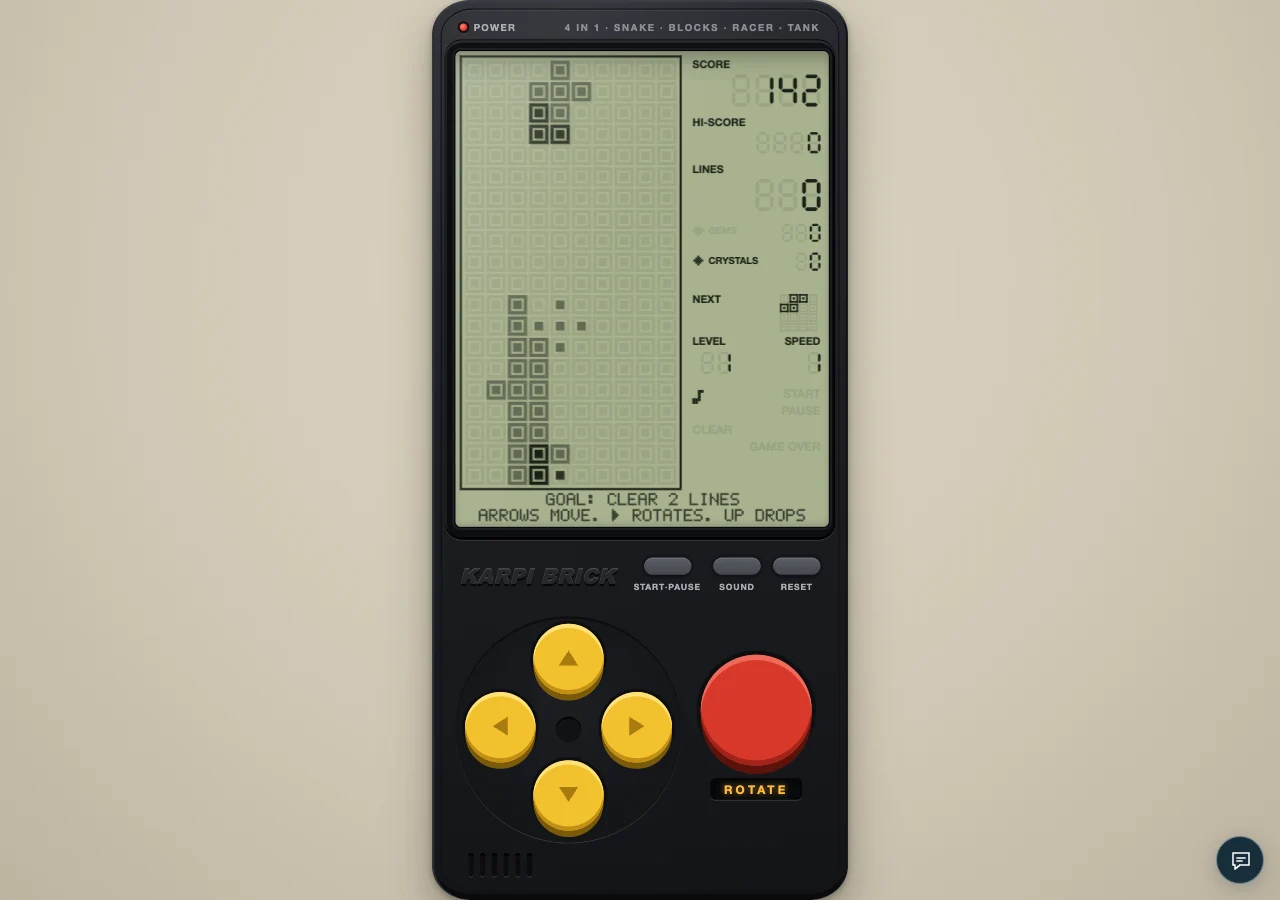
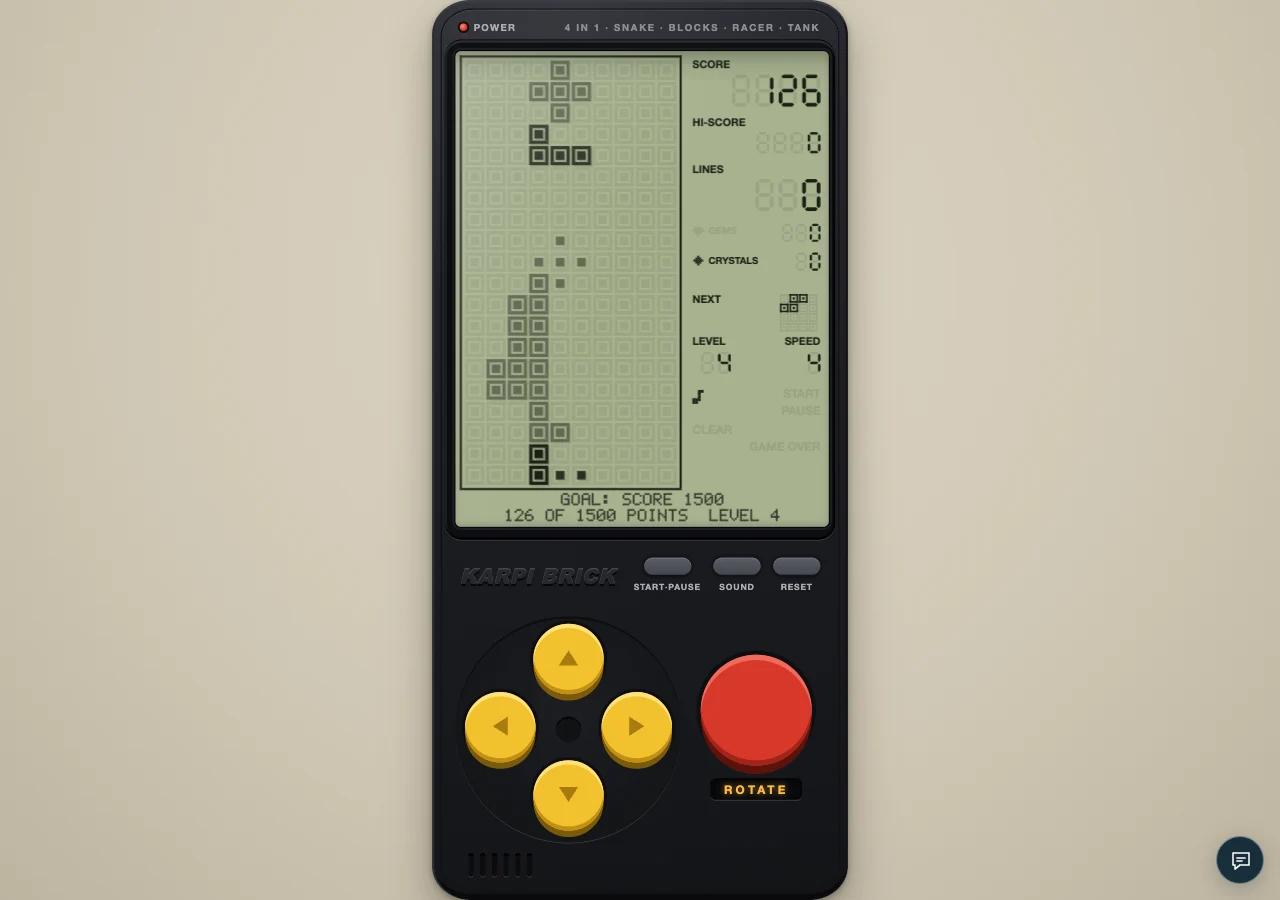
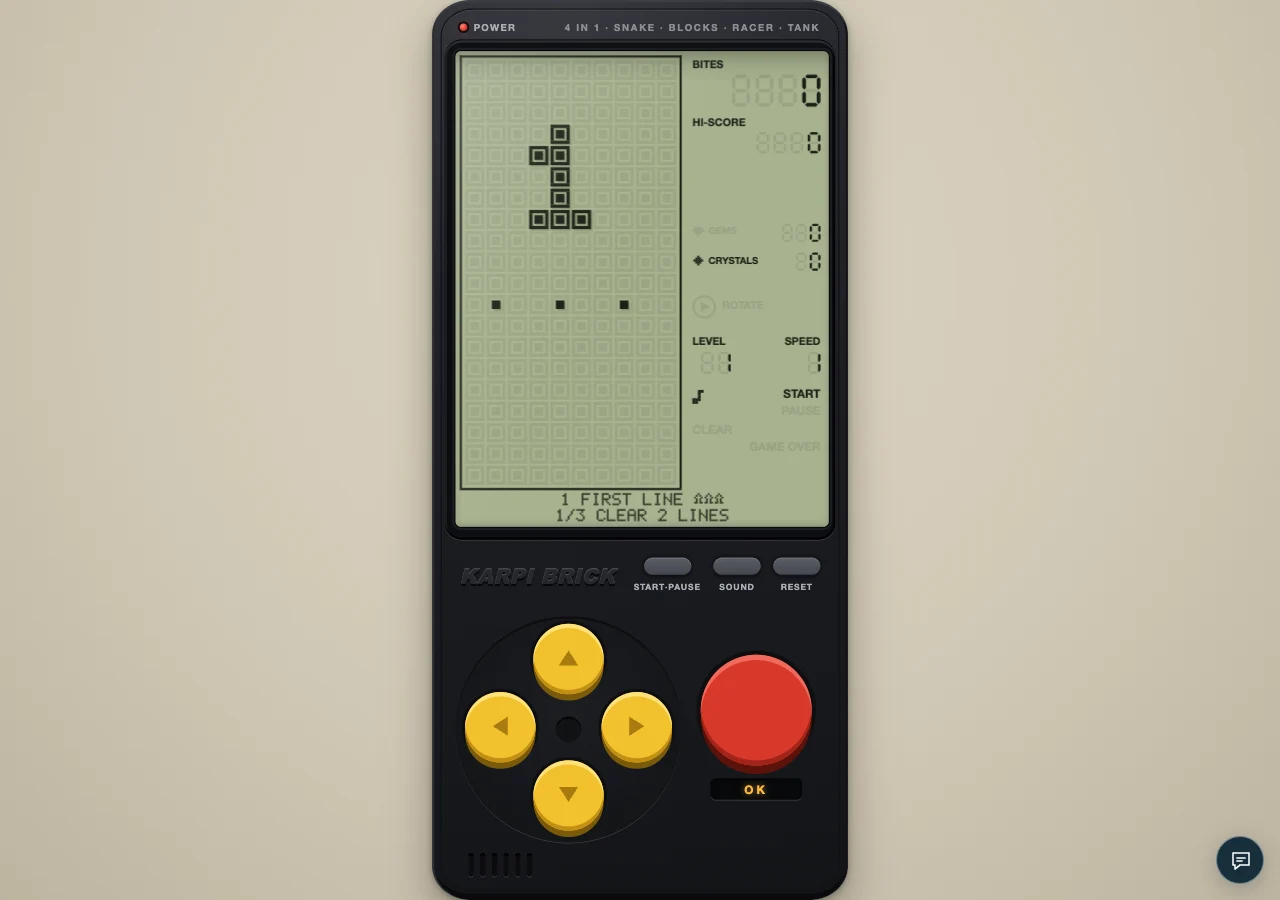
An authentic local capture of the cartridge. The visual guides below explain the decisions to look for.
Karpi Brick Blocks uses eight shapes rather than the seven-piece set many players expect. The five-cell plus and the shorter pieces change what counts as a useful gap. Learn the silhouettes before copying stacking habits from another game.
Read cells, not familiar names
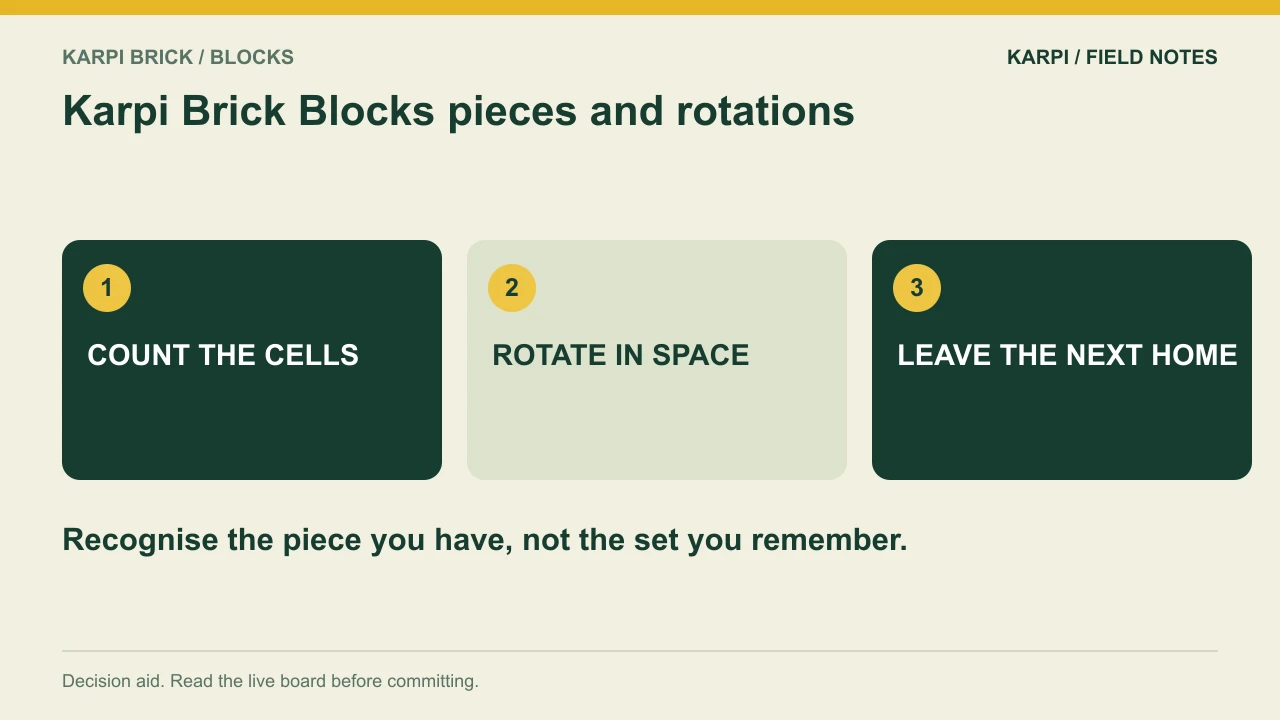
The shapes are a three-cell bar, a three-cell corner, a square, a T, an S, an L, a four-cell bar and a five-cell plus. Their footprints differ, so a one-column well is not a universal answer. Count the occupied cells in the preview and compare them with the actual surface. Similar-looking pieces can require different support underneath.
Rotate while there is room
The red key rotates clockwise through the shape's distinct orientations. Rotation needs a legal space on the board; crowded stacks can remove options. Decide on the rough orientation near the top, then adjust the position. Waiting until the piece is almost locked makes a simple geometric choice into a timing problem.
The plus needs a shaped landing
A plus is three cells wide through the centre, with a cell above and below its middle. It rewards recognising a matching notch. Dropping it onto a flat surface can create awkward spaces beside its lower cell. Before committing, examine the next surface it creates, not just whether the piece fits at the current moment.
The bag is a planning aid, not a promise
The engine draws from a shuffled bag of the eight shapes. NEXT tells you the immediate successor, which is more useful than guessing a distant rescue piece. Plan the current placement so that the next shape has at least one reasonable home. Do not spend all the available height waiting for a specific silhouette to arrive.
Compare the square and the plus
A square has a flat two-cell base. The plus has one lower central cell beneath its wider middle row. On a flat surface, those pieces therefore create different spaces around their landing. The square can sit flush when both supporting columns are level. The plus can leave side pockets beside its lowest cell, so a matching notch may be more convenient. This does not make one shape good and the other bad. It makes the current surface important. Rotate and inspect the shadow rather than applying a memorised rule that ignores the stack. The shorter bar and corner also deserve their own practice: a gap designed for a four-cell bar may not be solved by the three-cell version. Count the cells before committing, especially when the display makes two silhouettes look similar at a glance.
A focused practice attempt
Play slowly until you have seen all eight silhouettes. For each unfamiliar piece, rotate in open space and name the gap it could fill. Spend an extra attempt watching the plus. Compare a placement that leaves its side spaces accessible with one that buries them.
At the console | What to use |
|---|---|
Open this cartridge | |
Main controls | Left/right move; Down soft-drops; Up hard-drops; Space or the red key rotates. |
Pause | START/PAUSE on the console; Enter or P on a keyboard |
Journey | 12 levels across three chapters; read the goal and two extras |
Take it to the board: Play Blocks and test one decision from this guide. The advice describes the current cartridge rules; a practice exercise is not a guaranteed score or clear.
 Take it to the gameBrick GameSnake, Blocks, Racer and Tank on a 90s handheldPlay free
Read next
The Hidden Hole That Ends a Blocks Run For the series starting point, read Karpi Brick Blocks: Build a Floor, Not a Tower.